
 0
0
 0
0
Are you prepared for the changing landscape of tax preparation costs in 2026? As tax rules grow more complex and IRS regulations continue to evolve, many people find themselves unsure how much to budget or how to pay for tax preparer services.
This guide is designed to demystify your options and provide clarity. You will discover how to compare fee structures, spot hidden costs, and choose the right professional for your needs.
By using this resource, you can confidently plan for your 2026 tax filing, avoid unnecessary expenses, and make informed decisions about how you pay for tax preparer expertise.
Explore the types of preparers, new pricing trends, factors impacting costs, and proven strategies to minimize your tax prep bills.
Understanding Tax Preparer Types and Credentials
Choosing how to pay for tax preparer services in 2026 starts with understanding the professionals available. Each preparer type brings unique expertise, credentials, and cost structures. Selecting the right one can help you balance accuracy, legal compliance, and value.
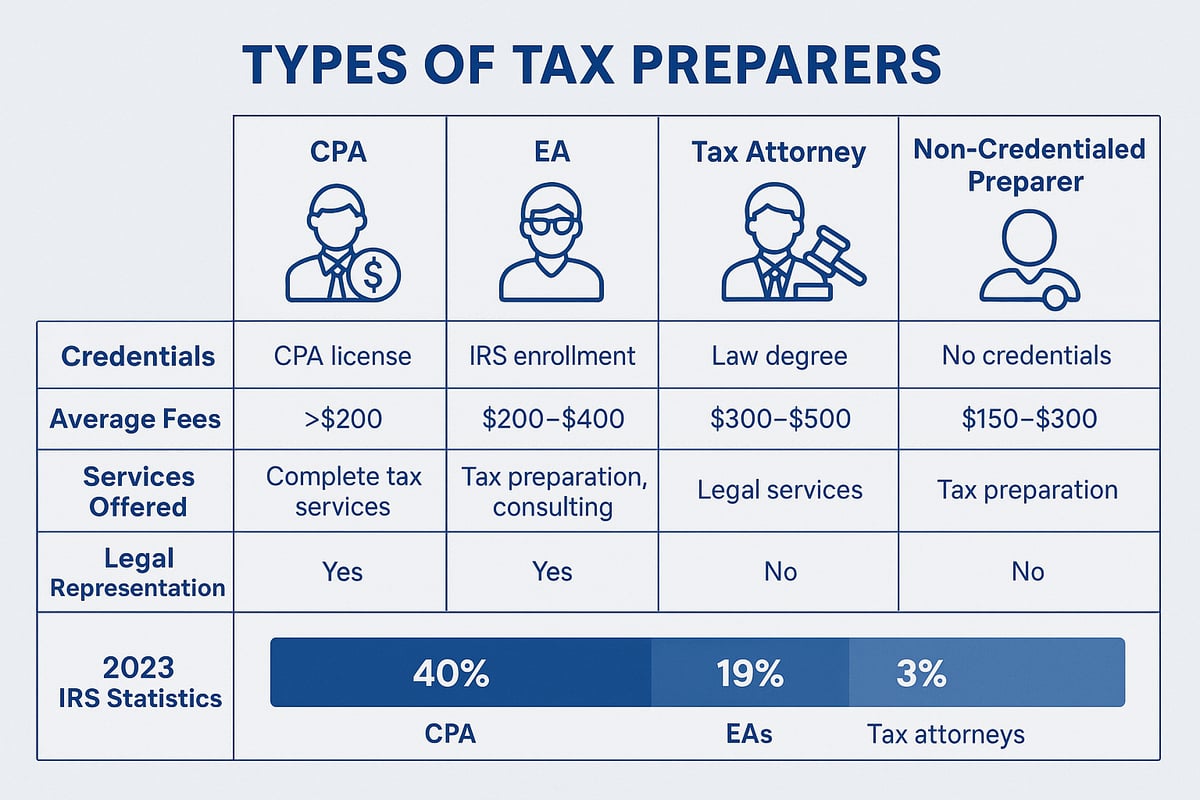
Types of Tax Preparers: CPAs, EAs, Tax Attorneys, and Non-Credentialed Preparers
When you pay for tax preparer expertise, you can choose from several professional categories. Certified Public Accountants (CPAs) are licensed at the state level after rigorous exams and continuing education. They offer tax preparation, planning, and financial advisory services, and can represent clients in IRS matters.
Enrolled Agents (EAs) are federally licensed by the IRS. They must pass a comprehensive exam or have prior IRS experience, and complete annual continuing education. EAs specialize in tax matters and can represent taxpayers before the IRS for audits or collections, making them a solid choice if you pay for tax preparer services with complex federal issues.
Tax attorneys are legal professionals with advanced training in tax law. They handle complex tax controversies, legal disputes, and high-stakes negotiations with tax authorities. If your situation involves legal complications, consider the Claw Tax Attorneys expertise for representation and guidance. For many, paying for a tax preparer with a legal background becomes essential when facing IRS investigations or significant tax liabilities.
Non-credentialed preparers, such as seasonal workers or independent tax pros, may offer lower fees but lack formal credentials. In 2026, regulations in many states require these preparers to have a valid Preparer Tax Identification Number (PTIN) and sometimes additional state certification. However, they cannot represent clients in IRS disputes, limiting the value you receive when you pay for tax preparer services.
The following table summarizes key differences:
| Preparer Type | Credentials | Services Provided | Representation Rights | Typical Fee Range |
|---|---|---|---|---|
| CPA | State license, CPA exam | Tax prep, planning, advisory | Yes, unlimited | $$ – $$$ |
| EA | IRS license, EA exam | Tax prep, representation | Yes, unlimited | $$ |
| Tax Attorney | Law degree, bar license | Legal tax matters, disputes | Yes, unlimited | $$$$ |
| Non-Credentialed | PTIN, some state rules | Basic tax prep | No | $ – $$ |
According to the IRS Data Book 2023, about 53% of returns were prepared by professionals, with the majority handled by CPAs and EAs. Some states, like California and Oregon, require even non-credentialed preparers to complete state courses and register annually, ensuring some basic level of skill.
When deciding how to pay for tax preparer help, consider your tax complexity, need for representation, and budget. For straightforward returns, a non-credentialed preparer may suffice. For business owners, investors, or those with legal concerns, a CPA, EA, or tax attorney is usually worth the investment.
Credentials and Qualifications: What Matters in 2026
As you pay for tax preparer services in 2026, credentials are more important than ever. Always check for a valid PTIN, which is required by the IRS for anyone preparing paid tax returns. Many top preparers also maintain memberships in professional associations, signaling a commitment to ethical standards and ongoing education.
New regulations coming into effect in 2026 demand more rigorous standards. For example, recent IRS and state updates require background checks, expanded continuing education, and stricter documentation for preparers, especially those handling digital assets or multi-state returns. These changes, spurred by 2025 regulatory updates, aim to protect consumers and raise industry professionalism.
Watch for red flags when you pay for tax preparer services:
- Preparers who refuse to sign your return or provide their PTIN
- Promises of inflated refunds or fees tied to refund size
- Lack of professional liability insurance
- No clear engagement letter or contract
Professional liability insurance is now considered essential, providing clients with recourse if errors occur. Ethical standards, such as those outlined by the AICPA or NAEA, are non-negotiable for reputable preparers.
In summary, always verify a preparer's credentials before you pay for tax preparer support. This due diligence ensures you receive competent, compliant, and trustworthy service.
Tax Preparer Pricing Models and 2026 Cost Trends
Navigating how to pay for tax preparer services in 2026 means understanding the evolving landscape of pricing models, industry trends, and new cost drivers. With tax law changes, technology advancements, and shifting consumer expectations, being informed about how professionals set their fees is crucial for smart financial planning.
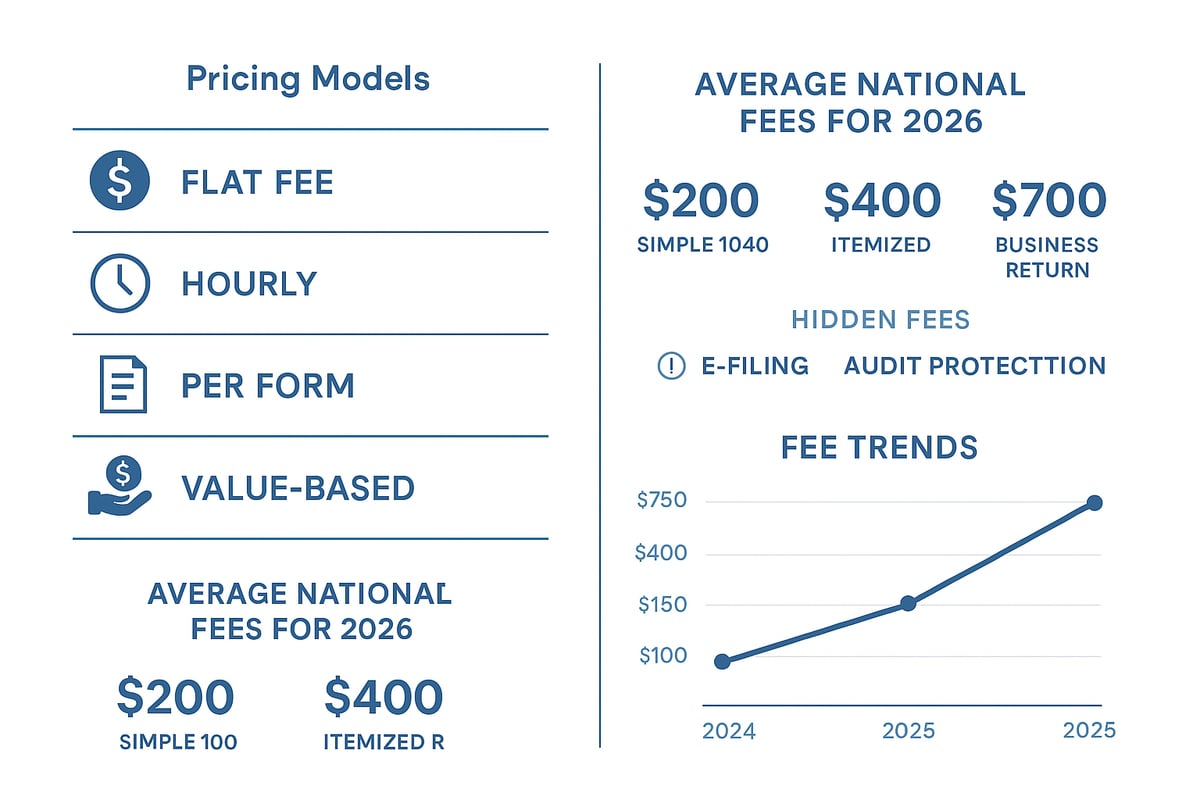
Common Pricing Structures: Flat Fee, Hourly, Per Form, and Value-Based
When you pay for tax preparer services, the method they use to bill you can significantly affect your total cost. The most common pricing models in 2026 include flat fees, hourly rates, per form charges, and value-based pricing.
A flat fee model means you pay for tax preparer services at a set price for your entire return. This approach is popular for simple tax situations, such as a basic 1040, and provides cost certainty. Hourly billing, on the other hand, means you pay for tax preparer time spent on your file, which can add up quickly if your taxes are complex or require extra research.
Many preparers charge per form, adding fees for each additional schedule or document. For example, adding a Schedule C for self-employment or a Schedule E for rental income can increase your bill. Value-based pricing is newer and ties the fee to the complexity or potential tax savings, rather than time or forms.
Here’s a quick overview:
| Pricing Model | Typical Use Cases | 2026 Example Fee | Pros | Cons |
|---|---|---|---|---|
| Flat Fee | Simple 1040, standard W-2 | $150 – $250 | Predictable cost | May not fit complex cases |
| Hourly | Consulting, audits | $100 – $400/hour | Pay for actual time | Hard to estimate total |
| Per Form | Itemized, small business | $50 – $200 per form | Scales with work | Adds up for complex returns |
| Value-Based | High-net-worth, tax savings | $500+ | Incentivizes results | Less transparency |
According to recent Average tax preparation costs in 2025, the national average for a 1040 with Schedule A is around $220, while small business returns often exceed $800. Always ask how you will pay for tax preparer services and request a detailed quote.
Hidden fees can include charges for e-filing ($20–$40), audit protection ($50–$150), or amended returns ($150–$300). Reviewing a sample invoice or fee schedule can help you understand the full picture before you commit to pay for tax preparer services.
2026 Cost Drivers: What’s Changing?
Several factors will influence how much you pay for tax preparer services in 2026. Legislative updates are introducing new reporting requirements, particularly for digital asset transactions and gig economy income. These changes increase the complexity of returns, raising the time and expertise needed.
Inflation and industry wage trends continue to drive up costs. As preparers adapt to rising labor costs, expect incremental fee increases. Additionally, expanded IRS funding and stricter enforcement have led to higher demand for audit defense and representation, which can impact how you pay for tax preparer services, especially if you opt for audit protection add-ons.
Technology adoption, such as automation and AI, is streamlining routine data entry and document review. This may help reduce costs for straightforward returns. However, complex cases, such as multi-state filings or cryptocurrency reporting, still require human expertise, which means you may pay for tax preparer services at a premium.
Location remains a key cost driver. Urban areas, where demand and overhead are higher, often see fees that are 20–30% above national averages. In contrast, rural preparers tend to charge less, but may offer fewer specialized services. Demand spikes, especially after major tax law changes or IRS announcements, can lead to temporary fee increases as preparers manage higher volumes.
Comparing Online, In-Person, and Hybrid Tax Prep Services
When deciding how to pay for tax preparer help, consider whether an online, in-person, or hybrid service best fits your needs and budget. Online DIY platforms are generally the least expensive, with prices ranging from free to $150 for most standard returns. These services are ideal for filers with simple tax situations who feel comfortable using technology.
In-person professional preparers offer personalized guidance and can handle complex situations, but you will pay for tax preparer expertise—average fees for itemized returns or business filings often exceed $400. Hybrid services combine digital convenience with expert review, striking a balance between cost and support.
A recent case study shows that filers who switched from in-person to online platforms saved an average of $120 per return, provided their situations remained simple. However, as complexity increases, the value of professional advice may outweigh the savings.
Online tax prep usage continues to grow, with 38% of filers choosing digital solutions in 2024. Regardless of which method you choose, always clarify how you will pay for tax preparer services and what is included in the quoted fee.
Key Factors Affecting How Much You’ll Pay in 2026
Understanding what influences how much you’ll pay for tax preparer services in 2026 is essential for budgeting and making smart choices. Costs can vary dramatically depending on your unique tax situation, where you live, the preparer's expertise, and even the time of year you file. Let’s break down each key factor so you can anticipate and potentially control your expenses.
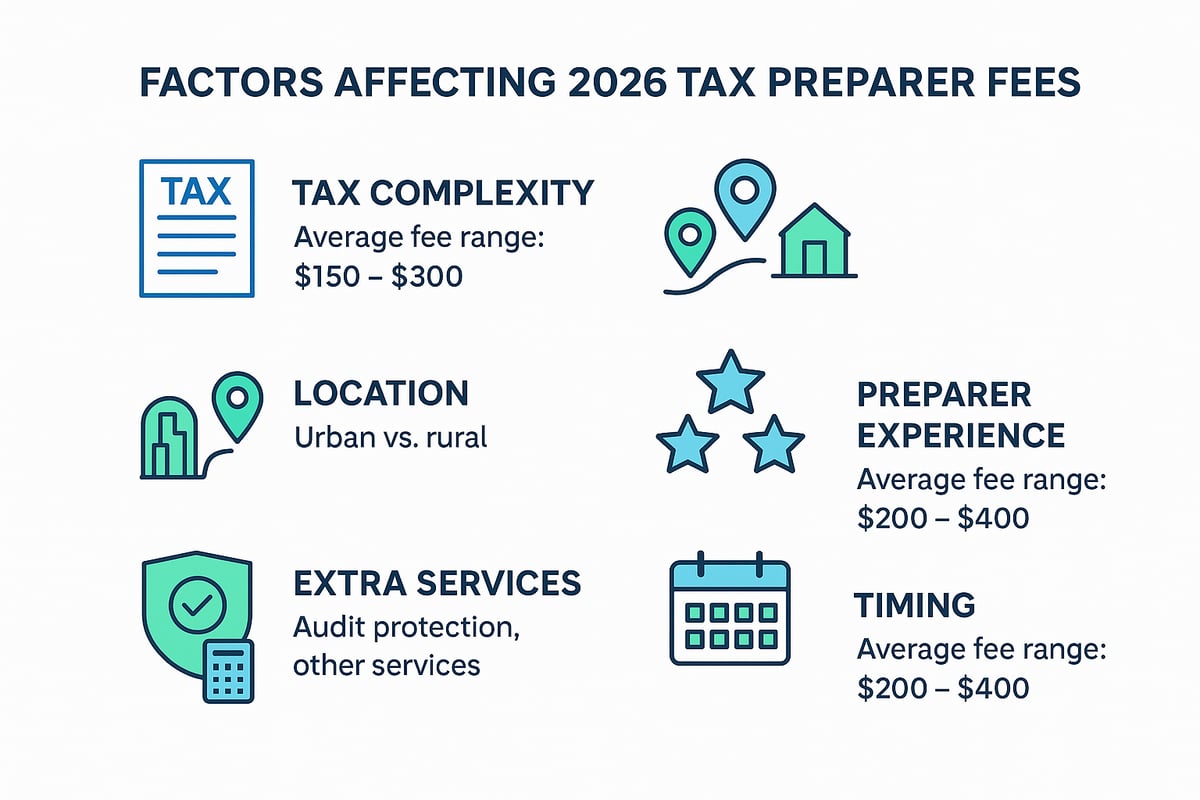
Complexity of Your Tax Situation
The biggest driver in what you’ll pay for tax preparer help is the complexity of your return. If you only have a single W 2 and standard deduction, fees tend to be low. Add multiple income streams, investments, rental properties, or business activities, and the price rises quickly.
Special situations, such as self employment, rental income, cryptocurrency transactions, or filing in multiple states, demand more time and expertise. For example, a basic federal 1040 return may cost $150 to $250, while a self employed taxpayer with crypto and rental income might pay $500 or more.
Organizing your records and using tax resources and tools can help minimize the time your preparer spends, directly lowering the amount you pay for tax preparer services.
Location and Market Competition
Where you live has a notable impact on what you’ll pay for tax preparer services. Urban areas with high living costs, like New York City or San Francisco, often see average fees of $400 or more for complex returns. In contrast, rural areas in the Midwest or South might average closer to $150 to $200.
Market competition also plays a role. Areas with many preparers may offer competitive rates, while regions with fewer options can see higher prices. Comparing providers in your area ensures you do not overpay for tax preparer expertise.
| Region | Basic 1040 Fee | Business Return Fee |
|---|---|---|
| Urban (NYC, SF) | $250-$400 | $800-$1,200 |
| Rural Midwest | $120-$200 | $400-$700 |
Experience, Reputation, and Niche Expertise
The experience and reputation of your chosen preparer will impact what you pay for tax preparer services. Long standing professionals with advanced credentials, positive reviews, and a proven track record typically charge more than new or less established preparers.
If you require specialized expertise—such as international tax, expat filings, or high net worth strategies—expect to pay a premium. For instance, a preparer with international tax credentials might charge 20 to 30 percent more than a generalist. Ultimately, you are paying for peace of mind and specialized knowledge.
Additional Services and Value-Add Offerings
Many taxpayers opt for services that go beyond standard filing, which can significantly affect how much you pay for tax preparer help. Common add ons include audit defense, year round consulting, tax planning sessions, and bundled packages with bookkeeping or financial planning.
Audit insurance, for example, typically costs $50 to $150 and offers representation if the IRS questions your return. Bundling services can sometimes yield discounts compared to paying for each individually. Always clarify what is included to avoid surprise costs.
- Audit defense ($50-$150)
- Year round consulting (varies)
- Tax planning sessions ($100+)
- Bookkeeping bundles (5-15% discount)
Timing: When You Schedule and File
Timing also matters when you pay for tax preparer services. Preparing your return early in the season may qualify you for discounts or lower rates. However, waiting until the last minute, especially after March 31, can result in rush fees or peak season surcharges.
Many preparers raise prices as the April deadline approaches due to increased demand and compressed schedules. Early birds not only save money but also gain peace of mind by avoiding the stress of last minute filing.
Step-by-Step Guide: How to Choose and Pay for the Right Tax Preparer in 2026
Selecting the ideal professional to pay for tax preparer services in 2026 requires a methodical approach. With regulations evolving and fee structures shifting, it is essential to navigate the process confidently and avoid costly missteps. Use this step-by-step guide to evaluate options, compare offers, and ensure you get the value and expertise you need.
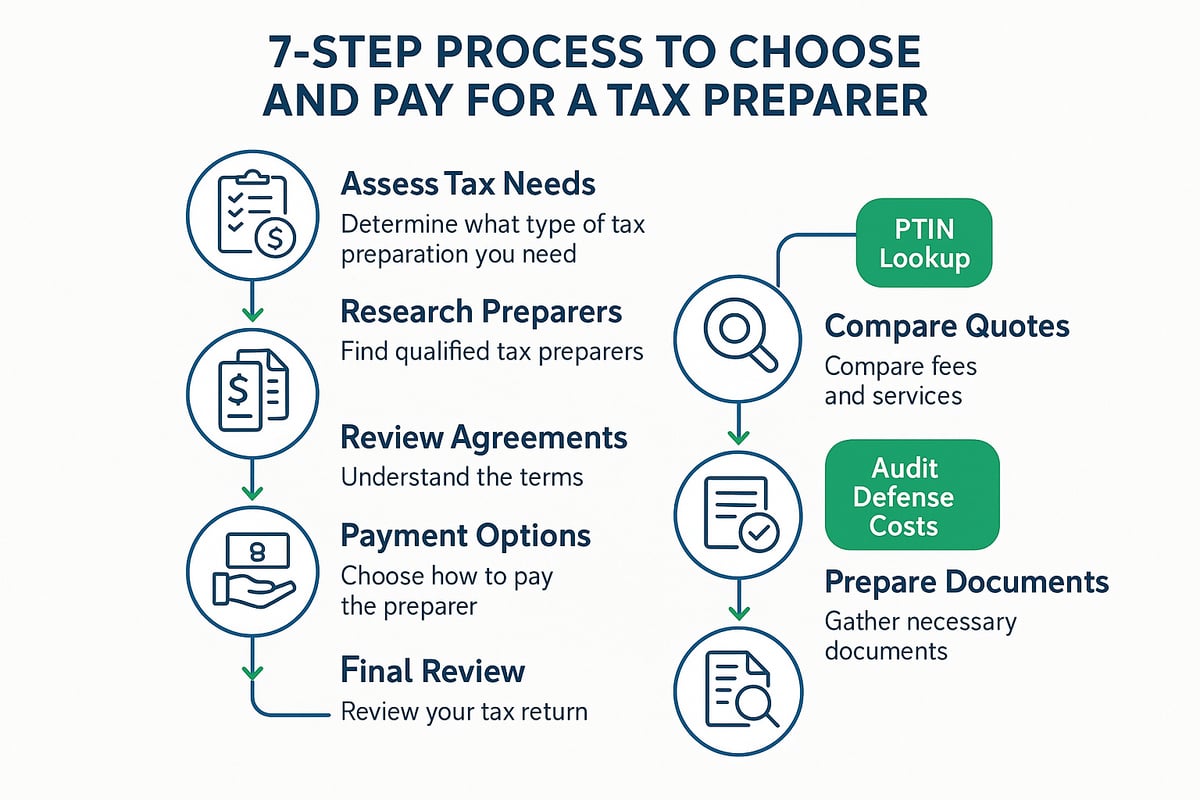
Step 1: Assess Your Tax Needs and Complexity
Begin by evaluating your unique tax situation. List all income sources, such as W-2s, 1099s, investment accounts, and any business or rental income. Identify deductions, credits, and any potential red flags like cryptocurrency activity or multi-state filing.
Determine whether your needs are basic or require specialized expertise. For example, self-employed individuals, landlords, or those with international assets may need advanced services. This clarity helps you pay for tax preparer support that matches your true requirements, ensuring you do not overpay for unnecessary features.
Step 2: Research and Shortlist Qualified Preparers
Next, search for reputable professionals. Use resources like the IRS Directory, state boards, and professional associations. Always verify credentials, such as a Preparer Tax Identification Number (PTIN), and check disciplinary history.
For 2026, note that IRS reduces PTIN fees for tax professionals, making it more affordable for preparers to stay compliant. This change may affect how much you pay for tax preparer services, as lower administrative costs could be passed on to clients.
Step 3: Request Transparent Quotes and Compare Offers
Contact your shortlist and request itemized quotes. Ask about their pricing model: is it a flat fee, hourly rate, per form, or value-based? Clarify which services are included and which will incur extra charges.
Use a table to compare offers side by side:
| Provider | Fee Structure | Included Services | Extra Fees | Payment Terms |
|---|---|---|---|---|
| Preparer A | Flat Fee | Prep, e-file | Audit defense | 50% upfront |
| Preparer B | Per Form | Prep | E-filing, amendments | Due on completion |
This approach helps you pay for tax preparer services with full transparency and ensures you understand the total cost before committing.
Step 4: Evaluate Service Agreements and Engagement Letters
Review all contracts carefully. Look for scope of services, timelines, confidentiality clauses, and dispute resolution terms. Watch for warning signs such as large upfront payment demands, vague descriptions, or missing details.
A strong agreement protects both parties. When you pay for tax preparer support, insist on clear terms so you know exactly what to expect, and avoid surprises during or after the filing process.
Step 5: Make Your Selection and Understand Payment Options
After comparing offers and reviewing agreements, choose the preparer who best fits your needs and budget. Discuss payment methods: many accept credit cards, ACH, or even installment plans.
Some offer pay-from-refund options, where their fee is deducted from your refund. While convenient, this can add $39 to $99 in extra charges. Consider the pros and cons before deciding how you want to pay for tax preparer services.
Step 6: Prepare Your Documents and Communicate Expectations
Gather all required documents: income statements, prior returns, receipts, and identification. Organize them digitally if possible, as this can streamline the process and reduce the time billed.
Set clear expectations for turnaround time and communication style. Proactive organization makes it easier to pay for tax preparer help efficiently and may even qualify you for discounts or faster service.
Step 7: Review, Approve, and Retain Your Return
Once your return is prepared, review it thoroughly for accuracy. Confirm all income, deductions, and credits are reported correctly. Ask questions about anything unclear.
Approve the return only when you are satisfied. Retain copies for your records, as you may need them for future filings or audits. This final check ensures you pay for tax preparer services that deliver value and peace of mind.
Strategies to Save Money on Tax Preparation in 2026
Saving money when you pay for tax preparer services in 2026 is more achievable than you might think. With the right strategies, you can keep costs low without sacrificing accuracy or peace of mind. Here are five proven ways to reduce your expenses and get the most value from your tax preparation experience.
Maximize Free and Low-Cost Filing Options
Before you pay for tax preparer services, check your eligibility for free filing programs. The IRS Free File, Volunteer Income Tax Assistance (VITA), and Tax Counseling for the Elderly (TCE) programs help millions of taxpayers file at no cost.
These resources are often available to those with incomes below specific thresholds, seniors, or people with disabilities. Using these options can save the average filer hundreds of dollars. For more on the overall time and expense Americans spend on taxes, see this discussion of taxpayers’ time and costs for tax compliance.
If you don’t qualify, consider low-cost online platforms. These can be more affordable than in-person services, especially for simple returns.
Bundle Services and Negotiate Fees
When you pay for tax preparer expertise, bundling services can lead to big savings. Many professionals offer discounts if you combine tax prep with bookkeeping or financial planning.
Ask your preparer if they provide package deals or loyalty discounts for returning clients. Don’t be afraid to negotiate your fee, especially if your return is straightforward or you’re bringing in multiple years of business.
Compare quotes from several preparers to ensure you’re not overpaying. Transparent communication about your needs can also open doors to better rates.
Organize and Digitize Your Documents
A well-organized document set can significantly lower the price you pay for tax preparer services. Clear, digital files reduce the time your preparer spends sorting through paperwork, which can cut hourly or per-form fees.
Use secure apps or cloud storage to keep W-2s, 1099s, receipts, and prior-year returns in order. Create a checklist and update it as you gather documents.
Being proactive not only saves you money but also helps prevent errors and missed deductions. Your preparer will appreciate your organization, and you’ll benefit from a smoother process.
Leverage Tax Deductions and Credits for Preparation Fees
Did you know you may be able to deduct the amount you pay for tax preparer services? If you’re self-employed, own rental property, or have business income, tax prep fees related to those activities are often deductible.
Keep detailed records of what you pay for tax preparer costs and confirm with your professional which portion is eligible. Claiming these deductions can offset your out-of-pocket expenses and reduce your taxable income.
Review changes in tax law each year to ensure you’re taking advantage of all available credits and deductions tied to tax preparation.
Avoid Common Pitfalls That Increase Costs
Missing documents, late filings, and return amendments can quickly inflate the amount you pay for tax preparer help. Each of these mistakes can result in extra fees, sometimes ranging from $150 to $300 for amendments alone.
To avoid these pitfalls, start early and double-check that you have all necessary forms. Respond promptly to your preparer’s questions and requests for information.
By staying organized and proactive, you’ll minimize unexpected expenses and have more control over your tax preparation budget.
What to Expect: The Future of Paying for Tax Preparation Beyond 2026
As we look ahead, the landscape of how you pay for tax preparer services is rapidly evolving. From new technology to regulatory changes, understanding the future will help you make informed choices and avoid surprises.
Evolving Technology and AI in Tax Preparation
Artificial intelligence is transforming how people pay for tax preparer services. Automation now handles much of the data entry, error detection, and document gathering for both individuals and businesses. This can lead to more efficient prep and potentially lower fees for straightforward returns.
However, as AI takes over routine tasks, the demand for expert review and complex tax advice is growing. You may find your pay for tax preparer experience shifting toward hybrid models, where technology and human expertise work hand in hand for better accuracy and peace of mind.
Regulatory Changes on the Horizon
The next few years will bring new IRS and state-level policies that impact how you pay for tax preparer help. For example, proposed e-filing mandates and expanded reporting for digital assets could affect both pricing and service requirements. As covered in IRS sets January 26 start for 2026 tax filing season, tax law changes often drive up complexity, making it more important than ever to budget for professional assistance.
Staying informed about these shifts ensures you can adjust your pay for tax preparer strategy to match evolving compliance demands.
The Rise of Subscription-Based and Year-Round Tax Services
A growing trend is the move from one-time prep fees to monthly or annual subscriptions. These models offer year-round support, including audit defense, tax planning, and ongoing advice. For many, this changes how they pay for tax preparer services by spreading costs over time and providing more value.
Subscription models can benefit consumers who need continuous guidance, but it is important to assess if the added services justify the extra expense compared to traditional pay-for-service approaches.
Consumer Protections and Preparer Accountability
With more ways to pay for tax preparer services, consumer protections are also expanding. States and the IRS are increasing oversight, requiring clearer fee disclosures and professional standards. If you encounter issues with a preparer, you have more resources than ever to resolve disputes or seek tax relief services overview.
Always verify credentials and check for professional liability insurance when you pay for tax preparer help. This ensures your interests are protected in an evolving market.
Preparing for 2027 and Beyond
Looking forward, those who pay for tax preparer services should expect ongoing change. To future-proof your approach, stay up to date on tax law changes, embrace digital tools, and review your preparer’s credentials annually.
By planning ahead, you can confidently navigate the shifting landscape and ensure you get the best value and protection when you pay for tax preparer support.
As you navigate the evolving landscape of tax preparation in 2026, understanding your options and preparing for changing fees is key to making smart financial decisions. Whether you are facing complex tax challenges or simply want to ensure you are not overpaying for professional help, having expert guidance can make all the difference. At CLAW Tax Group, we are here to help you clarify your choices, protect your assets, and resolve any tax concerns with confidence. If you are ready to discuss your unique situation or explore solutions tailored to your needs, contact us for a free consultation.



