
 0
0
 0
0
Are you feeling overwhelmed by tax issues in 2026? You are not alone, as millions of Americans turn to a tax relief group for expert support each year.
This guide is designed to help you understand how a tax relief group operates, what services they provide, and how to choose the right team for your needs. With in-depth insights from seasoned professionals, you will gain the confidence to address your tax challenges head-on.
Explore the basics of tax relief, discover expert strategies, and learn how to avoid common mistakes. Take the first step toward financial peace of mind with clear, actionable information tailored for 2026.
Understanding Tax Relief Groups: What They Do and Who They Help
Are you wondering what a tax relief group actually does? Many taxpayers find themselves confused about where to turn for help when facing IRS problems. Understanding the role of a tax relief group can be the first step toward resolving complex tax issues with confidence.
Definition and Core Functions
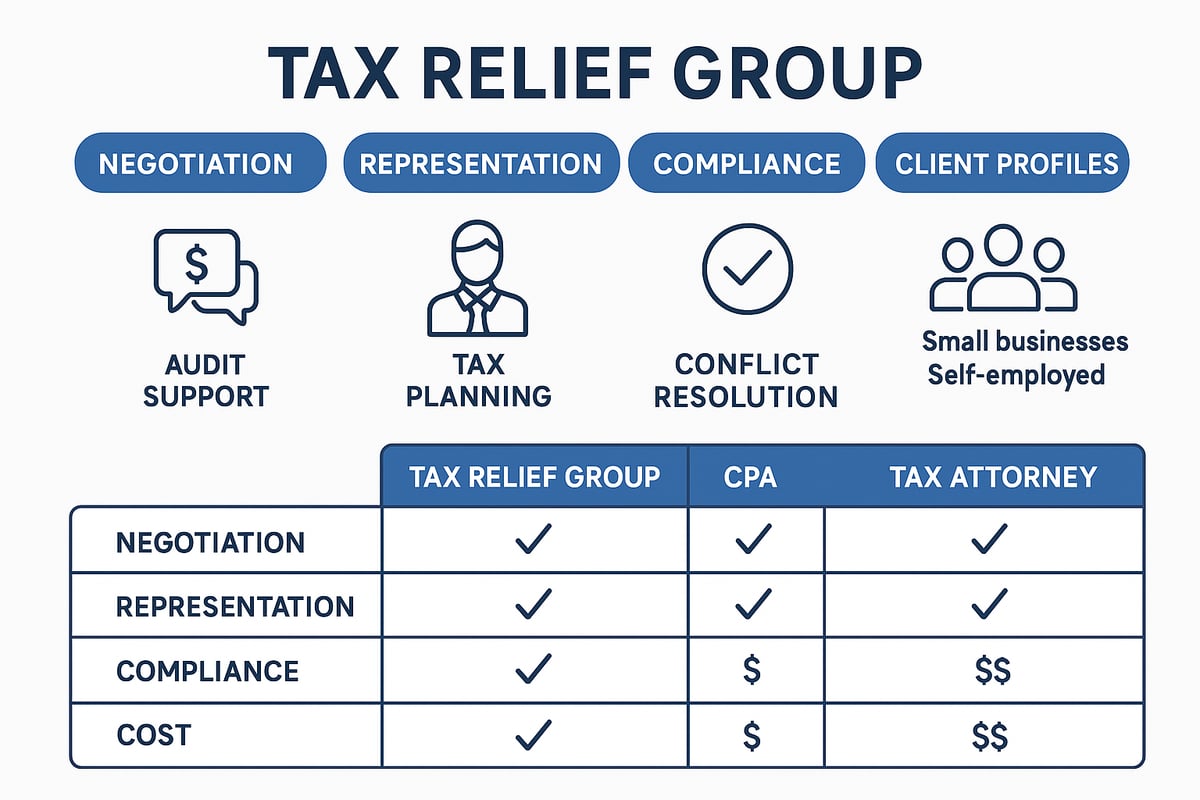
A tax relief group is a team of professionals that specializes in resolving tax problems for individuals and businesses. Their main role is to act as an advocate for clients who are struggling with IRS or state tax issues. Unlike solo practitioners, a tax relief group typically brings together enrolled agents, CPAs, and sometimes tax attorneys to offer comprehensive support.
How does a tax relief group differ from other financial experts? Here is a quick comparison:
| Professional | Main Focus | Typical Services |
|---|---|---|
| Tax Relief Group | Tax problem resolution | Negotiation, representation, compliance |
| CPA | Accounting and tax prep | Tax filing, bookkeeping, planning |
| Tax Attorney | Legal tax matters | Litigation, legal defense, appeals |
A tax relief group serves a wide range of clients. These include individuals facing back taxes, small business owners dealing with payroll tax issues, and the self-employed who may have unfiled returns or audit concerns. For example, a Tax Relief Group in El Cajon provides audit support, tax planning, and conflict resolution for both individuals and businesses.
The scope of services offered by a tax relief group is broad. They handle everything from negotiating with the IRS to representing clients in audits and ensuring ongoing compliance. This comprehensive approach makes a tax relief group a valuable ally in the face of tax challenges.
Types of Tax Problems Addressed
A tax relief group is equipped to handle a variety of tax problems. Common issues include back taxes, IRS audits, tax liens, wage garnishments, and bank levies. Many clients turn to a tax relief group when they have delinquent filings or unfiled tax returns, which can quickly escalate into larger problems if left unaddressed.
Additionally, a tax relief group can help reduce penalties and interest that have accumulated over time. For instance, consider a real-life scenario: a taxpayer was facing wage garnishment after years of unpaid taxes. With the intervention of a tax relief group, the garnishment was halted and a manageable payment plan was established. This type of resolution is common for those who seek expert help.
Other issues a tax relief group addresses include:
- Penalty abatement requests
- Negotiating offers in compromise
- Releasing or preventing tax liens
No matter the complexity, a tax relief group is prepared to guide clients through each step.
Regulatory Environment and Credentials
Choosing a qualified tax relief group is essential. The best groups have IRS Enrolled Agents, CPAs, and tax attorneys on staff, providing clients with a full spectrum of expertise. In fact, having a tax attorney within the Claw Tax Attorneys Expertise team is a strong indicator of a group’s credibility and legal capability.
The regulatory environment in 2026 is increasingly complex. The IRS processed over 8 million delinquent tax cases in 2025, signaling a strong focus on enforcement. This trend is expected to continue, making it even more important for taxpayers to work with a reputable tax relief group.
Tax relief professionals must adhere to strict legal and ethical standards. They are required to maintain confidentiality, act in the client’s best interest, and provide honest, transparent advice. Always verify the credentials of any tax relief group before engaging their services to ensure you receive the highest level of representation.
Key Tax Relief Services in 2026: Comprehensive Solutions for Taxpayers
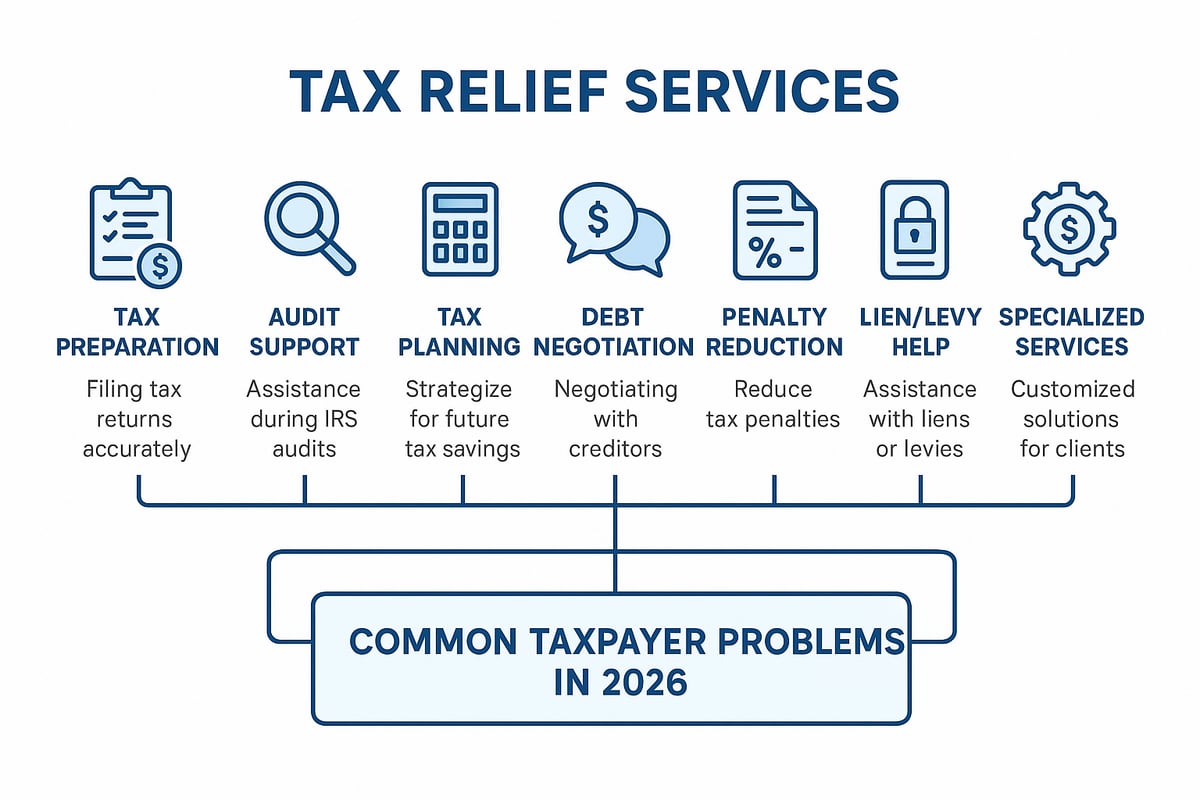
Navigating tax challenges in 2026 requires a clear understanding of the solutions a tax relief group can provide. These organizations offer a broad suite of services to help individuals and businesses resolve tax issues efficiently. Whether you are managing recent filings or facing complex disputes, knowing your options is the first step toward relief.
Tax Preparation and Filing
A tax relief group assists with both current and past year tax preparation. Their experts ensure that all returns, including amended ones, are accurate and submitted on time. This reduces the risk of future audits or penalties.
Services include:
- Preparing and filing federal and state tax returns
- Correcting previous errors with amended returns
- Addressing unfiled returns for prior years
By maintaining compliance, a tax relief group helps prevent issues before they arise. Their attention to detail is crucial for individuals and businesses aiming for peace of mind.
Audit and Conflict Resolution
Facing an IRS or state audit can be intimidating. A tax relief group offers comprehensive support throughout the audit process, from document preparation to representing you during hearings.
Their services typically cover:
- Collecting and organizing financial records
- Communicating with tax authorities on your behalf
- Negotiating to resolve conflicts and minimize liabilities
For deeper insights on audit strategies, see IRS Audit Insights and Tips. With professional representation, clients often experience reduced stress and more favorable outcomes.
Tax Planning and Prevention
Proactive planning is a key strength of any reputable tax relief group. Their specialists work year-round to create strategies that minimize future tax liabilities.
Key offerings include:
- Identifying available deductions and credits
- Recommending tax-advantaged investments
- Structuring business operations for optimal tax outcomes
This forward-thinking approach not only addresses current obligations but also helps clients avoid future surprises. Effective tax planning is essential for long-term financial health.
Debt Negotiation and Settlement
Resolving tax debt is a major focus for any tax relief group. They negotiate with the IRS or state agencies to secure manageable solutions for clients.
Common strategies involve:
- Offers in Compromise, allowing clients to settle for less than the total owed
- Setting up installment agreements for structured payments
- Requesting Currently Not Collectible status to temporarily halt collections
These options give taxpayers flexibility and a path toward financial stability. Every case is unique, and a tax relief group tailors solutions to fit specific needs.
Penalty Abatement and Interest Reduction
Tax penalties and accrued interest can make resolving tax issues even more challenging. A skilled tax relief group can request waivers and negotiate reductions to ease the financial burden.
Typical services include:
- Filing for penalty abatement due to reasonable cause or first-time forgiveness
- Negotiating to lower accrued interest on outstanding balances
By addressing penalties and interest, a tax relief group can significantly reduce the total amount owed. This service is especially valuable for those with long-standing tax problems.
Lien and Levy Assistance
Tax liens and levies threaten property and wages, but a tax relief group is equipped to respond quickly. Their intervention can stop or release these enforcement actions.
Support includes:
- Petitioning for the release of tax liens on homes or business assets
- Preventing or removing wage and bank account levies
Rapid action by a tax relief group helps protect your assets and restore financial stability. Timely communication with tax authorities is essential in these situations.
Specialized Services
Some tax cases require highly specialized expertise. A tax relief group often provides unique services to address complex scenarios.
Specialized offerings may include:
- Innocent spouse relief for those unfairly burdened by a partner’s tax debt
- Consultation on bankruptcy and its tax implications
- Guidance on business formation or dissolution to manage tax consequences
With a wide range of services, a tax relief group can support clients through virtually any tax challenge in 2026. Their comprehensive approach ensures solutions are tailored to each individual situation.
How to Choose the Right Tax Relief Group in 2026: Criteria & Red Flags
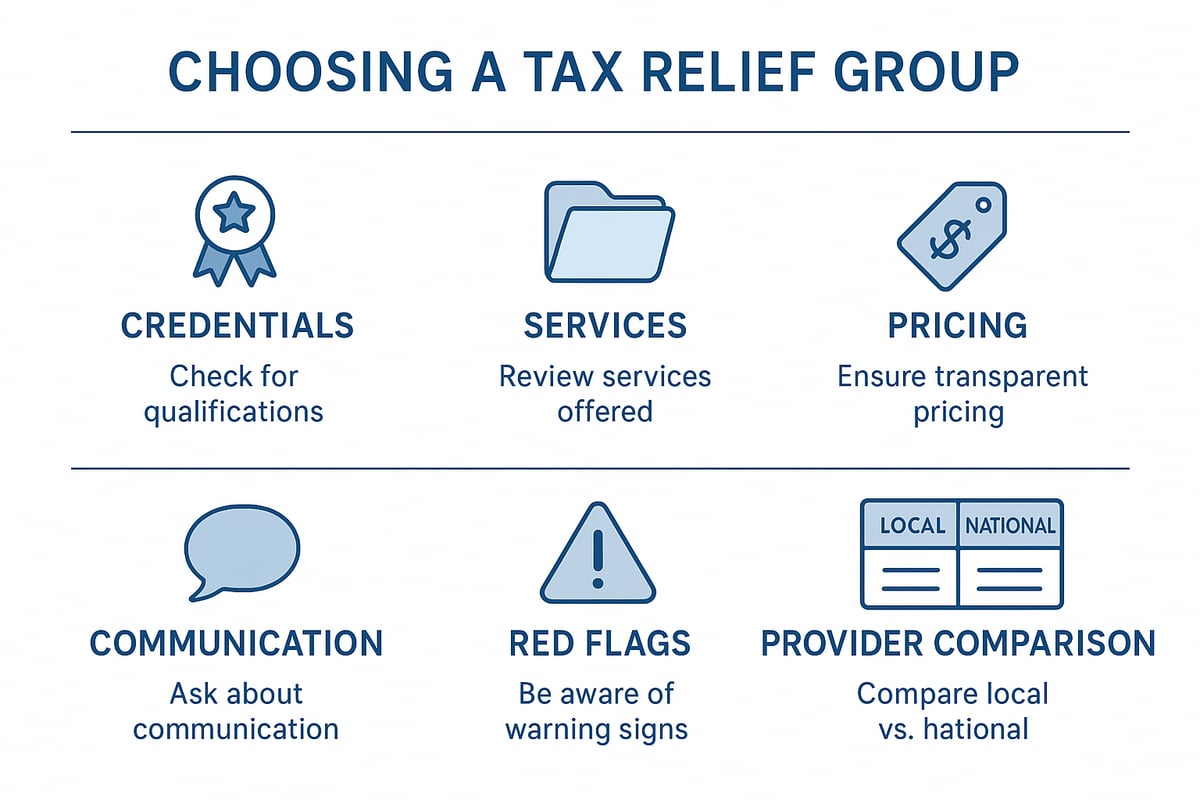
Selecting the best tax relief group can make the difference between resolving tax troubles and facing ongoing stress. With many options available in 2026, understanding what to look for and what to avoid is essential.
Credentials and Experience
A reputable tax relief group should have licensed professionals on staff, such as IRS Enrolled Agents, Certified Public Accountants (CPAs), or tax attorneys. These credentials ensure that your representatives understand complex tax laws and have the authority to negotiate directly with the IRS.
Experience matters, too. Look for a tax relief group with several years in business and a proven track record of successful resolutions. Verified client testimonials on platforms like Yelp or Google can offer insight into the group's reliability and success rate.
Service Offerings and Specialization
Not all tax issues are the same, so the right tax relief group should offer a broad range of services. Comprehensive providers address everything from back taxes and audit representation to penalty abatement and tax planning.
Some firms focus on specific client types, such as small businesses or high-debt cases. Ensure your chosen tax relief group understands your unique needs. To see a detailed list of services a group might offer, visit the Tax Relief Services Overview.
Transparency and Pricing
Transparency is a hallmark of a trustworthy tax relief group. Reputable firms provide clear, upfront fee structures, so you know what to expect from the beginning.
Many offer a no-cost initial consultation, giving you a chance to discuss your situation before committing. Be wary of hidden costs or vague pricing. Ask for a written breakdown of all fees and services included.
Communication and Support
Effective communication is key when working with a tax relief group. The best firms respond promptly to your questions and explain complex tax matters in clear, simple terms.
Regular updates and educational resources ensure you remain informed throughout the process. Choose a group that values ongoing support, not just a one-time resolution.
Warning Signs and Scams
Unfortunately, not all providers are legitimate. Watch for these red flags when evaluating a tax relief group:
- Guaranteed results or promises to "wipe out" tax debt
- High-pressure sales tactics pushing you to sign quickly
- Demands for large upfront payments before any work begins
- Lack of proper credentials or refusal to share staff qualifications
- Negative reviews or warnings from the FTC or IRS
Trust your instincts and verify any claims before proceeding.
Comparing Local vs. National Providers
Choosing between a local and national tax relief group depends on your preferences and needs. Here’s a quick comparison:
| Feature | Local Group | National Provider |
|---|---|---|
| Accessibility | In-person meetings possible | Remote consultations |
| Personalization | Tailored, local expertise | Standardized solutions |
| Regulatory Knowledge | Familiar with state/local laws | Broad national experience |
| Support | Direct, ongoing relationships | Larger client base, less personal |
Local providers, such as those in El Cajon, may offer more personalized service, while national groups can bring broader resources. Evaluate what matters most for your situation before choosing a tax relief group.
Step-by-Step Guide: Navigating the Tax Relief Process in 2026
Navigating the tax relief process in 2026 can feel overwhelming, but breaking it down into clear steps makes it manageable. Whether you are an individual, small business owner, or self-employed, following a structured approach with a tax relief group can help resolve your tax challenges efficiently.
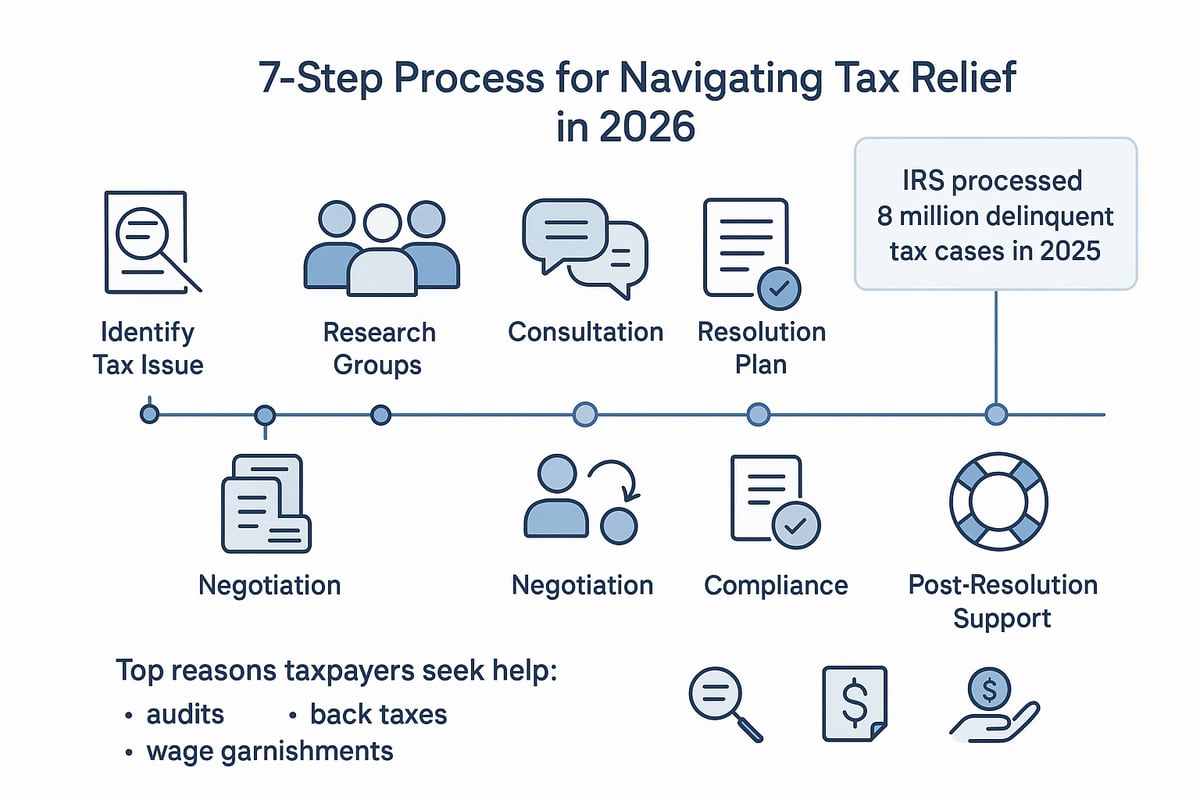
Step 1: Identifying Your Tax Issue
Begin by reviewing any IRS or state tax notices you have received. Carefully read each letter to understand the type of tax issue you are facing. Common problems include back taxes, audits, liens, and wage garnishments.
Gather all relevant documents, such as previous tax returns, correspondence, and financial records. This preparation ensures that when you contact a tax relief group, you can present a complete picture of your situation.
If you are unsure about the nature of your tax problem, make a list of questions to clarify with the professionals. Early organization is key to a smooth resolution.
Step 2: Researching and Contacting Tax Relief Groups
Next, compile a shortlist of reputable tax relief group providers. Start by looking for organizations with strong credentials, positive reviews, and proven experience handling cases like yours.
Visit official resources to verify legitimacy and explore options. For example, the IRS Tax Relief Programs 2026 page lists current programs and grants that may be available for your situation.
Prepare a list of questions to ask during your initial outreach, such as fees, services, and staff qualifications. This step helps you compare groups and select the best fit for your needs.
Step 3: Initial Consultation and Case Evaluation
During the initial consultation, the tax relief group will review your documentation and ask about your financial background. Be transparent about your income, debts, and prior tax filings.
Expect the group to assess possible solutions based on your specific tax issue. They may outline their approach, estimated timeline, and potential outcomes during this meeting.
This stage helps establish trust and sets realistic expectations for the process ahead.
Step 4: Developing a Customized Resolution Plan
Based on your case evaluation, the tax relief group will design a tailored resolution plan. This plan may include negotiating settlements, requesting penalty abatements, or establishing installment agreements.
You will receive a clear outline of each recommended step, along with an estimated timeline for resolution. Ask questions to ensure you understand the process and your responsibilities.
A detailed plan increases your confidence and helps you track progress effectively.
Step 5: Representation and Negotiation
Your tax relief group will represent you in all communications with the IRS or state tax authorities. They will submit required forms, respond to inquiries, and negotiate on your behalf.
Throughout this stage, you should receive regular updates on your case status. If additional documentation is needed, provide it promptly to avoid delays.
Professional negotiation by your group maximizes your chances of achieving a favorable outcome.
Step 6: Resolution and Ongoing Compliance
Once your case is resolved, the tax relief group will help finalize settlements or payment arrangements. They will guide you through any final paperwork and ensure all requirements are met.
You will also receive advice on maintaining tax compliance in the future. This includes tips on timely filing, accurate recordkeeping, and understanding changes in tax law.
Staying proactive reduces the risk of facing similar issues again.
Step 7: Post-Resolution Support
Many tax relief group providers offer ongoing support after your case is closed. Services may include audit defense, future tax planning, and educational resources.
Access to post-resolution assistance helps you stay informed and prepared for upcoming tax years. Reach out to your group with questions or concerns as new tax situations arise.
Consistent support ensures long-term peace of mind and financial stability.
Expert Insights: Strategies for Maximizing Tax Relief in 2026
Navigating 2026’s complex tax landscape requires more than just filing returns. The right strategies can help you leverage every opportunity a tax relief group offers. Below, discover expert insights to maximize your results, avoid common pitfalls, and stay ahead of new regulations.
Proactive Tax Planning Tips
A tax relief group’s support goes far beyond crisis intervention. Proactive planning is essential for minimizing future liabilities and positioning yourself for optimal outcomes.
- Keep detailed, year-round records of income, expenses, and deductions.
- Schedule periodic check-ins with your tax relief group to review changing financial circumstances.
- Take advantage of new credits or deductions unique to 2026.
By working closely with a tax relief group throughout the year, you can identify savings opportunities and reduce the risk of future IRS scrutiny.
Communication with Tax Authorities
Clear, timely communication is critical when dealing with tax issues. A tax relief group ensures your responses to IRS notices are accurate and on time.
- Respond to all tax authority letters promptly, even if you cannot pay immediately.
- Use your tax relief group as your representative to avoid miscommunication.
- Document all correspondence and keep copies for your records.
When escalation is needed, your tax relief group can advocate for you during hearings, ensuring your position is clearly presented.
Negotiation Tactics for Favorable Outcomes
A tax relief group’s negotiation skills can make the difference between a manageable solution and overwhelming debt.
- Present detailed financial documentation to support claims of hardship.
- Clearly outline extenuating circumstances that impact your ability to pay.
- Request options like Offers in Compromise or installment agreements.
Your tax relief group’s expertise in negotiation helps secure settlements that align with your financial reality.
| Strategy Type | Example Action | Role of Tax Relief Group |
|---|---|---|
| Planning | Year-round tax reviews | Guidance and oversight |
| Negotiation | Submitting Offer in Compromise | Expert representation |
Staying Informed on Tax Law Changes
Tax rules and relief options evolve each year. A tax relief group keeps you informed about regulatory updates that could affect your strategy.
For 2026, major legislative changes include inflation adjustments and new deduction thresholds. Stay current by reviewing resources like the IRS Tax Inflation Adjustments 2026. Regularly updating your approach ensures compliance and maximizes relief potential.
Real-World Success Stories
Many taxpayers have significantly reduced their liabilities with the help of an experienced tax relief group.
For example, one client faced a $60,000 debt but, through expert negotiation, settled for just $12,000. Another saw wage garnishments lifted after their tax relief group demonstrated financial hardship to the IRS.
These outcomes highlight the value of professional advocacy and tailored strategies.
Common Mistakes to Avoid
Avoiding errors is as important as taking the right steps. Common mistakes include:
- Ignoring IRS notices or missing deadlines.
- Failing to provide full documentation to your tax relief group.
- Overlooking eligibility for penalty abatement or relief programs.
By staying proactive and collaborating with your tax relief group, you can sidestep these pitfalls and secure the best possible outcome.
Frequently Asked Questions About Tax Relief Groups in 2026
Are you considering a tax relief group for your tax challenges in 2026? Below, we answer the most common questions to help you navigate your options with confidence.
What is the difference between a tax relief group and a tax attorney?
A tax relief group typically employs a team of professionals, including IRS Enrolled Agents, CPAs, and sometimes tax attorneys. While a tax attorney focuses on legal representation and litigation, a tax relief group provides a broader range of services, from compliance to negotiation. This makes a tax relief group a comprehensive solution for most tax problems.
How much do tax relief services cost in 2026?
Costs vary by the complexity of your case and the provider's experience. Most tax relief group fees range from $1,500 to $5,000 for standard cases. Some offer flat fees, while others charge hourly. Always request a written estimate before proceeding.
| Service Type | Typical Fee Range |
|---|---|
| Basic Consultation | Free – $500 |
| Standard Resolution | $1,500 – $5,000 |
| Complex Litigation | $5,000+ |
How long does the tax relief process usually take?
The timeline depends on your unique situation and the IRS's workload. Simple cases might resolve in a few months, while more complex cases can take a year or longer. A tax relief group will outline expected timelines during your initial consultation.
What documents will I need to provide?
Most tax relief group professionals will request:
- Recent tax returns
- IRS or state notices
- Proof of income
- Bank statements
- Expense records
Having these documents ready speeds up the process and helps your tax relief group build a strong case.
Can tax relief groups guarantee results?
No reputable tax relief group can guarantee specific results. The IRS and state authorities make the final decisions. Be wary of any provider promising guaranteed outcomes, as this is a common red flag.
Are there risks to using a tax relief group?
While most tax relief group firms operate ethically, risks include upfront fees, unqualified staff, or misleading promises. Protect yourself by verifying credentials and reading independent reviews before choosing a provider.
How do I verify a group’s credentials?
Check for IRS Enrolled Agents, licensed CPAs, or attorneys on staff. Confirm memberships in professional organizations and look for positive client testimonials. For additional peace of mind, consult trusted resources like Tax Resources and Guidance.
What should I do if I suspect a tax relief scam?
If a tax relief group pressures you for upfront payments or guarantees results, proceed with caution. Report suspicious activity to the FTC or IRS. Research any group thoroughly before sharing personal information.
Can a tax relief group help with state tax issues as well as federal?
Yes, most tax relief group professionals assist with both state and federal tax problems. Some also specialize in disaster-related relief, as outlined in IRS Tax Relief for Disaster-Affected Taxpayers.
Is ongoing support available after my case is resolved?
Many tax relief group providers offer post-resolution services, including audit defense and proactive tax planning. Ongoing support can help you maintain compliance and avoid future tax challenges.
As you navigate the complexities of tax relief in 2026, having a knowledgeable partner by your side can make all the difference. Whether you're facing IRS audits, mounting tax debts, or simply need clear guidance on your options, the right support empowers you to move forward with confidence and peace of mind. At CLAW Tax Group, we combine years of experience with proven strategies to help protect your assets and reduce financial stress. If you're ready to discuss your situation and explore personalized solutions, contact us for a free consultation.



