
 0
0
 0
0
Every year, millions of Americans find themselves asking, “irs where are my taxes?” Waiting for a tax refund can be stressful, especially when delays or confusion arise.
This essential guide will help you navigate the IRS refund process for 2026 with clarity and confidence. You will discover how to track your refund step by step, understand key IRS procedures, and tackle common issues that cause delays.
Learn how to use the official IRS “Where’s My Refund?” tool, identify reasons for slow refunds, and get actionable tips to speed up your return. Let’s take the guesswork out of tax season and empower you to take control of your refund journey.
Understanding the IRS Refund Process for 2026
Navigating the IRS refund process in 2026 can seem complex, but understanding each step helps you take control. Whether you are waiting for your refund or checking the status, knowing how the system works is essential. This section breaks down what happens after you file, how to track your refund, why delays occur, and how the IRS communicates with taxpayers. If you are asking, “irs where are my taxes,” this guide provides the answers you need.
Key Steps in IRS Tax Processing
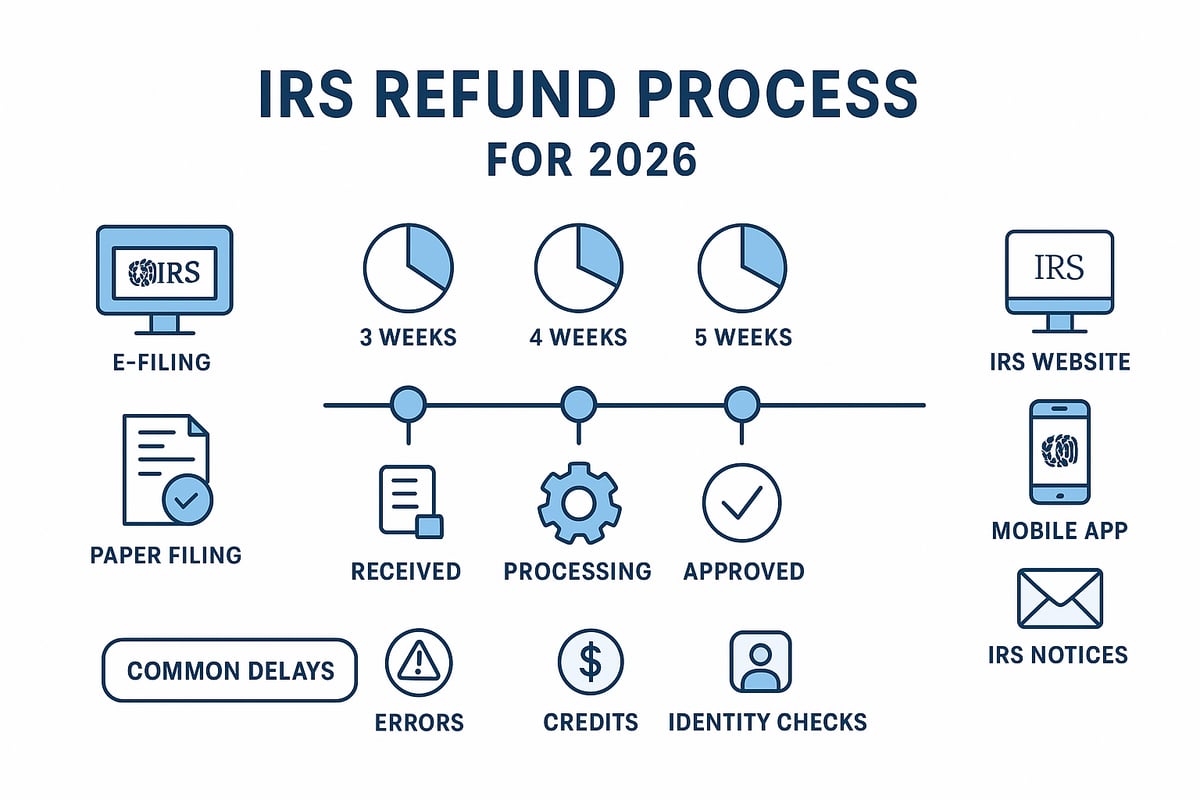
The IRS processes millions of returns each year, starting in late January for the 2026 tax season. Returns can be submitted electronically (e-file) or by mail. E-filing is the fastest method, with most refunds issued within 21 days, while mailed paper returns often take up to six weeks longer.
Processing follows these main stages:
- Received: IRS confirms your return is in the system.
- Processing: IRS reviews your details for accuracy.
- Approved: Refund is authorized for payment.
- Sent: Refund is issued via direct deposit or check.
Here’s a quick comparison:
| Filing Method | Average Refund Time (2025) |
|---|---|
| E-file | 21 days |
| Paper | 6-8 weeks |
If you are tracking “irs where are my taxes,” understanding these steps is crucial for managing your expectations.
IRS “Where’s My Refund?” Tool Explained
The “Where’s My Refund?” tool is the IRS’s official online resource for checking your refund status. You can access the tool on the IRS website or through the IRS2Go mobile app. To use it, you will need your Social Security Number (SSN), filing status, and the exact refund amount from your tax return.
The tool updates once daily, usually overnight, so checking more than once a day is unnecessary. The IRS uses advanced security protocols to protect your personal information during each lookup. For a detailed walkthrough, refer to the IRS “Where’s My Refund?” Tool Guide for step-by-step instructions.
If you are wondering, “irs where are my taxes,” this tool is your primary resource for real-time updates.
Common IRS Processing Delays
Refund delays can happen for various reasons. The most common are errors on your tax return, incomplete forms, or the need to verify your identity. Claims for credits like the Earned Income Tax Credit (EITC) or Additional Child Tax Credit (ACTC) can also delay processing, as the IRS is required by law to hold these refunds until mid-February.
In 2025, the IRS experienced significant backlogs, and similar challenges are projected for 2026. If you claimed EITC or ACTC, expect additional verification steps that may add days or weeks to your wait.
If you find yourself repeatedly asking, “irs where are my taxes,” reviewing your return for these common issues is a good first step.
IRS Refund Status Codes and What They Mean
As you track your refund, you may see several status messages in the IRS system. The most frequent are:
- Received: The IRS has your return.
- Processing: Your return is under review.
- Approved: Refund is ready to be sent.
- Sent: Refund has been issued.
You may also encounter error codes, such as Code 1121, indicating a specific issue requiring attention. If your status does not change for several weeks, review any IRS notices you have received and consider reaching out for help.
These codes are key for anyone searching, “irs where are my taxes,” as they provide insight into where your return stands in the process.
How the IRS Communicates Updates
The IRS communicates with taxpayers through official letters and notices, such as CP05 (refund held for review), CP12 (math errors), and CP53 (direct deposit issues). You may also receive notifications through your IRS.gov account.
If there is a problem, the IRS will contact you by mail, never by email or phone for sensitive information. Always review any correspondence carefully, as it will outline the steps you need to take to resolve issues or provide additional documentation.
Staying alert to IRS communications is vital for resolving “irs where are my taxes” concerns quickly and efficiently.
Step-by-Step: How to Use “Where’s My Refund?” in 2026
Navigating the irs where are my taxes process in 2026 does not need to be overwhelming. By following a clear step-by-step approach, you can efficiently track your refund status, interpret IRS responses, and resolve common obstacles. Let us walk through each stage so you know exactly what to expect.
Step 1: Gather Required Information
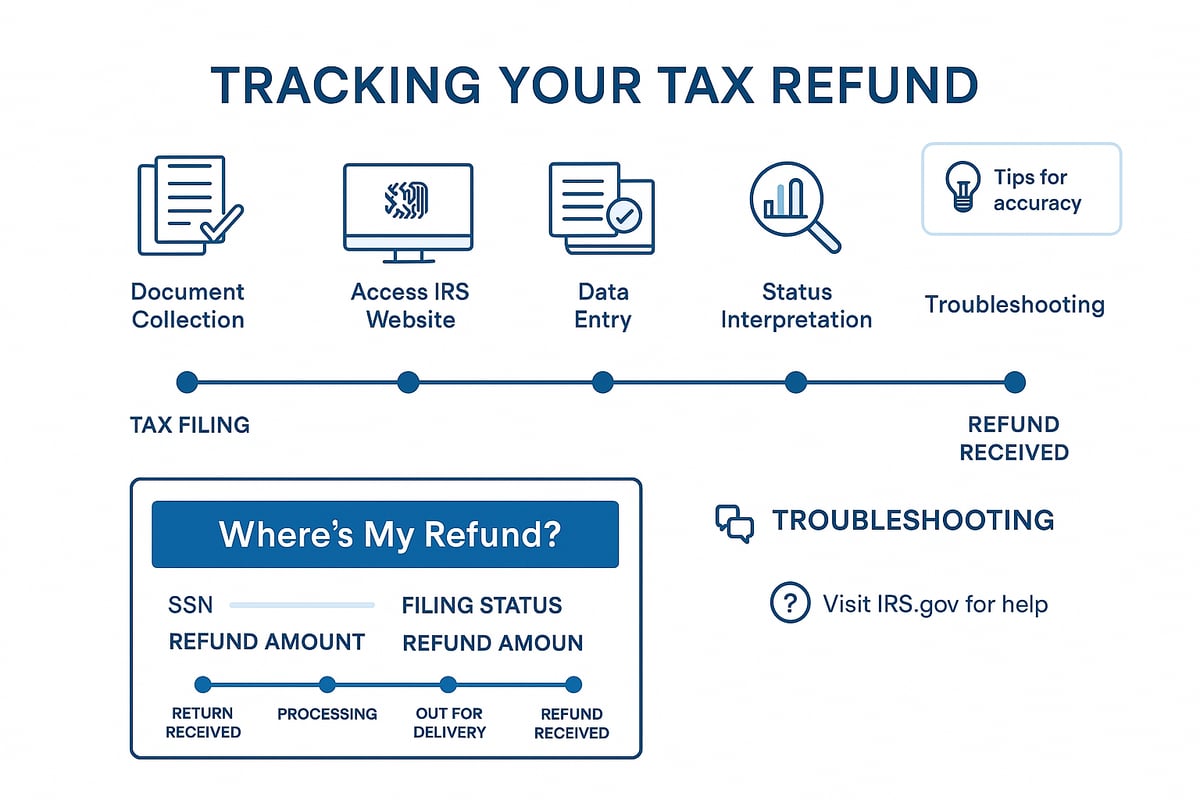
Before accessing the irs where are my taxes tool, collect three essential pieces of information. First, locate your Social Security Number. Next, confirm your exact filing status as used on your tax return, such as single, married filing jointly, or head of household. Lastly, have the precise refund amount you expect to receive, which you can find on line 35a of Form 1040.
Accuracy is critical. Any mismatch between your entries and IRS records may result in errors or failed lookups. Double-check these details to ensure a smooth experience when tracking your refund.
Step 2: Access the IRS Website or App
To use the irs where are my taxes tool, visit the official IRS website at www.irs.gov or download the IRS2Go mobile app from your device’s app store. Always verify you are on the correct site to avoid phishing scams. Look for “https” and the lock icon in your browser’s address bar.
When opening the tool, you will be prompted to enter your collected information. The IRS2Go app offers a similar process, allowing you to check your status securely on the go. Following these security best practices protects your sensitive data.
Step 3: Enter Your Details and Submit
On the irs where are my taxes portal, enter your Social Security Number, filing status, and refund amount exactly as they appear on your return. Pay close attention to spelling and numbers. Even a minor typo in your Social Security Number or refund amount can prevent the system from locating your record.
After submitting your information, the system will process your request. You will see a status screen providing the latest update on your refund. If you make a mistake, simply re-enter your details and try again.
Step 4: Interpreting Your Refund Status
The irs where are my taxes tool displays one of several status messages, including “Received,” “Processing,” “Approved,” or “Sent.” Each status reflects a stage in the IRS review and payment process.
If your status is unclear or you see an error code, consult the IRS FAQs or help section for guidance. The IRS updates the tool once daily, so checking more often will not yield new information. Use available support channels if you need clarification.
Step 5: Next Steps if There’s a Delay or Problem
If your irs where are my taxes status does not change after 21 days for e-filed returns, or six weeks for paper returns, it is time to take action. Look for any IRS notices or requests for additional information sent by mail or to your IRS online account.
Prepare your tax return details before calling the IRS to expedite your inquiry. Be patient, as high call volumes can lead to wait times. The IRS will guide you through the next steps to resolve your issue.
Troubleshooting Common Issues
Sometimes, the irs where are my taxes tool may not find your data or may experience technical problems. In these cases, verify your information for accuracy and try again later. If the tool is temporarily unavailable, wait a few hours before retrying.
For further assistance or alternative refund tracking methods, consult IRS tax resources and guides, which provide detailed educational materials and troubleshooting support. Staying informed empowers you to address any refund concerns quickly.
Top Reasons for Tax Refund Delays in 2026
Waiting for your tax refund can be frustrating, especially when delays occur and answers are hard to find. If you have ever found yourself asking, "irs where are my taxes," you are not alone. Understanding the top reasons for refund delays in 2026 can help you take action and avoid common pitfalls.
Errors and Mistakes on Your Tax Return
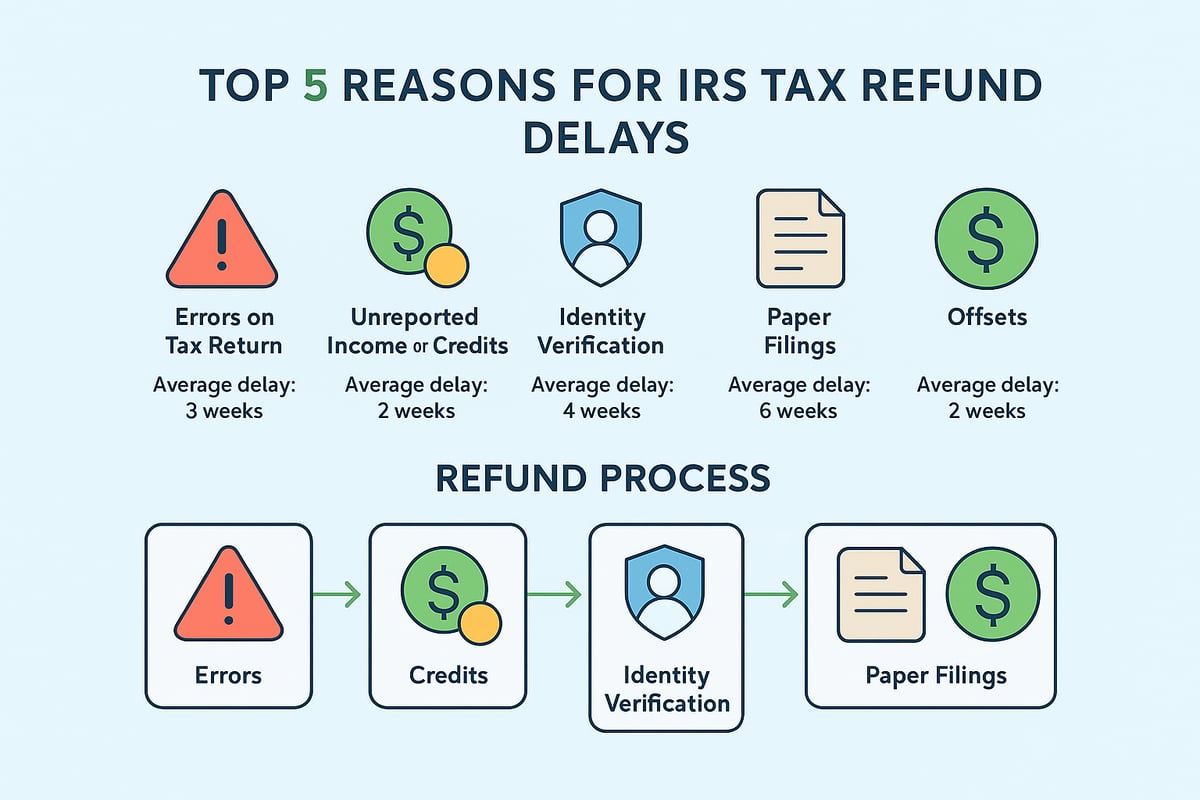
One of the main reasons people ask "irs where are my taxes" is due to simple errors on their returns. Common mistakes include math miscalculations, entering the wrong Social Security Number, or providing incorrect bank information. Even a small typo can cause the IRS to pause processing while they verify your details.
If the IRS finds a mistake, they will attempt to correct it, but this can add days or even weeks to your refund timeline. For example, a transposed digit in your bank account number may require manual review. With ongoing IRS Staffing Shortages Impacting Refunds, these delays can be even longer in 2026. Always double-check your return before filing to prevent unnecessary holdups.
Claims for Certain Credits or Deductions
If you are claiming the Earned Income Tax Credit (EITC) or Additional Child Tax Credit (ACTC), you may notice a delay after asking, "irs where are my taxes." Due to the PATH Act, the IRS must hold refunds involving these credits until at least mid-February to prevent fraud.
The average delay for EITC or ACTC claims in 2025 was about two weeks longer than standard returns. If you have claimed these credits, expect a similar wait in 2026. The IRS uses this holding period to verify eligibility and accuracy, so be prepared for additional processing time.
Identity Theft or Fraud Concerns
Tax-related identity theft remains a significant concern for taxpayers and the IRS. If your return is flagged for possible identity fraud, you might be left wondering, "irs where are my taxes," as the IRS will pause processing until your identity is confirmed.
You may receive a letter requesting verification, such as the 5071C notice. In recent years, the IRS has flagged hundreds of thousands of suspicious returns each season. If you are a victim, follow the IRS instructions promptly to resolve the issue and protect your refund.
Amended Returns or Paper Filings
Amended returns and paper filings are much more likely to result in delays, leading taxpayers to question, "irs where are my taxes." Paper returns often take four to six weeks longer to process compared to e-filed returns.
If you have submitted Form 1040-X to amend your return, expect the process to take 12 to 16 weeks. The IRS handles these forms manually, and any errors or missing information can add further delays. Electronic filing remains the fastest way to receive your refund.
Outstanding Debts or Offsets
Sometimes, your refund is delayed or reduced because you owe money to federal or state agencies. If you are asking, "irs where are my taxes," it could be due to the Treasury Offset Program. This program allows the IRS to use your refund to pay overdue student loans, child support, or other debts.
The IRS will notify you if an offset occurs, explaining how your refund was applied. If you believe an offset is incorrect, contact the agency listed in the notice. Understanding this process can help you avoid surprises and manage your refund expectations.
What to Do If Your Refund Is Delayed or Missing
Millions of taxpayers experience anxiety when their refund does not arrive as expected. If you find yourself wondering, "irs where are my taxes," there are structured steps you can take to resolve the issue and get answers quickly.
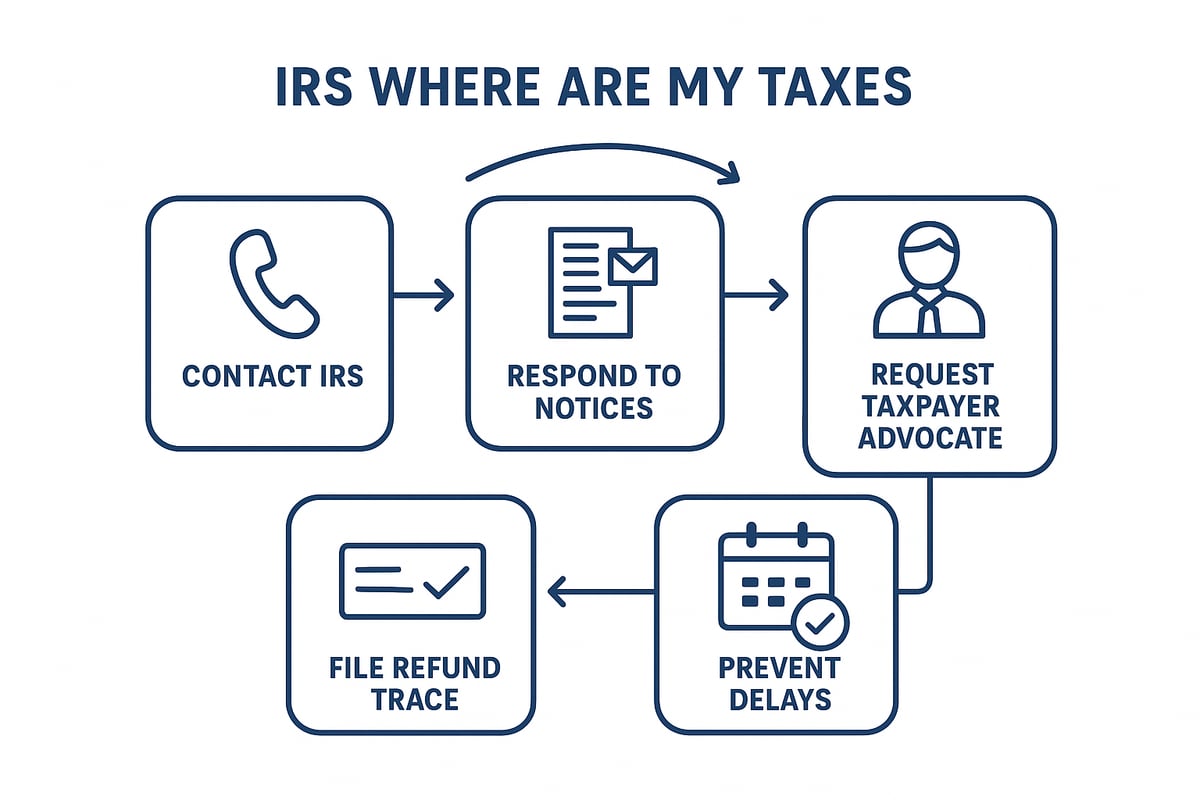
Contacting the IRS: When and How
If you are still asking "irs where are my taxes" after 21 days for e-filed returns or six weeks for paper filings, it is time to contact the IRS. Begin by gathering your Social Security Number, filing status, and exact refund amount to streamline the process.
For direct assistance, call the IRS at 800 829 1040 during early morning hours for shorter wait times. Have your tax return handy, as agents will need to verify your identity and details. Keep in mind, the IRS will not email or text you first, so only respond to official notices and calls.
Responding to IRS Notices or Letters
Receiving a notice from the IRS can be alarming, but it is often the fastest way to resolve the "irs where are my taxes" question. Notices like CP05, CP12, or identity verification letters will outline the specific issue and guide you on what documents or actions are required.
Follow instructions carefully and respond by the deadline. For example, a CP05 notice may ask for proof of income or identity. Providing the requested information promptly can help the IRS process your refund faster and prevent further delays.
Requesting a Taxpayer Advocate
If you have exhausted normal channels and still are left wondering "irs where are my taxes," consider reaching out to the Taxpayer Advocate Service (TAS). You may qualify if your refund delay is causing financial hardship or you cannot resolve the issue through standard procedures.
To request help, fill out Form 911 or contact your local TAS office. The Taxpayer Advocate can act on your behalf, escalate your case, and provide personalized assistance. For more details on professional help with the IRS, visit Claw Tax Attorneys IRS help to understand your options.
Filing a Refund Trace for Lost Checks
If your refund was issued as a check and has not arrived, you may need to initiate a refund trace. Start this process if it has been four weeks since the mailing date and you are still asking "irs where are my taxes." Use IRS Form 3911 to request a trace.
Once submitted, the IRS will investigate whether your check was cashed or lost. If necessary, they will reissue your refund. Keep a copy of your form and monitor your IRS account for updates during the investigation period.
Preventing Future Refund Delays
Avoid repeated "irs where are my taxes" frustrations by taking proactive steps each year. File your return early and use e-filing for faster processing. Double-check all information, including Social Security Numbers and bank details, before submitting.
Opt for direct deposit to receive your refund more quickly and securely. Keep copies of your tax documents and respond promptly to any requests from the IRS. These habits can greatly reduce the chances of future refund delays.
How to Avoid Common Tax Filing Mistakes in 2026
Filing your taxes accurately is essential for a smooth refund experience. Many taxpayers ask, "irs where are my taxes," only to discover preventable mistakes caused delays. By following these steps, you can minimize errors and increase your chances of a quick refund.
Preparing Your Documents Accurately
Start by gathering all necessary documents before beginning your return. This includes W-2s, 1099s, receipts for deductions, and your prior year’s tax return. Ensuring your documents match what the IRS has on file is vital. If you miss or misreport income, the IRS may flag your return, leading to delays and the common question: "irs where are my taxes?"
Create a checklist:
- W-2 forms from employers
- 1099 forms for other income
- Receipts for deductions or credits
- Last year’s tax return
A mismatched income report can trigger a review, slowing down your refund process.
Double-Checking Your Return Before Filing
Before you file, review every detail for accuracy. Common mistakes include math errors, incorrect Social Security numbers, and wrong bank account information. Use tax software with built-in error checks to catch issues early. According to IRS audit information and updates, errors can also increase your chances of an audit or further review.
Compare error rates:
| Preparation Method | Error Rate (%) |
|---|---|
| Self-prepared (paper) | 21 |
| Self-prepared (e-file) | 6 |
| Professionally prepared | 1 |
Careful review helps you avoid delays and repeated searches for "irs where are my taxes."
Choosing the Right Filing Method
Your choice of filing method can affect how quickly you receive your refund. E-filing is faster, more secure, and less prone to mistakes compared to paper filing. In 2025, over 90% of taxpayers chose e-filing for its speed and reliability. The IRS Free File program and authorized e-file providers make it simple to submit your return electronically.
E-filing means your "irs where are my taxes" inquiry is less likely to involve processing delays. Paper returns can take weeks longer and are more vulnerable to manual errors.
Using Direct Deposit for Faster Refunds
Opting for direct deposit is the fastest way to receive your refund. You’ll need your bank routing and account numbers, which you can find on your checks or online banking portal. Direct deposit is more secure than a mailed check and reduces the risk of lost payments.
In most cases, those who use direct deposit see their refund within 21 days. If you’re asking "irs where are my taxes," choosing this method can help you get a quicker answer.
Seeking Professional Tax Help When Needed
If your situation is complex, consulting a tax professional can prevent costly mistakes. Certified Public Accountants (CPAs), Enrolled Agents, and tax attorneys have the expertise to handle unique or complicated returns. They can also assist if you face audits or receive IRS notices.
Relying on a professional reduces the likelihood of errors that might lead you to wonder, "irs where are my taxes." When in doubt, expert help can make all the difference in achieving a smooth tax season.
IRS Where’s My Tax Refund: Frequently Asked Questions for 2026
Millions of taxpayers use the IRS Where’s My Refund tool each year, but questions often arise. Here, we answer the most common concerns about irs where are my taxes, helping you navigate the refund process with confidence.
How often does the IRS update refund status?
The IRS updates refund status on the Where’s My Refund tool once each day, usually overnight. Checking your irs where are my taxes status multiple times a day will not provide new information. For the latest updates, check in the morning. Most status changes occur within 24 hours of IRS processing milestones.
Can I track my refund if I filed an amended return?
Amended returns are not tracked on the standard tool. Use the IRS Where’s My Amended Return? tool for updates. Processing times for amended returns are longer, often taking up to 20 weeks. For more details on refund processing, see IRS Tax Refund Processing Times 2025.
What if my refund is less than expected?
If your refund is less than you anticipated, check for possible offsets or IRS adjustments. The IRS may reduce your refund to pay debts such as child support or federal loans. You can review the explanation in your IRS notice or online account. This is a common question about irs where are my taxes, especially after an offset.
Is it safe to use the IRS online tools?
Yes, the IRS Where’s My Refund and IRS2Go app use advanced encryption and security protocols. Always access these tools directly from IRS.gov to avoid phishing. Never share your information on unofficial sites. If you are unsure, refer to IRS security tips before checking irs where are my taxes online.
What should I do if I suspect fraud or identity theft?
If you believe your tax information has been compromised, contact the IRS immediately. Respond promptly to any IRS identity verification letters. You may be eligible for an Identity Protection PIN. The Taxpayer Advocate Service Annual Report 2025 provides insights into how the IRS addresses identity theft cases.
How long should I keep my tax records?
The IRS recommends keeping tax records for at least three years. In some situations, such as claims for loss or unreported income, you may need to keep them longer. Secure storage protects your data and helps if you need to revisit irs where are my taxes questions in the future.
If you’ve made it this far, you know how challenging it can be to navigate IRS refund delays, error codes, and confusing notices. Staying informed is your best defense, but sometimes even the most thorough guide can’t solve every tax issue. That’s where having experienced professionals in your corner makes a real difference. If you’re facing tax debt, complicated refund delays, or just want peace of mind during tax season, we’re here to help you find the right solution and protect your financial future.
Contact us for a free consultation.



