
 0
0
 0
0
Few experiences spark more anxiety than being audited by the IRS. The uncertainty, the questions, and the fear of the unknown can feel overwhelming. But understanding exactly what being audited means—and knowing what steps to take—can turn confusion into confidence.
This guide is here to demystify the audit process for 2026. You will learn what triggers an audit, the different types of IRS audits, the step-by-step process, essential documentation, your taxpayer rights, and when to seek professional help. By the end, you will have the clarity and tools to face an audit with control and peace of mind.
Understanding IRS Audits: What They Are and Why They Happen
Receiving notice of being audited can be unsettling, but understanding the process is the first step to regaining control. An IRS audit is a review of your tax return and related records to ensure everything is accurate and complies with tax laws. The primary goal is to verify that income, deductions, and credits are reported correctly. For most taxpayers, being audited is rare, but knowing why audits happen can help you prevent common mistakes.
IRS audits are triggered in several ways. Some are selected randomly, while others result from document-matching programs that compare your tax return to forms like W-2s and 1099s. If the numbers do not match, this can prompt further review. There are also “red flags” that increase the odds of being audited, such as unusually high deductions, frequent business losses, or large charitable donations. According to IRS Audit Red Flags, these factors are among the most common reasons returns are flagged for examination.
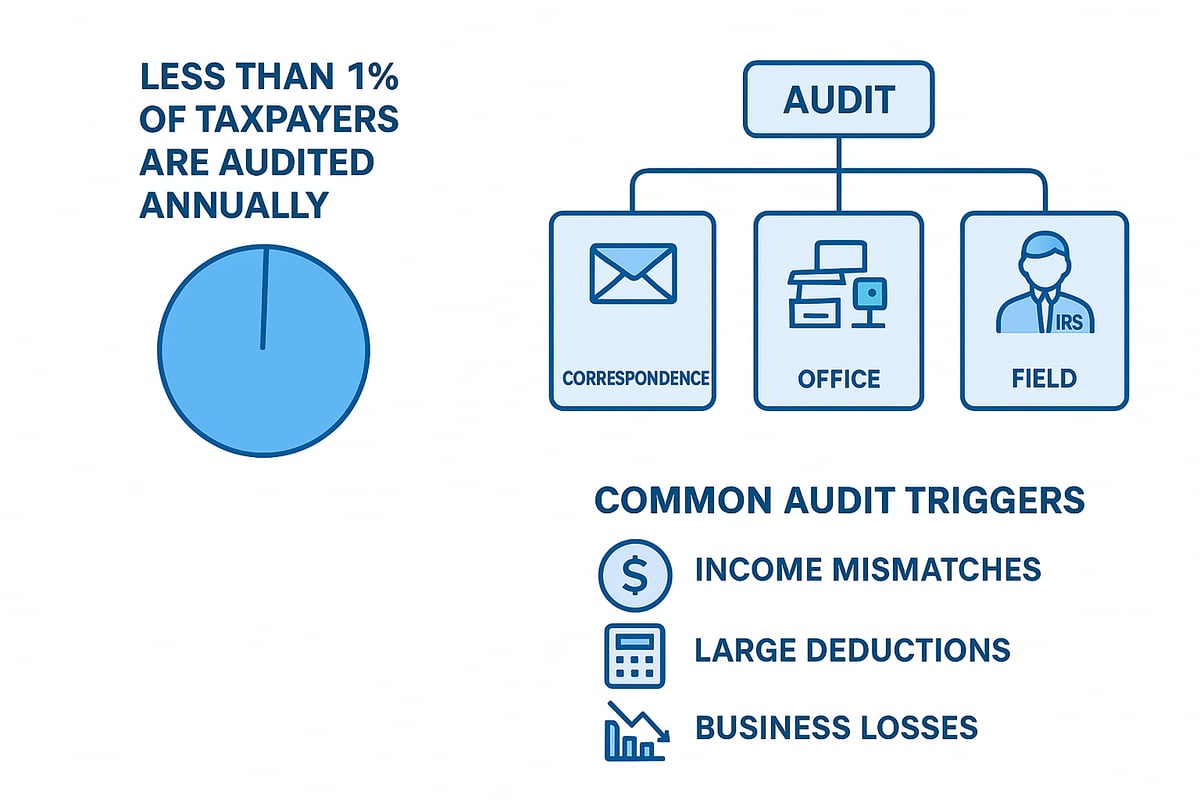
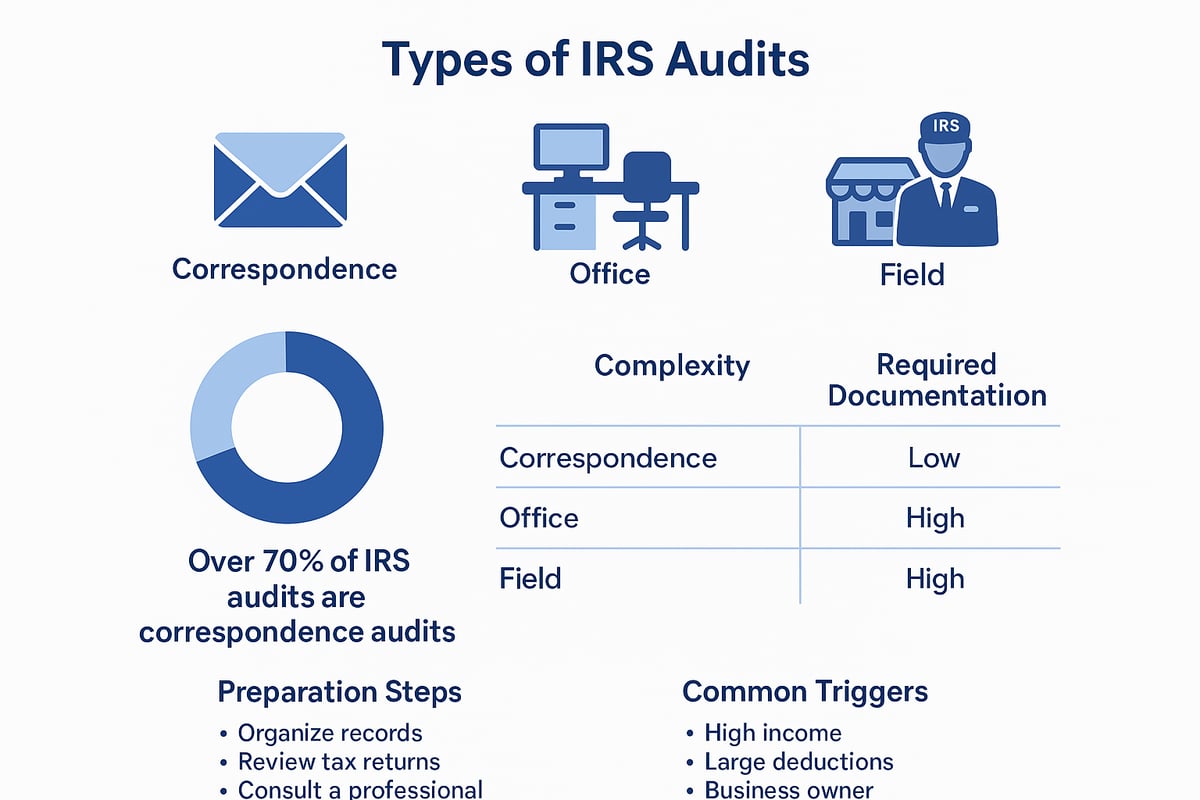
Statistically, the chance of being audited is low. Less than 1% of taxpayers are audited each year, but certain profiles face higher risk. High-income earners, self-employed individuals, and those with complex returns are more likely to be selected. Audits come in three types: correspondence audits (handled by mail), office audits (in-person at an IRS office), and field audits (an IRS agent visits your home or business). Each type has a different level of complexity and documentation required.
Common examples of audit triggers include reporting income that does not match IRS records, claiming large unreimbursed business expenses, or reporting significant losses from a small business. It is important to understand that being audited does not automatically mean you have done something wrong. In fact, some audits result in refunds if the IRS finds you overpaid your taxes. Many taxpayers believe audits are always negative, but sometimes they simply require clarifications or additional documentation.
Timely response to an IRS notice is crucial if you find yourself being audited. Ignoring or delaying your reply can lead to penalties and increased scrutiny. As IRS technology advances, especially by 2026, expect more audits to be selected based on sophisticated data analytics and artificial intelligence. This means accuracy and consistency in your tax reporting will be more important than ever.
By understanding the reasons behind being audited, the types of audits, and the evolving landscape, you can better prepare and reduce anxiety about the process.
Who Gets Audited? Audit Triggers and Risk Factors
Receiving an IRS notice can be unsettling, but understanding who is most at risk of being audited can help reduce anxiety and prepare you for next steps. The IRS uses a mix of random selection and targeted reviews to identify returns for closer examination. While being audited may seem random, certain patterns and behaviors increase the likelihood of a review, especially as IRS technology becomes more advanced.
Key Audit Triggers and Risk Factors
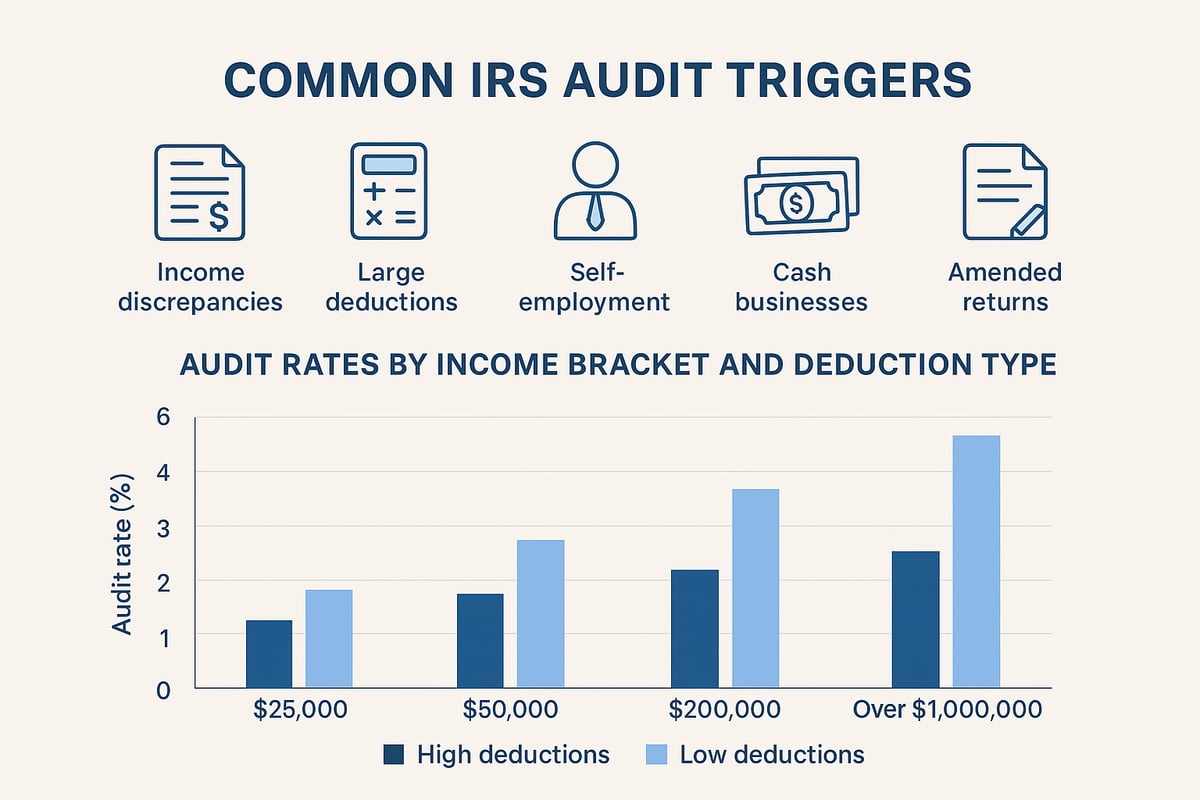
Several factors can raise your chances of being audited. The IRS often flags returns with:
- Income discrepancies between reported income and third-party forms (W-2s, 1099s)
- Large or unusual deductions compared to your income level
- Self-employment or cash-based businesses with irregular income patterns
- Amended returns or frequent corrections
- Claims for certain tax credits, such as the Earned Income Tax Credit
For a deeper dive into these triggers and how they may affect your risk of being audited, visit IRS audit triggers explained.
Audit Risk by Taxpayer Profile
Data shows that high-income earners and self-employed individuals are more likely to face IRS scrutiny. For instance, those reporting over $1 million in annual income are audited at a much higher rate than those earning less than $100,000. Self-employed taxpayers, especially those in cash-heavy industries, also draw attention due to the complexity and variability of their income.
The IRS uses document-matching programs to compare information from employers, banks, and third-party platforms. Mismatches between forms like W-2s, 1099s, or even payment apps can trigger an audit. For example, if a freelancer receives inconsistent payments or omits income from platforms such as Venmo, the risk of being audited increases sharply.
Examples and Changing Audit Landscape
Consider a taxpayer who claims unusually high medical expenses or a freelancer whose reported income fluctuates dramatically year over year. These scenarios stand out to IRS algorithms. New tax laws or credits, including the expanded Child Tax Credit, may also prompt additional scrutiny as the IRS looks for compliance with updated regulations.
The IRS’s use of advanced data analytics means that being audited is not just about random chance. Instead, returns are evaluated for patterns and “red flags” that may indicate errors or underreporting. This evolving landscape means taxpayers must stay vigilant about changes that could affect their own audit risk.
Myths and IRS Audit Statistics
There are many misconceptions about being audited. Not all audits are the result of suspected wrongdoing. In fact, many are selected randomly or due to simple mismatches in reported figures. According to recent data, less than 1% of all individual tax returns are audited annually, but this rate increases for high earners and those claiming certain deductions.
| Income Bracket | Audit Rate (Approx.) |
|---|---|
| Under $100,000 | 0.2% |
| $100,000 – $1M | 0.6% |
| Over $1M | 2.4% |
Knowing these facts helps demystify the process and clarifies how being audited is often a matter of numbers and data, not just suspicion.
Proactive Steps to Minimize Audit Risk
While there is no guaranteed way to avoid being audited, you can take measures to lower your risk. Always report all income, even from side gigs or digital platforms. Keep thorough, organized records and retain supporting documents for at least three years. Double-check for errors before filing and be honest about deductions and credits.
By understanding what triggers audits and how IRS systems operate, you put yourself in a stronger position to respond if you ever find yourself being audited. Preparation, accuracy, and transparency are your best defenses against unwanted surprises.
Types of IRS Audits: Correspondence, Office, and Field Examinations
When you receive notice of being audited, it is essential to know which type of IRS audit you are facing. The IRS uses three main types of audits, each with its own process and level of complexity. Understanding these can help you prepare effectively and reduce anxiety.
Correspondence Audits
Correspondence audits are the most common type when it comes to being audited by the IRS. These are conducted entirely by mail, allowing taxpayers to respond from home. In fact, over 70% of all audits fall into this category, making it the situation most people will encounter if they are being audited.
Typical issues addressed in correspondence audits include:
- Missing or incomplete documentation
- Clarification of specific deductions, such as charitable contributions
- Verification of reported income
For example, you might receive a letter asking for receipts to support a large charitable deduction. The IRS will specify the tax year, the items being audited, and the deadline for response. If you want more details on audit frequency and trends, the IRS Audit Statistics 2025 page provides recent data on how often taxpayers are being audited.
Responding promptly is crucial. You will need to gather the requested paperwork and send copies to the IRS by the stated deadline. This process is more straightforward than other audit types but still requires careful attention.
Office Audits
Office audits are more involved than correspondence audits, and if you are being audited in this manner, you will be asked to visit an IRS office in person. These audits usually focus on specific issues or deductions that require a face-to-face explanation.
During an office audit, you will meet with an IRS examiner who will review your documentation and ask questions about your return. Common reasons for being audited in an office setting include:
- Unusual business expenses
- Large claimed deductions
- Questions around self-employment income
Preparation is key. Bring all relevant documents in an organized fashion, such as receipts, bank statements, and logs. Knowing your tax return details will help you answer questions confidently and accurately. Being audited in this way may seem intimidating, but clear records and honest answers can make the process smoother.
Field Audits
Field audits are the most comprehensive form of being audited by the IRS. In a field audit, an IRS agent visits your home or business to examine records in person. These audits are typically reserved for complex tax situations, high-income individuals, or businesses.
Examples of field audit scenarios include:
- Inspecting a small business’s inventory and transaction records
- Reviewing multiple years of returns for high-value taxpayers
- Investigating cash businesses with irregularities
Field audits often require professional representation, such as a CPA or tax attorney, because the stakes are higher. If you are being audited in this way, it is wise to have an expert present to ensure your rights are protected and communications are clear. Keeping calm, organized, and cooperative will help the process go as smoothly as possible.
The IRS Audit Process: Step-by-Step Timeline and What to Expect
Facing the reality of being audited can feel overwhelming, but understanding the IRS audit process step by step can bring clarity and confidence. Here is what to expect at each stage, from the initial notice to possible appeals.
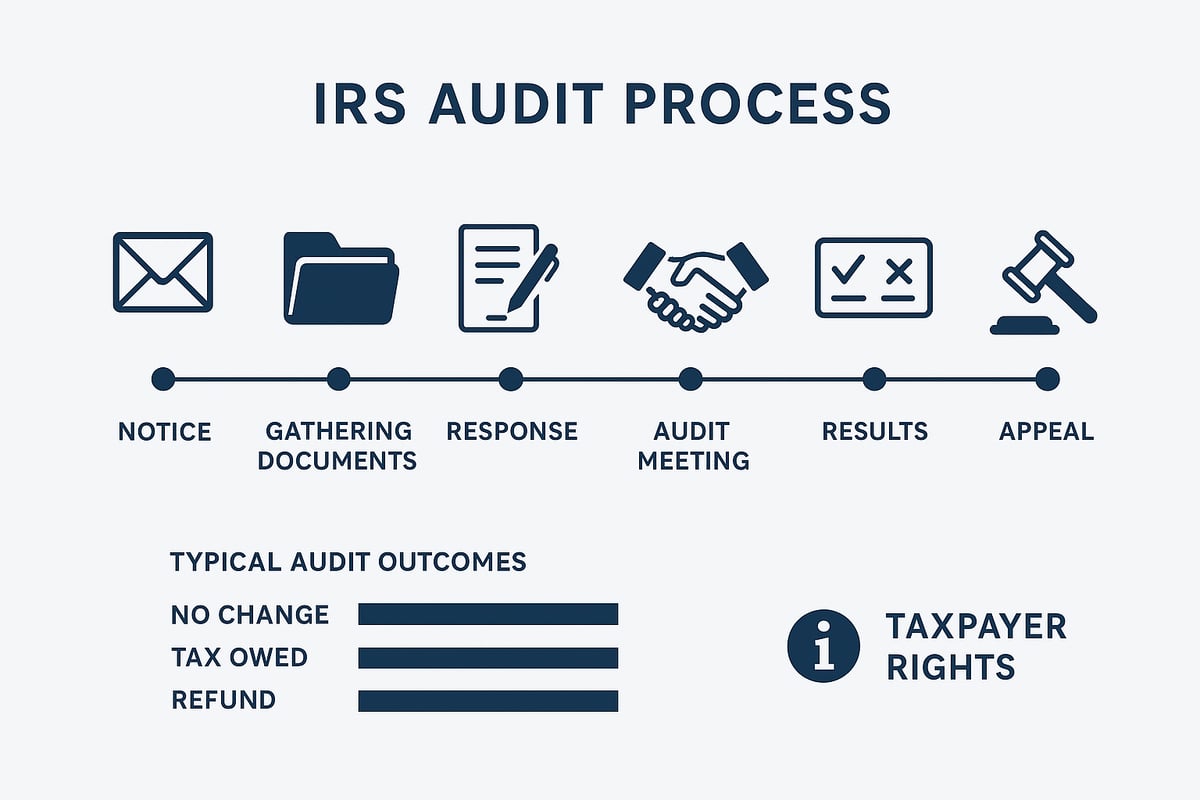
Step 1: Receiving and Understanding the Audit Notice
The first stage in being audited begins with an official IRS notice sent by mail. The IRS never initiates audits by phone or email, so always be cautious of scams. The notice will specify the tax year under review, the exact items or deductions questioned, and a clear deadline for your response.
When being audited, read the notice carefully and note all deadlines. Do not panic. Most audits are routine and may not indicate serious issues. Ignoring the notice can lead to penalties or further complications.
For a comprehensive overview, refer to the IRS Audit Process Guide, which outlines the due diligence steps and your responsibilities. Staying informed sets the foundation for a smooth experience.
Step 2: Gathering Documentation and Evidence
Once you know you are being audited, you must gather all relevant records. Required documents typically include your tax return for the year in question, W-2s, 1099s, bank statements, receipts, invoices, and mileage logs.
Organizing these records is crucial when being audited. Original documents are best, but if you have lost any, you may reconstruct them using bank records or digital backups. Create a checklist to ensure nothing is missed.
A well-prepared document set demonstrates transparency and can speed up the process. Assemble your paperwork in logical order, making it easy for the IRS agent to verify your information.
Step 3: Preparing Your Response and Statement
The next step in being audited involves drafting a clear and factual written response to the IRS. Address each item or question raised in the audit notice, referencing your supporting documentation.
Include concise explanations for any unusual items. For example, if you have a large business deduction, provide receipts, logs, and a brief written summary of the expense. Stick to the facts and avoid unnecessary details.
Your response should be organized, professional, and submitted within the specified deadline. Prompt and thorough answers can lead to a faster resolution when being audited.
Step 4: Attending the Audit (Mail, Office, or Field)
During this phase of being audited, you will either correspond by mail, meet at an IRS office, or welcome an agent to your home or business. The audit type is specified in your notice.
Be ready to answer questions about your return. Respond honestly and concisely. Bring all requested documents and maintain a professional demeanor throughout the process.
You have the right to representation at any audit meeting. If the audit is complex, consider having a tax professional or attorney present. This support can ensure your rights are protected while being audited.
Step 5: Audit Results and Next Steps
After the audit review, the IRS will present the results. The main outcomes when being audited are: no changes (your return is accepted as filed), additional tax owed, or a refund if an overpayment is found.
You will receive a report detailing findings and any required actions. If you owe taxes, payment plans may be available. If you disagree with the outcome, you can provide further documentation or request a conference.
Respond to the IRS findings promptly. Missing deadlines after being audited can result in penalties or loss of appeal rights.
| Possible Audit Outcomes | Description |
|---|---|
| No Change | Return accepted as filed |
| Additional Tax Owed | Must pay additional taxes/penalty |
| Refund | Overpayment credited/refunded |
Step 6: Appeals and Dispute Resolution
If you disagree with the audit results after being audited, you have the right to appeal. The IRS will send you Letter 525 (30-day letter) or Letter 531 (Notice of Deficiency), outlining your options.
Appeals can involve submitting new evidence, written explanations, or requesting a meeting with an appeals officer. Many taxpayers succeed in reducing their liability or reaching a settlement through the appeals process.
Remember, deadlines are strict. Acting quickly is vital if you wish to contest the results of being audited. Knowing your rights and the available appeal channels helps ensure a fair resolution.
Documentation, Record-Keeping, and Best Practices for Audit Defense
Facing the prospect of being audited can be intimidating, but thorough documentation and careful record-keeping are your strongest defenses. Knowing what to keep, how long to keep it, and how to organize it will help you respond confidently if the IRS requests a closer look at your return.
Essential Documents for Audit Defense
When being audited, the IRS expects you to provide clear evidence of your reported income, deductions, and credits. Common documents include:
- Receipts and invoices for business or personal expenses
- Bank and credit card statements
- Mileage logs for business vehicle use
- Canceled checks and proof of payment
- Tax forms (W-2s, 1099s)
Organize these by year and category. For example, keep a dedicated folder for each tax year with subfolders for income, expenses, and supporting documents. This approach ensures you can quickly retrieve what you need during an audit.
Record-Keeping Guidelines and Organization
The IRS generally recommends keeping tax records for three to seven years, depending on the situation. For most taxpayers, three years is sufficient, but keep records up to seven years if you claim a loss from worthless securities or bad debt.
A simple table can help you remember:
| Document Type | Retention Period |
|---|---|
| Tax Returns | 3–7 years |
| Income Statements | 3–7 years |
| Expense Receipts | 3–7 years |
| Property Records | Until sold + 3 |
Proper organization is essential when being audited. Label folders clearly, store digital copies securely, and periodically review your files to remove clutter or duplicate documents.
Digital Strategies and Common Mistakes
In 2026, digital record-keeping is more important than ever. Use cloud storage or encrypted drives to back up important documents, and scan paper receipts as soon as you receive them. Name digital files with clear dates and descriptions for easy retrieval.
Be aware of common mistakes that can complicate being audited:
- Mixing personal and business expenses
- Failing to back up digital files
- Relying solely on bank statements instead of itemized receipts
- Disorganized folders or missing labels
For more detailed audit documentation tips and resources, visit the IRS audit resources and guidance page for up-to-date checklists and advice.
Reconstructing Lost Records
If you are being audited and discover missing documents, act quickly. The IRS allows taxpayers to reconstruct records using reasonable methods, such as:
- Reviewing prior bank or credit card statements
- Contacting vendors for duplicate receipts
- Using appointment books, calendars, or mileage apps to estimate business travel
Create a written explanation for any reconstructed figures, and gather as much supporting information as possible. Honest, organized efforts to rebuild your records show good faith and can help reduce penalties or disallowed deductions.
By following these best practices, you will be well prepared if you ever find yourself being audited, ensuring a smoother and less stressful process.
Taxpayer Rights, Legal Representation, and Seeking Professional Help
Facing the reality of being audited can be daunting, but understanding your rights as a taxpayer is your first line of defense. The IRS provides clear protections, ensuring every individual has the opportunity for fair treatment and due process throughout the audit process.
Key Taxpayer Rights During an IRS Audit
| Right | What It Means |
|---|---|
| Representation | You may hire a tax professional to speak for you |
| Appeal | You can challenge IRS findings and request reconsideration |
| Confidentiality | Your information is protected by law |
| Fair Treatment | IRS must treat you with respect and impartiality |
When being audited, you have the right to bring in a qualified professional. Tax professionals include Certified Public Accountants (CPAs), enrolled agents, and tax attorneys. Their expertise can make a significant difference, especially in complex cases or when large sums are at stake.
Knowing when to seek help is crucial. If the audit involves a field examination, complicated business returns, or hints at potential criminal issues, professional representation is highly recommended. For example, a tax attorney can help limit the scope of questioning, prevent accidental self-incrimination, and ensure the IRS follows proper procedures.
Consider these roles:
- CPAs: Experts in tax law and return preparation.
- Enrolled Agents: Licensed by the IRS to represent taxpayers.
- Tax Attorneys: Provide legal defense and negotiate on your behalf.
The benefits of professional help during being audited are measurable. Studies show taxpayers with representation often achieve more favorable outcomes, including reduced penalties or dismissed claims. While hiring a professional involves costs, the investment can prevent costly errors or unnecessary payments.
If you are being audited, protect your interests by reviewing the IRS's audit help from tax attorneys and their official audit resources and guidance. These resources explain your rights, outline the audit process, and connect you with experts if needed.
Remember, being audited does not mean you are alone. You have the right to ask questions, appeal decisions, and secure professional help to ensure a fair outcome.
Special Situations: Joint Filers, Innocent Spouse Relief, and Penalties
Filing jointly can offer tax benefits, but it also brings shared responsibility. Many couples are surprised to learn that both spouses are generally liable for any tax due, even if only one earned most of the income. If you are being audited after a divorce or separation, you may still be held responsible for a former spouse’s errors. This joint liability can be unsettling, especially when you face unexpected tax bills or penalties.
Understanding relief options is essential if you’re being audited and believe you should not be held liable for your spouse’s mistakes. The IRS offers Innocent Spouse Relief, which protects individuals who were unaware of unreported income or improper deductions made by their partner. To qualify, you must prove you had no knowledge of the issue and that holding you responsible would be unfair.
There are three main types of relief:
- Innocent Spouse Relief: For those unaware of errors on a joint return.
- Separation of Liability: Allocates tax between former spouses.
- Equitable Relief: For unique situations not covered by the first two.
You can apply using IRS Form 8857. Quick action is important, as you typically must file within two years of the IRS starting collection activities. According to the IRS, about 20% of innocent spouse relief requests are approved each year. If you are being audited and think you qualify, gather documentation showing your lack of involvement or knowledge.
Penalties are a major concern when being audited. Common penalties include:
- Accuracy-Related Penalty: Up to 20% of the underpaid tax.
- Fraud Penalty: Up to 75% of the underpayment due to fraud.
- Failure-to-Pay Penalty: Usually 0.5% per month, plus interest.
Interest accrues on unpaid amounts until the debt is settled. The IRS may also assess additional penalties if it determines the errors were intentional. For a deeper understanding of how the IRS examines returns and assesses penalties, you may find the IRS Audit Technique Guides helpful.
Here is a summary of relief options and penalties:
| Relief Option | Description | Typical Use Case |
|---|---|---|
| Innocent Spouse | Relief for those unaware of errors | Unreported income by spouse |
| Separation of Liability | Tax allocated between former spouses | Divorced or separated couples |
| Equitable Relief | For unique, unfair situations | Other circumstances not covered above |
| Penalty Type | Rate/Amount | Reason |
|---|---|---|
| Accuracy-Related | Up to 20% of underpaid tax | Substantial errors |
| Fraud | Up to 75% of underpayment | Intentional wrongdoing |
| Failure-to-Pay | 0.5% per month, plus interest | Late payment |
If you are being audited and worry about joint liability or penalties, consult a tax professional. They can help you evaluate your eligibility for relief, gather evidence, and respond to the IRS effectively. Acting quickly improves your chances of a favorable outcome and reduces the risk of accumulating interest or penalties.
If you’re feeling overwhelmed by the thought of an IRS audit, remember you don’t have to navigate this alone. We’ve explored what triggers audits, how to prepare, and the importance of knowing your rights—yet every situation is unique, and the stakes can feel high. Whether you’re facing complex tax issues, worried about missing documents, or just want peace of mind, expert support can make all the difference. The experienced team at CLAW Tax Group is here to guide you, protect your interests, and help you resolve your tax concerns with confidence.
Contact us for a free consultation.



