

 0
0
 0
0
Facing tax debt can feel overwhelming, especially when the Internal Revenue Service begins sending notices or threatening collection actions. Many taxpayers believe they have limited options when dealing with tax obligations, but the reality is that multiple pathways exist to resolve IRS issues effectively. Understanding these resolution methods and knowing when to seek professional assistance can make the difference between years of financial stress and a manageable path forward. Whether you owe thousands or hundreds of thousands in back taxes, the IRS offers various programs designed to help taxpayers settle their debts while protecting their financial future.
Understanding Your Tax Resolution Options
When you need to resolve IRS debt, the first step involves understanding what solutions are available. The IRS provides several formal programs that allow taxpayers to address outstanding balances through structured arrangements.
Payment Plans and Installment Agreements
One of the most straightforward ways to resolve IRS obligations is through an Installment Agreement, which allows taxpayers to pay their debt over time in monthly installments. This option works well for individuals and businesses who cannot pay their full balance immediately but have consistent income.
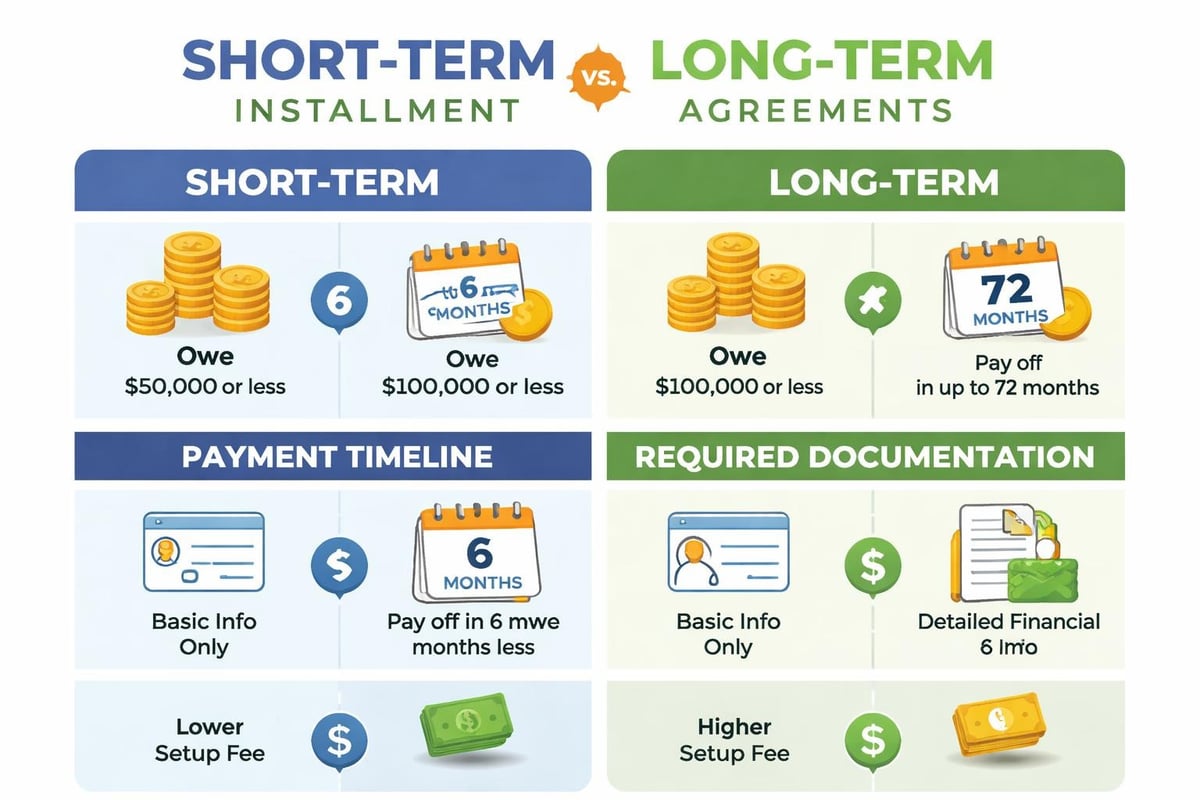
Short-term payment plans are available for taxpayers who owe less than $100,000 and can pay within 180 days. These arrangements typically do not require extensive financial documentation and can be set up quickly through the IRS website or by phone.
Long-term installment agreements extend beyond 180 days and are suitable for larger debts. These require more detailed financial information and may involve setup fees, though the IRS reduces or waives these fees for low-income taxpayers.
The key advantage of installment agreements is that they stop most collection activities while you remain compliant with your payment terms. However, interest and penalties continue to accrue on the unpaid balance, which means your total debt will grow if the payment period extends too long.
Offers in Compromise: Settling for Less
An Offer in Compromise (OIC) represents one of the most powerful tools to resolve IRS debt by settling for less than the full amount owed. This program allows qualifying taxpayers to negotiate a reduced settlement based on their ability to pay, income, expenses, and asset equity.
The IRS Offer in Compromise program requires comprehensive financial disclosure and strict eligibility criteria. The IRS evaluates what they call "reasonable collection potential," which is the total amount they believe they could collect from you before the collection statute expires.
| OIC Qualification Factor | What the IRS Evaluates | Impact on Approval |
|---|---|---|
| Doubt as to Collectability | Current income and expenses | High likelihood if proven |
| Doubt as to Liability | Whether you actually owe the debt | Requires strong evidence |
| Effective Tax Administration | Exceptional circumstances causing hardship | Rarely approved alone |
Successfully navigating an OIC requires meticulous documentation and strategic presentation of your financial situation. Many taxpayers who attempt this process without professional guidance face rejection, which can complicate future resolution efforts.
Addressing IRS Collection Actions
When taxpayers fail to respond to IRS notices or cannot immediately resolve IRS balances, the agency may initiate collection activities. Understanding how to respond to these actions is crucial for protecting your assets and rights.
Liens, Levies, and Wage Garnishments
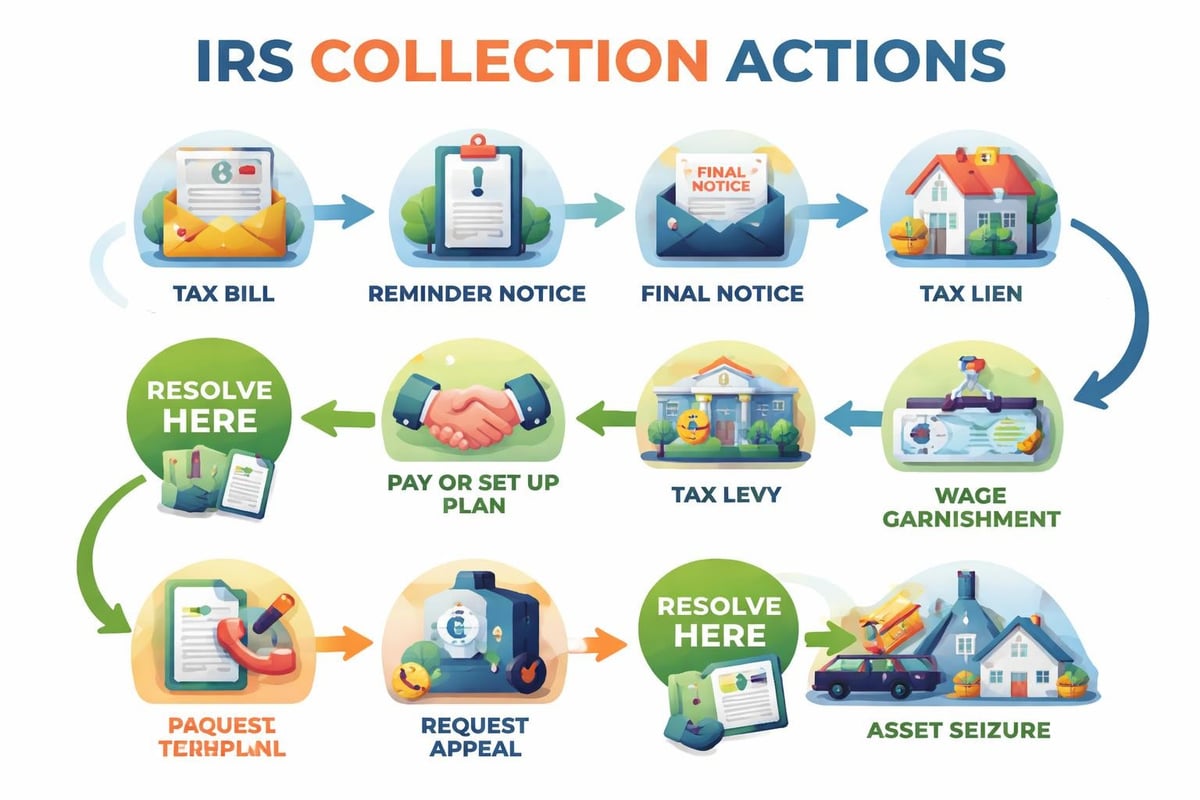
The IRS has significant collection powers, including the ability to file tax liens against your property, levy bank accounts, and garnish wages. A federal tax lien is a public notice that the government has a legal claim to your property due to unpaid taxes. This can severely damage your credit score and make it difficult to sell assets or obtain financing.
Levies go a step further by actually seizing assets. The IRS can take money directly from your bank account, wages, or even sell your property to satisfy tax debt. Wage garnishments can claim a substantial portion of your paycheck, leaving insufficient funds for basic living expenses.
Immediate actions to take when facing collection:
- Respond to all IRS notices promptly, even if you cannot pay immediately
- Request a Collection Due Process hearing if you receive a levy notice
- Document all communication with the IRS
- Consider Currently Not Collectible status if you face genuine financial hardship
- Explore help with tax debt options provided by the IRS
Currently Not Collectible Status
For taxpayers experiencing severe financial hardship, Currently Not Collectible (CNC) status can provide temporary relief. When the IRS designates your account as CNC, they temporarily suspend collection activities because collecting the debt would prevent you from meeting basic living expenses.
This status does not eliminate your debt, and interest and penalties continue to accumulate. However, it provides breathing room to stabilize your financial situation. The IRS periodically reviews CNC accounts and may resume collection if your circumstances improve.
Professional Representation and Legal Defense
Attempting to resolve IRS matters without professional assistance often leads to unfavorable outcomes. Tax professionals bring expertise in negotiation, knowledge of IRS procedures, and the ability to present your case effectively.
When to Hire Tax Resolution Experts
Certain situations demand professional intervention from the outset. If you face an audit, criminal investigation, or substantial debt exceeding your ability to pay, working with experienced tax attorneys becomes essential.
Scenarios requiring professional representation:
- You owe more than $50,000 in combined tax debt
- The IRS has initiated criminal investigation procedures
- You need to negotiate an Offer in Compromise
- You face business trust fund recovery penalties
- Multiple tax years remain unfiled with potential liabilities
- You need to contest an audit or appeal IRS decisions
Tax attorneys provide additional benefits beyond enrolled agents or CPAs because they offer attorney-client privilege, which protects your communications from disclosure. This protection proves invaluable during sensitive negotiations or when criminal exposure exists.
The Appeals Process and Mediation
When you disagree with an IRS determination, the appeals process provides an administrative remedy before resorting to tax court. The IRS Independent Office of Appeals operates independently from the collection and examination functions, offering a fresh perspective on your case.
Appeals officers have authority to consider the hazards of litigation, meaning they can settle cases based on the likelihood of the IRS prevailing in court. This creates negotiation opportunities that do not exist at earlier stages of the resolution process.
Mediation programs offer another avenue to resolve IRS disputes through facilitated negotiation. A neutral mediator helps both parties reach a mutually acceptable resolution without formal litigation. This process works particularly well for factual disputes or cases where both sides have valid arguments.
Strategic Approaches to Tax Resolution
Successfully resolving IRS debt requires more than simply choosing a program. Strategic planning and proper execution determine whether you achieve optimal results or settle for less favorable terms.
Penalty Abatement Strategies
Tax penalties often constitute a significant portion of total debt. The IRS assesses penalties for late filing, late payment, accuracy-related issues, and fraud. Removing these penalties can dramatically reduce your balance.
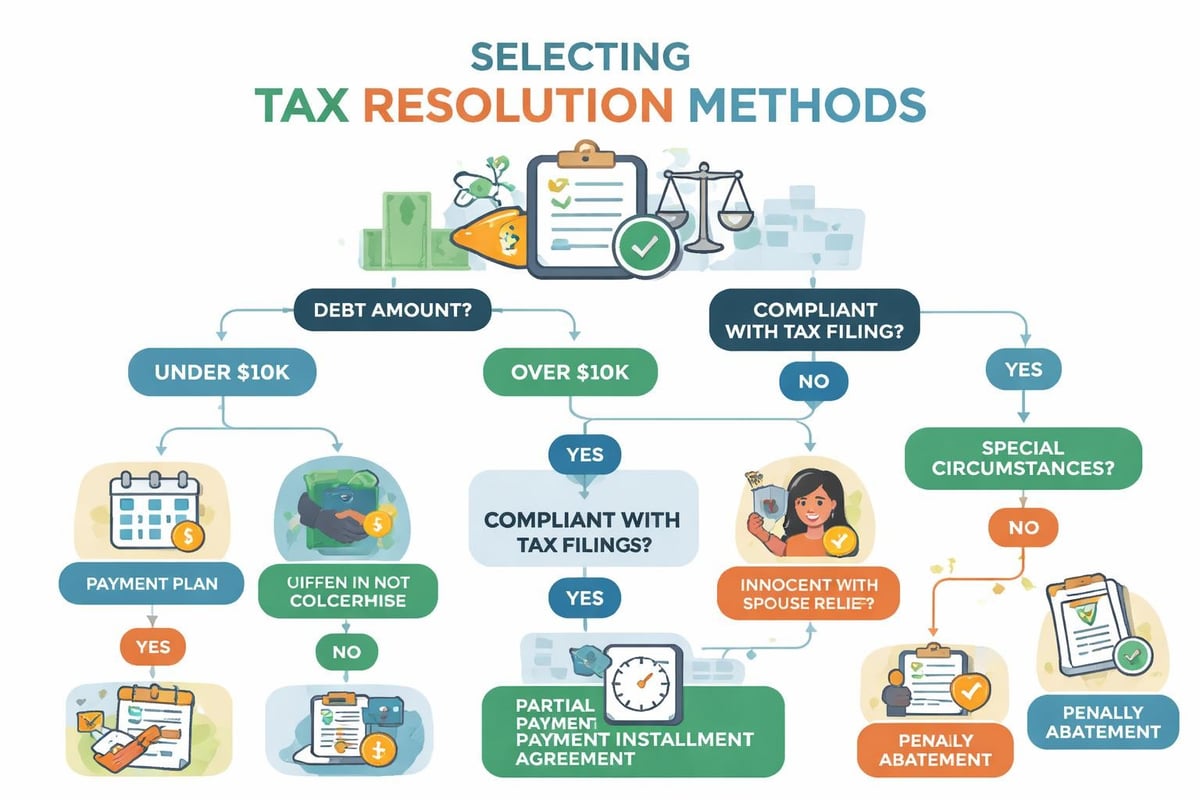
First-time penalty abatement is available to taxpayers with a clean compliance history for the previous three years. This administrative waiver removes failure-to-file and failure-to-pay penalties for a single tax year without requiring detailed justification.
For other situations, reasonable cause penalty abatement requires demonstrating that circumstances beyond your control prevented compliance. Acceptable reasons include serious illness, death in the immediate family, natural disasters, or unavoidable absence.
| Penalty Type | Standard Rate | Abatement Strategy | Success Factors |
|---|---|---|---|
| Failure to File | 5% per month, max 25% | First-time or reasonable cause | Clean history, documented hardship |
| Failure to Pay | 0.5% per month | First-time or installment agreement | Payment compliance |
| Accuracy-Related | 20% of underpayment | Reasonable cause or reliance | Professional advice documentation |
Audit Representation and Defense
IRS audits require careful handling to prevent adverse outcomes that escalate tax debt. Whether you face a correspondence audit, office audit, or field audit, professional representation ensures your rights are protected and only required documentation is provided.
Effective audit defense involves understanding what the IRS can and cannot request, knowing which records support your position, and presenting information in a manner that satisfies IRS requirements without volunteering unnecessary details.
During audits, taxpayers have the right to professional representation without being present. This prevents statements made in stress or confusion from undermining your position. Tax professionals understand IRS examination procedures and can identify when agents exceed their authority or make unreasonable demands.
Protecting Your Financial Future
Resolving current tax debt represents only part of comprehensive tax resolution. Preventing future issues and rebuilding financial stability ensures long-term success.
Compliance Moving Forward
Once you establish a resolution plan to resolve IRS obligations, maintaining current compliance becomes critical. This means filing all future returns on time and paying any new tax liabilities as they arise. Failure to stay current typically results in default of your resolution agreement and resumption of collection activities.
For self-employed individuals and business owners, this often requires implementing quarterly estimated tax payments. The IRS expects taxpayers to pay taxes throughout the year as income is earned, not just at year-end. Proper tax planning prevents accumulation of new debt while you address existing balances.
Steps for maintaining compliance:
- Set up a dedicated tax savings account
- Make quarterly estimated payments based on accurate income projections
- Work with a tax professional to optimize withholding or estimated payments
- File all returns by their deadlines, even if you cannot pay in full
- Address notices immediately rather than ignoring them
The Role of Taxpayer Advocate Service
When standard IRS channels fail to resolve issues or you face significant hardship due to IRS actions, the Taxpayer Advocate Service provides independent assistance. This organization operates independently within the IRS and helps taxpayers navigate complex problems that have not been resolved through normal channels.
The Taxpayer Advocate Service can issue Taxpayer Assistance Orders to stop collection actions causing immediate harm. They also help resolve systemic issues, expedite cases, and ensure taxpayers receive fair treatment under the law.
Managing Business Tax Debt
Business owners face unique challenges when they need to resolve IRS debt, particularly regarding trust fund taxes and employment tax issues. These situations require specialized knowledge and aggressive defense strategies.
Trust Fund Recovery Penalties
Employers who withhold taxes from employee paychecks but fail to remit them to the IRS face severe consequences. The IRS assesses Trust Fund Recovery Penalties (TFRP) against responsible individuals within the business, making them personally liable for unpaid employment taxes.
The IRS defines responsible persons broadly, potentially including owners, officers, directors, and even bookkeepers or accountants who had authority over financial decisions. Once assessed, these penalties become personal obligations that follow individuals even if the business closes or declares bankruptcy.
Defending against TFRP requires demonstrating either that you were not a responsible person or that you did not willfully fail to remit the taxes. This defense demands comprehensive documentation of corporate structure, decision-making authority, and financial constraints that prevented payment.
Business Resolution Strategies
Businesses struggling with tax debt have similar resolution options to individuals, but the analysis differs based on business structure and ongoing operations. For viable businesses seeking to continue operations, installment agreements that preserve cash flow while satisfying IRS requirements become essential.
Businesses facing closure or bankruptcy require different strategies. Understanding how tax debt is treated in various bankruptcy chapters, which taxes can be discharged, and how to protect assets during dissolution requires sophisticated legal guidance.
The Cost of Delay
Procrastination when facing tax debt invariably worsens the situation. The IRS collection statute typically runs for ten years from the assessment date, but penalties and interest accumulate throughout this period, sometimes doubling or tripling the original debt.
Additionally, collection actions become more aggressive over time. What begins as notices escalates to liens, levies, and potentially criminal investigation if the IRS suspects fraud or evasion. Early intervention to resolve IRS matters prevents these severe consequences and provides more negotiation leverage.
The financial and emotional toll of unresolved tax debt extends beyond the numbers. Taxpayers lose sleep, face strained relationships, and experience constant anxiety about potential IRS actions. Addressing the problem head-on through appropriate resolution channels restores peace of mind and financial stability.
Professional tax resolution services may involve upfront costs, but these expenses pale in comparison to the long-term costs of accumulated penalties, interest, and lost opportunities due to liens or garnishments. Strategic investment in qualified representation typically yields returns through reduced settlements, eliminated penalties, and structured payment terms that preserve assets.
Resolving IRS tax debt requires understanding available options, acting promptly, and often engaging professional representation to navigate complex procedures effectively. Whether you qualify for an installment agreement, Offer in Compromise, penalty abatement, or need to defend against collection actions, taking decisive action protects your financial future and ends the cycle of accumulating debt. CLAW Tax Group specializes in comprehensive tax resolution services, providing experienced legal representation to help individuals and businesses resolve tax debts through strategic solutions tailored to their unique circumstances. Our team handles everything from IRS audits and criminal defense to negotiating favorable settlement terms that reduce your financial burden while protecting your assets.



