
 0
0
 0
0
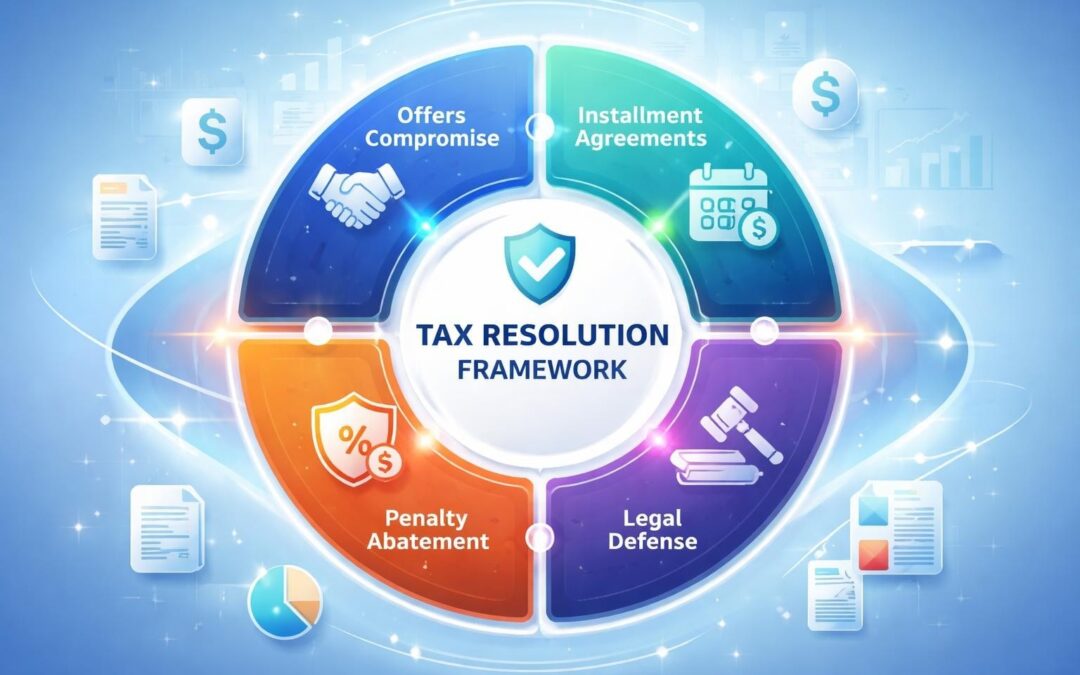
Tax challenges extend far beyond simple filing errors or missed deadlines. When individuals and businesses face serious tax debt, penalties, and aggressive collection actions, they need comprehensive solutions that address every aspect of their situation. Tax resolution plus represents an evolved approach to managing IRS problems, combining traditional resolution methods with advanced legal strategies, asset protection techniques, and long-term financial planning. This comprehensive framework ensures taxpayers don't just resolve immediate issues but build sustainable compliance systems that prevent future problems while protecting their financial interests.
Understanding the Tax Resolution Plus Framework
The tax resolution plus methodology differs fundamentally from basic tax help services. Standard resolution focuses on negotiating a single solution, such as an installment agreement or penalty abatement. Tax resolution plus, however, takes a holistic view of your entire financial situation, tax history, and future obligations.
This comprehensive approach begins with detailed analysis of all outstanding tax years, pending audits, and potential future liabilities. Professionals examine your complete financial picture, including assets, income streams, business structures, and family circumstances. This investigation reveals opportunities that single-solution approaches often miss.
Multiple Resolution Tools Working Together
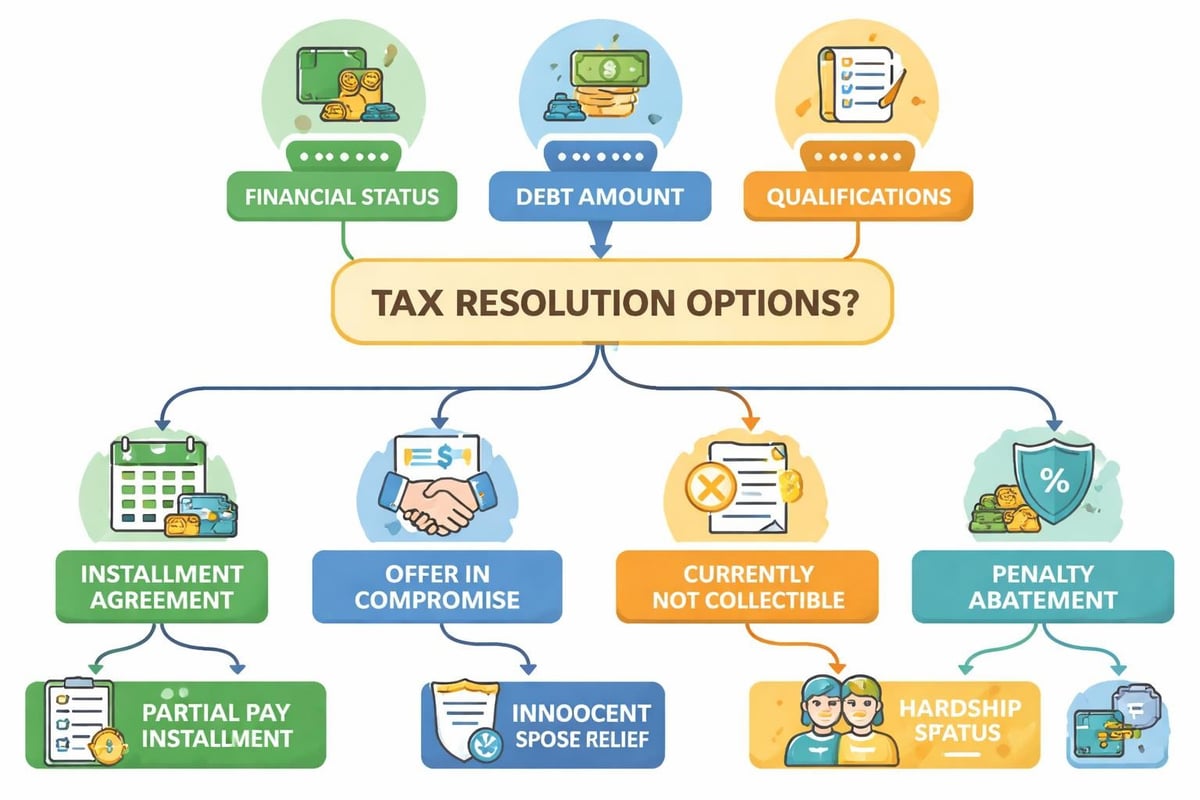
Tax resolution plus strategies typically combine several IRS programs simultaneously:
- Offers in Compromise for qualifying taxpayers who cannot pay their full debt
- Installment Agreements structured to match cash flow while protecting assets
- Penalty abatement requests that can reduce total debt by 25-40%
- Currently Not Collectible status as temporary relief during financial hardship
- Innocent Spouse Relief when applicable for separated or divorced taxpayers
The power of tax resolution plus lies in sequencing these tools correctly. For example, securing Currently Not Collectible status first provides breathing room to gather documentation for an Offer in Compromise. Meanwhile, penalty abatement requests reduce the total debt amount, making the final settlement more favorable.
Advanced Negotiation Techniques in Tax Resolution Plus
Effective tax resolution plus requires sophisticated negotiation skills that go beyond submitting forms. The IRS dispute resolution programs offer multiple pathways for reaching favorable settlements, but navigating these options requires strategic planning.
Leveraging Alternative Dispute Resolution
When traditional negotiation stalls, tax resolution plus incorporates alternative dispute resolution methods. Mediation can help taxpayers resolve tax issues more efficiently than prolonged appeals processes. This approach works particularly well for valuation disputes, penalty determinations, and collection cases where both parties want to avoid litigation.
The Appeals process through the Independent Office of Appeals provides another powerful tool. Unlike dealing with revenue officers who focus solely on collection, Appeals officers have authority to settle cases based on hazards of litigation and administrative efficiency.
| Resolution Method | Timeline | Success Rate | Best For |
|---|---|---|---|
| Offer in Compromise | 6-12 months | 40-45% | Permanent debt reduction |
| Installment Agreement | 30-60 days | 85-90% | Manageable monthly payments |
| Currently Not Collectible | 2-4 weeks | 70-75% | Temporary hardship relief |
| Penalty Abatement | 4-8 weeks | 60-65% | First-time or reasonable cause |
Asset Protection Within Tax Resolution Plus
Standard tax resolution rarely addresses asset protection, yet this component proves critical for business owners and high-net-worth individuals. Tax resolution plus integrates legal strategies that shield property from IRS collection actions while remaining fully compliant with federal law.
Understanding which assets the IRS can and cannot seize informs strategic planning. Primary residences carry limited protection, but proper structuring of business entities, retirement accounts, and family assets can prevent unnecessary losses.
Strategic Business Restructuring
Business owners facing tax debt need specialized tax resolution plus services. The IRS can levy business bank accounts, seize inventory, and file liens against equipment. Proactive restructuring options include:
- Converting sole proprietorships to LLCs or S-corporations
- Segregating assets between operating entities and holding companies
- Implementing proper payroll tax compliance systems
- Establishing separate accounts for tax withholdings
- Creating documented financial controls that demonstrate good faith
These structural changes don't hide assets or evade taxes. Instead, they create legitimate business organizations that operate more efficiently while reducing exposure to collection actions. When combined with resolution negotiations, this restructuring often leads to more favorable settlement terms.
The Research Phase of Tax Resolution Plus
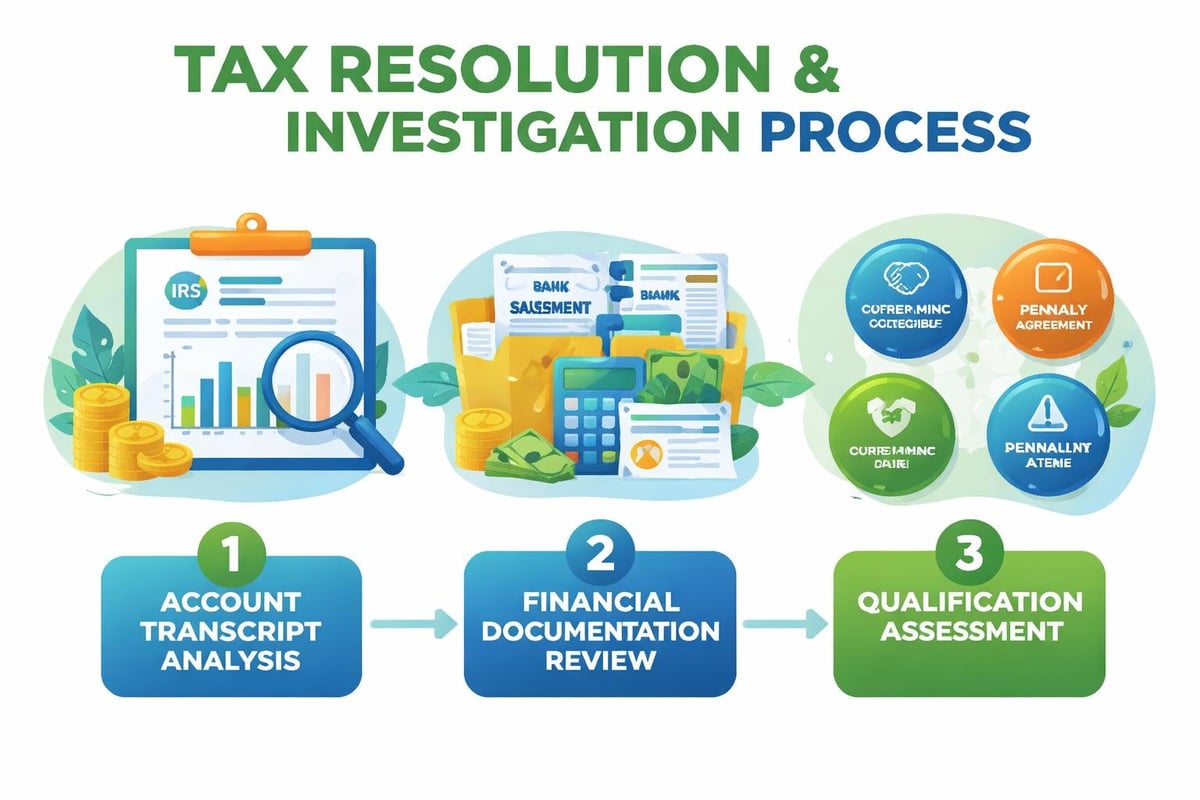
The three phases of tax resolution begin with comprehensive research, which forms the foundation of any tax resolution plus strategy. This investigation phase determines which solutions are available and which approach offers the best outcome.
Professional tax resolution plus services conduct detailed account transcripts analysis, examining every transaction, penalty, and interest charge. This review frequently uncovers IRS errors, misapplied payments, or incorrect penalty assessments that reduce the actual debt owed.
Uncovering Hidden Opportunities
During research, tax resolution plus professionals identify qualification criteria for various programs. Many taxpayers assume they don't qualify for certain relief options without understanding the nuanced requirements. Detailed financial analysis often reveals:
- Income calculation methods that improve Offer in Compromise qualification
- Reasonable cause arguments for penalty abatement based on specific circumstances
- Statute of limitations issues that limit IRS collection authority
- Filing errors that allow amended returns to reduce tax liability
- Missing deductions or credits from previous years that offset current debt
This thorough investigation distinguishes tax resolution plus from quick-fix services that jump immediately to generic solutions. The research phase may take several weeks but saves substantial money and produces better long-term outcomes.
Stopping Collection Actions Through Tax Resolution Plus
The second phase focuses on halting aggressive IRS collection activities. While standard services might request a simple installment agreement to stop levies, tax resolution plus employs strategic timing and multiple protective measures.
Collection Due Process hearings provide powerful rights that many taxpayers never exercise. When the IRS issues a final notice of intent to levy or files a Notice of Federal Tax Lien, you have 30 days to request a CDP hearing. This request automatically suspends collection while your case is reviewed.
Coordinating Multiple Protection Strategies
Tax resolution plus coordinates various protective measures based on your specific situation:
- Filing delinquent returns to establish good faith and enable resolution options
- Requesting Collection Due Process hearings to suspend levies and wage garnishments
- Submitting Currently Not Collectible applications when appropriate
- Negotiating temporary delays while gathering documentation
- Initiating Appeals for disputed liabilities
These actions work together to create breathing room. For instance, filing missing returns demonstrates compliance, which strengthens Currently Not Collectible requests and improves Offer in Compromise prospects. Each protective step builds toward the ultimate resolution strategy.
Comprehensive Debt Resolution Strategies
The final phase implements the actual resolution, where tax resolution plus strategies deliver measurable financial relief. Unlike single-solution approaches, comprehensive planning may involve sequential resolutions across multiple tax years or simultaneous solutions for different tax issues.
Installment Agreement Optimization
Even setting up IRS installment payments requires strategic planning within the tax resolution plus framework. The IRS offers several agreement types, each with different qualification requirements, payment amounts, and long-term implications.
Streamlined installment agreements for debts under $50,000 allow quick approval without detailed financial disclosure. However, taxpayers often pay more than necessary by accepting the IRS's standard payment calculation. Tax resolution plus services analyze your financial situation to determine the lowest acceptable monthly payment while maintaining compliance.
Partial payment installment agreements represent another powerful tool. These agreements allow monthly payments below the normal calculation when taxpayers demonstrate financial hardship. The remaining balance may expire when the collection statute ends, resulting in significant debt forgiveness.
Legal Defense Components in Tax Resolution Plus
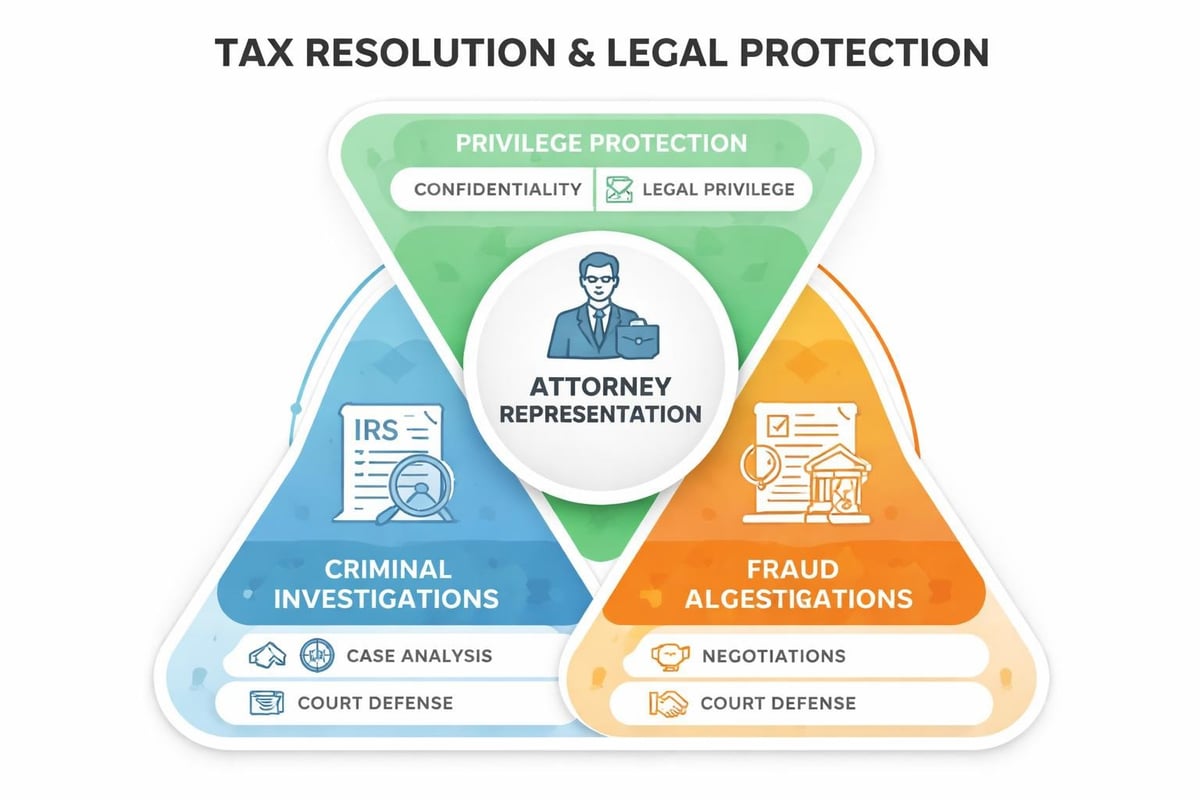
Tax resolution plus extends beyond financial negotiations to include legal representation when necessary. Criminal tax investigations, fraud allegations, and certain audit situations require attorney representation that standard tax resolution services cannot provide.
Legal defense situations requiring specialized representation:
- IRS Criminal Investigation Division inquiries
- Fraud penalty assessments exceeding standard civil penalties
- Tax court litigation for disputed liabilities
- Department of Justice referrals for collection lawsuits
- Summons enforcement actions
These serious matters carry potential criminal liability, making attorney-client privilege essential. Tax resolution plus services provided by law firms ensure all communications remain protected while aggressive defense strategies are implemented.
Innocent Spouse and Injured Spouse Relief
Marriage-related tax problems require specialized tax resolution plus approaches. Innocent Spouse Relief can eliminate tax debt from a spouse's underreporting or fraud, while Injured Spouse Relief protects refunds from being applied to a spouse's separate debt.
These relief provisions involve complex legal standards and extensive documentation requirements. Successful claims often hinge on demonstrating lack of knowledge about tax understatement or proving financial abuse within the marriage. Tax resolution plus services coordinate these relief requests with other resolution strategies to maximize debt elimination.
Preventive Compliance in Tax Resolution Plus
Resolving current tax debt represents only half the battle. Tax resolution plus includes forward-looking compliance systems that prevent future problems. Many taxpayers who successfully resolve IRS debt later find themselves in trouble again due to ongoing compliance failures.
Comprehensive compliance planning addresses:
- Quarterly estimated tax payment calculations for self-employed individuals
- Payroll tax withholding and deposit systems for businesses
- Sales tax collection and remittance procedures where applicable
- Record-keeping systems that support deductions and credits
- Entity selection and structure to minimize tax exposure
This preventive approach saves substantially more than it costs. A business that prevents one year of payroll tax problems avoids penalties that can exceed 100% of the original tax debt. Self-employed individuals who make proper estimated payments avoid underpayment penalties and the stress of large annual tax bills.
Financial Planning Integration
Tax resolution plus recognizes that tax problems rarely exist in isolation. Most significant tax debts connect to broader financial challenges, including cash flow problems, business downturns, divorce, medical emergencies, or poor financial planning.
Coordinating Tax Resolution with Financial Recovery
Effective tax resolution plus services coordinate IRS negotiations with overall financial rehabilitation:
| Financial Area | Tax Resolution Plus Integration | Expected Outcome |
|---|---|---|
| Credit repair | Strategic lien withdrawal after payment plans | Improved credit scores |
| Debt consolidation | Prioritizing secured vs. tax debt | Optimized payment allocation |
| Business recovery | Cash flow protection during resolution | Sustainable operations |
| Retirement planning | IRA/401k protection strategies | Asset preservation |
This integrated approach recognizes that paying the IRS means nothing if it bankrupts your business or depletes retirement savings. Tax resolution plus balances IRS obligations against other financial priorities, creating sustainable solutions rather than temporary fixes that collapse under financial pressure.
Understanding tax resolution best practices helps taxpayers recognize the difference between comprehensive services and quick fixes. The best outcomes emerge when resolution strategies align with long-term financial goals rather than focusing solely on immediate IRS relief.
Choosing Tax Resolution Plus Providers
Not all tax professionals offer genuine tax resolution plus services. Many firms advertise comprehensive solutions but deliver only basic installment agreements or penalty abatement requests. Distinguishing quality providers requires understanding what comprehensive services actually include.
Indicators of true tax resolution plus services:
- Licensed attorneys or enrolled agents with tax resolution experience
- Detailed financial analysis before recommending solutions
- Multiple resolution strategies tailored to your situation
- Legal representation capabilities for serious matters
- Ongoing compliance support after debt resolution
- Transparent pricing without unrealistic guarantees
Be wary of firms that guarantee specific outcomes or quote prices before reviewing your situation. Quality tax resolution plus requires detailed analysis, and no ethical professional can guarantee IRS acceptance of any resolution proposal.
The Value Proposition of Tax Resolution Plus
Tax resolution plus commands higher fees than basic tax help, but the investment typically returns multiples in savings and protection. Consider a business owner facing $150,000 in payroll tax debt with penalties. Basic services might negotiate a $2,000 monthly installment agreement, costing $96,000 over four years plus ongoing interest.
Tax resolution plus might coordinate penalty abatement reducing the debt to $110,000, then negotiate a partial payment installment agreement at $1,200 monthly. After the collection statute expires in six years, $23,200 of remaining debt is written off. Total paid: $86,400 versus $96,000, plus the benefits of protected cash flow and legal defense if criminal investigation arose.
The comparison becomes more dramatic when asset protection, business restructuring, and future compliance support are factored in. Avoiding tax resolution scams while finding legitimate, comprehensive help protects both your immediate financial interests and long-term fiscal health.
Industry Developments Affecting Tax Resolution Plus
Tax resolution plus strategies must adapt to changing IRS policies, technological developments, and legislative reforms. The IRS continues modernizing its systems and collection procedures, creating both new challenges and opportunities for taxpayers.
Recent developments impacting tax resolution plus include:
- Enhanced IRS data analytics identifying more unreported income
- Streamlined Offer in Compromise review processes reducing approval timelines
- Increased Collection Statute Expiration Date monitoring by the IRS
- Expanded electronic filing requirements for resolution applications
- New taxpayer protection provisions through the Office of the Taxpayer Advocate
Understanding these developments allows tax resolution plus professionals to leverage new opportunities while avoiding pitfalls created by policy changes. The Office of the Taxpayer Advocate provides valuable resources for taxpayers facing systemic IRS problems that standard resolution cannot address.
When Tax Resolution Plus Becomes Necessary
Not every tax problem requires comprehensive tax resolution plus services. Simple balance due notices under $10,000 with clear payment ability may need only basic installment agreements. However, certain situations absolutely demand comprehensive approaches:
- Tax debt exceeding $25,000 or spanning multiple years
- IRS collection actions including levies, liens, or asset seizures
- Business payroll tax problems with trust fund recovery penalty assessments
- Audit disputes involving substantial underreporting or fraud allegations
- Criminal investigation inquiries or special agent contacts
- Combination of federal and state tax debts requiring coordinated resolution
These complex situations create cascading problems when handled piecemeal. Tax resolution plus addresses all issues simultaneously, preventing one partially resolved problem from undermining solutions for other tax years or tax types.
Tax resolution plus provides the comprehensive framework necessary for addressing serious tax debt while protecting your financial future and building sustainable compliance systems. Rather than accepting whatever terms the IRS initially offers, strategic tax resolution plus combines multiple programs, legal protections, and financial planning to achieve optimal outcomes. If you're facing overwhelming tax debt, aggressive collection actions, or complex tax problems that demand sophisticated solutions, CLAW Tax Group offers the legal expertise and comprehensive tax resolution plus strategies needed to resolve your situation while protecting your assets and financial interests. Contact their team today to discuss your specific circumstances and develop a customized resolution strategy.



