
 0
0
 0
0
Are you ready for the changing landscape of real estate tax in 2026? With new rules and shifting regulations, property owners and investors face more complexity than ever.
Missing a single update can put your investments at risk. Without a real estate tax attorney, you could face costly mistakes, audits, or missed opportunities.
This guide will show you how a real estate tax attorney can safeguard your assets, reduce your liabilities, and help you stay compliant. You’ll find expert strategies, practical tips, and clear steps to prepare for what’s ahead.
Let’s explore how to navigate 2026 with confidence and protect your real estate future.
The Role of a Real Estate Tax Attorney in 2026
Understanding the role of a real estate tax attorney is essential for anyone managing property or investments in 2026. These professionals offer a unique combination of legal and tax expertise designed specifically for the real estate sector. Their guidance can make the difference between costly mistakes and long-term financial security.
What Does a Real Estate Tax Attorney Do?
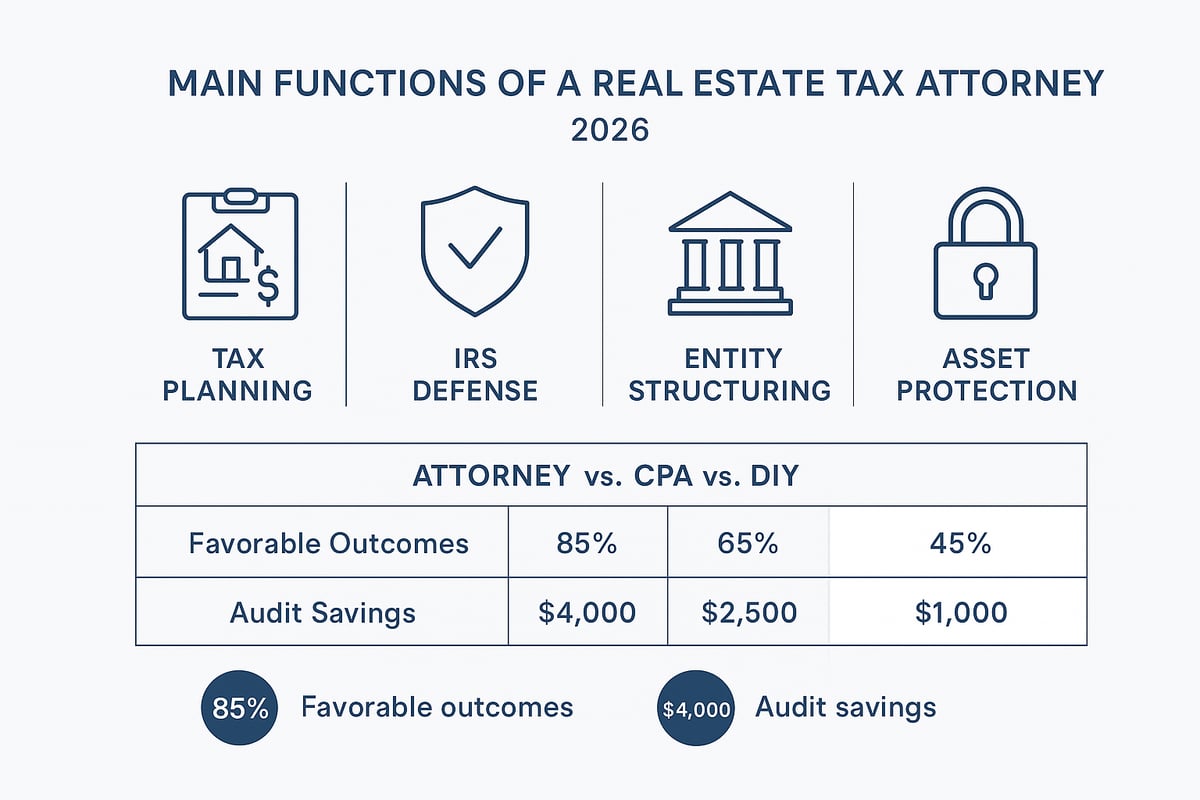
A real estate tax attorney brings specialized legal and tax expertise tailored to property transactions and ownership. Unlike CPAs, who focus on accounting, or general real estate lawyers, these attorneys are trained to interpret complex tax laws and represent clients during IRS audits, disputes, and litigation. They handle intricate matters such as 1031 exchanges, estate planning, and negotiations with tax authorities. If you want to learn more about the qualifications and expertise these professionals bring, you can review the Experienced tax attorneys team.
Their role often includes advising on the best strategies for complex deals, ensuring full compliance, and advocating for clients in high-stakes discussions with federal and state agencies.
Key Services for Property Owners and Investors
A real estate tax attorney provides a suite of services designed to protect and optimize your investments.
- Tax planning for property purchases, sales, and exchanges
- Asset protection for landlords and developers
- Guidance on property tax appeals and reduction strategies
- Structuring entities such as LLCs and trusts for investment efficiency
- Resolving tax liens, levies, and back tax issues
These services ensure that property owners and investors minimize liabilities, maximize returns, and remain compliant with evolving regulations.
How Attorneys Add Value in a Changing Tax Environment
With 2026 bringing new tax laws at federal, state, and local levels, a real estate tax attorney is invaluable for interpreting these changes. They help prevent costly errors and noncompliance penalties by staying current on new legislation. By identifying unique deductions and credits, attorneys often uncover tax-saving opportunities that others miss.
For example, one client saved over $50,000 in capital gains tax simply by engaging an attorney early for proactive planning. This expertise is especially important as regulations become more intricate and enforcement increases.
When Should You Hire a Real Estate Tax Attorney?
Hiring a real estate tax attorney is crucial during major transactions, such as buying or selling property, handling inheritance issues, or dissolving partnerships. If you are facing an audit, tax debt, or legal dispute, legal representation is vital. Proactive planning with an attorney before 2026's new rules take effect can help avoid penalties and missed opportunities.
Consider the example of an investor who consulted an attorney before restructuring their portfolio. With expert guidance, they avoided IRS penalties and ensured compliance with the latest regulations.
Real Estate Tax Attorney vs. DIY or Other Professionals
Choosing between a real estate tax attorney, a CPA, or self-representation can significantly impact your financial outcome. The complexities of real estate tax law often exceed the expertise of accountants or generalists. According to a competitor survey, 72% of property owners who used tax attorneys in disputes reported more favorable outcomes.
| Service/Expertise | Real Estate Tax Attorney | CPA/Accountant | DIY |
|---|---|---|---|
| Legal Tax Representation | ✔️ | ❌ | ❌ |
| IRS Audit/Litigation Defense | ✔️ | Limited | ❌ |
| Complex Transaction Structuring | ✔️ | Some | ❌ |
| State/Local Law Interpretation | ✔️ | Some | ❌ |
| Success Rate in Disputes | High | Moderate | Low |
Understanding the unique benefits of a real estate tax attorney ensures you make informed decisions and safeguard your investments in 2026.
Navigating 2026 Real Estate Tax Law Changes
The real estate tax landscape is rapidly shifting as 2026 approaches. New legislation, IRS enforcement trends, and evolving state and local rules will impact property owners and investors alike. A real estate tax attorney can be instrumental in helping you adapt to these changes, protect your investments, and avoid costly missteps.
Overview of 2026 Tax Law Changes Impacting Real Estate
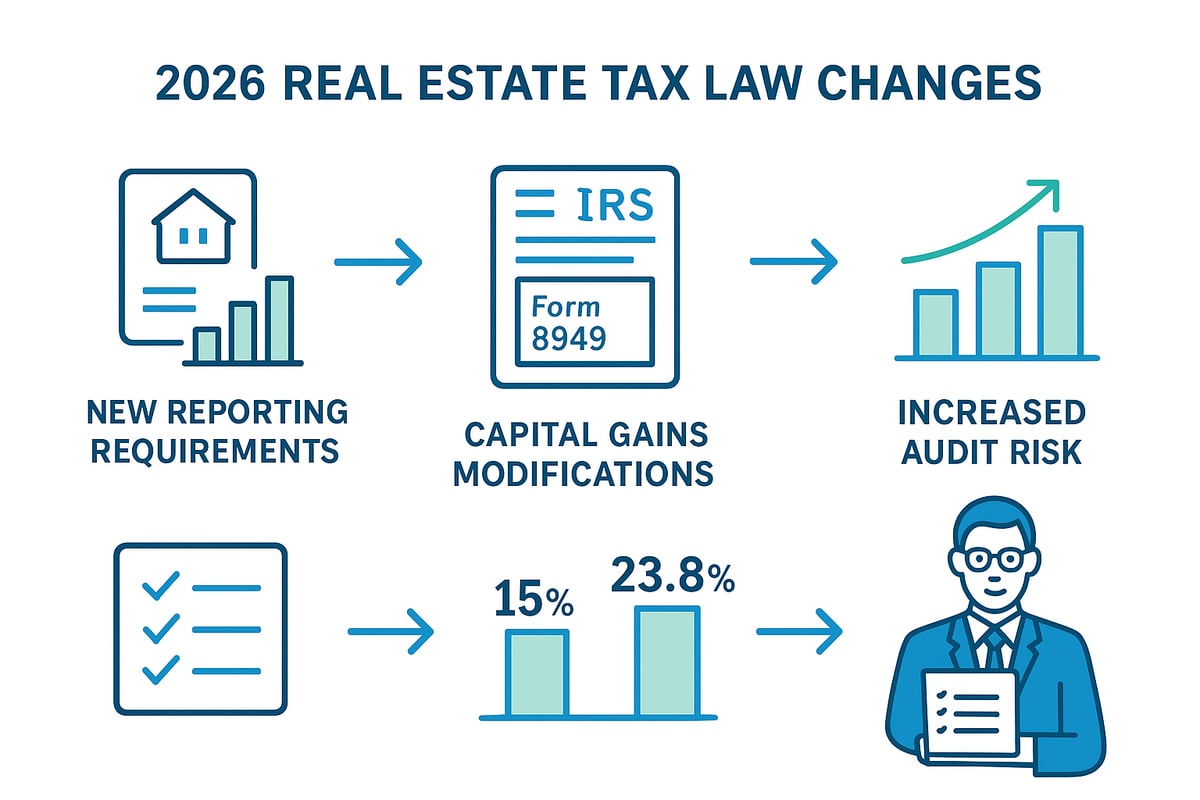
The tax landscape for real estate is set for significant changes in 2026. Federal updates include potential increases in capital gains tax rates, modifications to 1031 exchanges, and new depreciation schedules for investment properties. State and local governments are also revising property tax assessments and rates, with some introducing new compliance deadlines.
Many of these updates are driven by expiring provisions from earlier tax reforms and new legislative efforts. For a comprehensive summary, see the Key 2026 Tax Changes resource, which outlines major federal and state-level adjustments. Engaging a real estate tax attorney early ensures you remain compliant and take advantage of available planning opportunities.
New Reporting and Compliance Obligations
In 2026, property owners will face expanded IRS reporting requirements for real estate transactions. The IRS is introducing updated forms and increasing scrutiny of beneficial ownership disclosures for LLCs and trusts. Failing to report or disclosing inaccurate information can result in steep penalties.
A real estate tax attorney can help you navigate these new obligations, ensuring all documents are filed correctly and on time. For example, form changes may require additional detail about property transfers or entity structures. Proactive legal guidance helps prevent compliance mistakes that could trigger audits or fines.
Capital Gains, Depreciation, and 1031 Exchange Modifications
Several core tax provisions affecting real estate are changing in 2026. Capital gains tax rates may rise, and rules around qualified holding periods could shift. Depreciation schedules are also being updated, with changes to bonus depreciation and allowable deductions.
1031 exchanges, a popular tool for deferring gains, face new eligibility criteria and stricter timelines. The table below highlights key differences between 2025 and 2026 rules:
| Provision | 2025 Rules | 2026 Changes |
|---|---|---|
| Capital Gains Rate | 15-20% | Up to 25% for some brackets |
| 1031 Exchange Time | 180 days | 120 days |
| Bonus Depreciation | 60% | 40% |
A real estate tax attorney can analyze these changes and develop strategies to minimize your tax exposure when selling or exchanging properties.
State and Local Tax Shifts: What to Watch For
States and cities are responding to evolving market conditions with their own tax reforms. Many major cities are increasing property tax rates, while some states are offering incentives for affordable housing and green building initiatives.
For example, California’s 2026 property tax assessment reform could impact commercial and residential owners differently. A real estate tax attorney with local experience can help you interpret these nuances, identify available relief programs, and avoid unexpected tax bills after purchasing out-of-state properties.
Audit Risk and IRS Enforcement Trends
The IRS is ramping up enforcement efforts in the real estate sector. Audit rates for property owners increased by 12% in 2025, and this trend is expected to continue. Common red flags include underreporting rental income and claiming improper deductions.
Below is a quick reference list of frequent audit triggers:
- Mismatched 1099 forms
- Large one-time deductions
- Unreported short-term rental income
A real estate tax attorney provides critical defense during audits, helping you prepare documentation and respond to IRS inquiries effectively.
Proactive Steps for Compliance in 2026
To stay ahead of 2026 changes, property owners should review and update their tax strategies well in advance. Begin by organizing transaction records, updating ownership documentation, and consulting with a real estate tax attorney for a compliance checkup.
Here’s a simple compliance checklist:
- Review property holdings and transactions
- Update entity structures as needed
- Prepare for new reporting requirements
- Schedule a legal review before major transactions
Early action, guided by a real estate tax attorney, can help you avoid penalties and position your investments for long-term success.
Common Real Estate Tax Pitfalls and How to Avoid Them
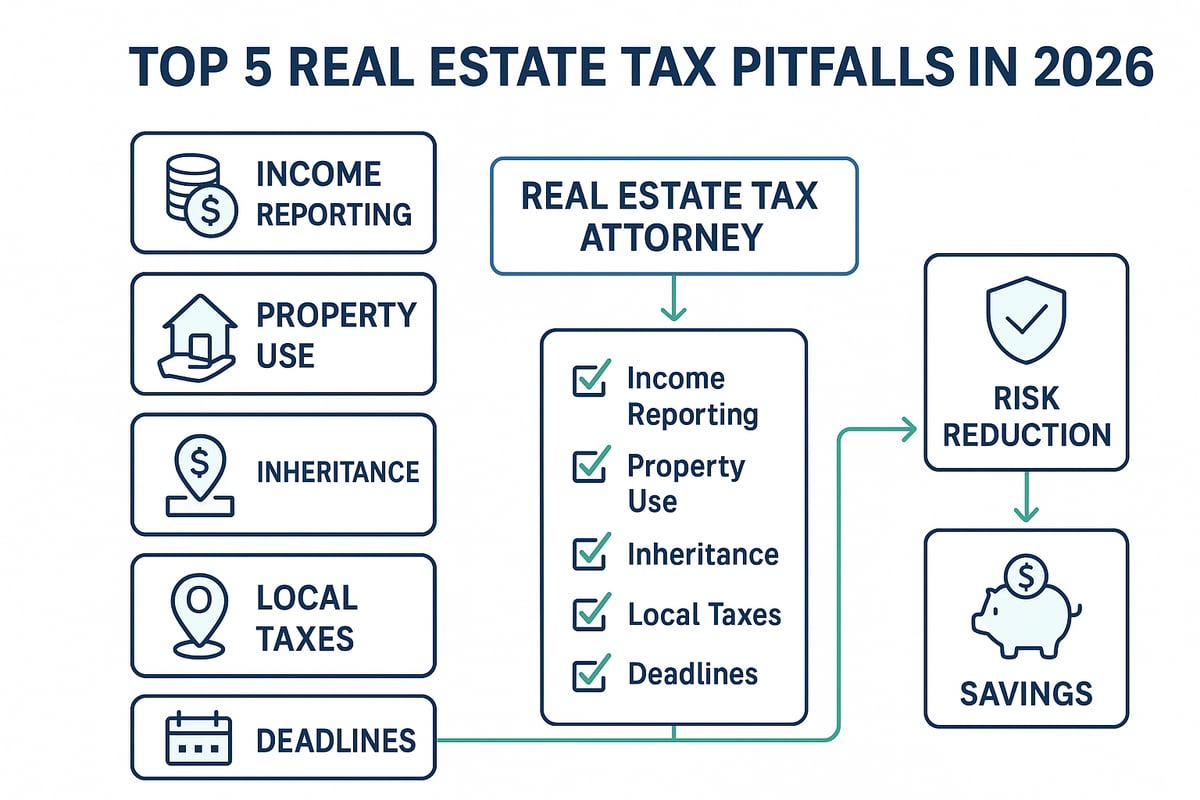
Navigating real estate taxation in 2026 presents unique challenges. Even the most diligent investors can fall victim to costly errors. Working with a real estate tax attorney is the best way to sidestep these common pitfalls, safeguard your assets, and ensure compliance. Below, we outline the top mistakes property owners make, along with strategies to avoid them.
Underreporting Income and Overstating Deductions
One of the most frequent mistakes is underreporting rental income or overstating deductions. This is especially true for property owners handling short-term rentals or self-managing multiple properties. The IRS is increasing its focus on platforms like Airbnb, making accurate income reporting essential.
Common triggers for audits include mismatched 1099 forms and inconsistent expense documentation. A real estate tax attorney can help you implement robust tracking systems for every dollar earned or spent. By reviewing your records before filing, you reduce the risk of audit and non-compliance penalties.
- Track all rental income, including cash and app-based payments
- Maintain receipts and records for every deduction
- Cross-check IRS forms for accuracy
When in doubt, consult a real estate tax attorney to ensure every entry is correct.
Misclassification of Property Use and Ownership
Misclassifying your property’s use can have major tax consequences. Reporting a property as residential when used for business, or vice versa, impacts your eligibility for deductions, depreciation, and capital gains treatment.
Mistakes also occur when owners fail to distinguish between personal and investment properties. For example, living in a rental part-time may disqualify certain tax benefits. A real estate tax attorney will analyze your portfolio and clarify each asset’s correct classification, preventing costly errors.
- Identify each property’s primary use annually
- Understand how mixed-use properties affect your taxes
- Review ownership structures for compliance
Proper classification protects your deductions and minimizes audit risk.
Failure to Plan for Transfer Taxes and Inheritance
Estate and gift tax implications are often overlooked in real estate transactions, especially during inheritance or gifting. Without proper planning, families can face unexpected tax bills that erode the value of inherited assets.
A real estate tax attorney helps structure ownership and transfers to minimize or defer taxes. Strategies might include trusts, gifting plans, or staggered transfers. In one case, a family lost over $100,000 due to lack of planning, a scenario that could have been avoided with legal guidance.
- Assess potential transfer tax liabilities in advance
- Explore trusts and gifting strategies with your attorney
- Update estate plans as tax laws evolve
Early consultation ensures your legacy is preserved.
Ignoring State and Local Tax Nuances
Each state and locality imposes unique taxes, surcharges, and exemptions on real estate. Investors buying out-of-state often miss local nuances, leading to surprise tax bills or missed savings opportunities.
Local homestead exemptions, school taxes, and special assessments can significantly impact your bottom line. A real estate tax attorney familiar with local laws will help you navigate these variables and avoid unpleasant surprises.
- Research local tax rates and assessment schedules
- Apply for available exemptions and relief programs
- Review each new market with legal counsel
A single misstep in a new state can be costly, making local expertise essential.
Delayed or Inaccurate Filings
Missing property tax deadlines or submitting inaccurate forms can result in tax liens, penalties, or even foreclosure risks. The complexity of 2026 tax regulations increases the potential for error. A real estate tax attorney provides vital support by managing deadlines, preparing accurate filings, and representing you during disputes.
If you face audits or unresolved tax debt, consider working with professionals who offer tax resolution services overview. They can negotiate with authorities, pursue penalty abatement, and appeal assessments on your behalf.
- Set calendar reminders for all property tax deadlines
- Double-check filings for accuracy before submission
- Seek legal help immediately if you receive IRS notices
Timely and precise filings protect your assets and peace of mind.
Step-by-Step Guide: Working with a Real Estate Tax Attorney
Navigating 2026 real estate tax regulations is a complex process, but working with a real estate tax attorney can simplify every stage. This step-by-step guide breaks down what to expect, how to prepare, and the value of ongoing collaboration with a legal expert.
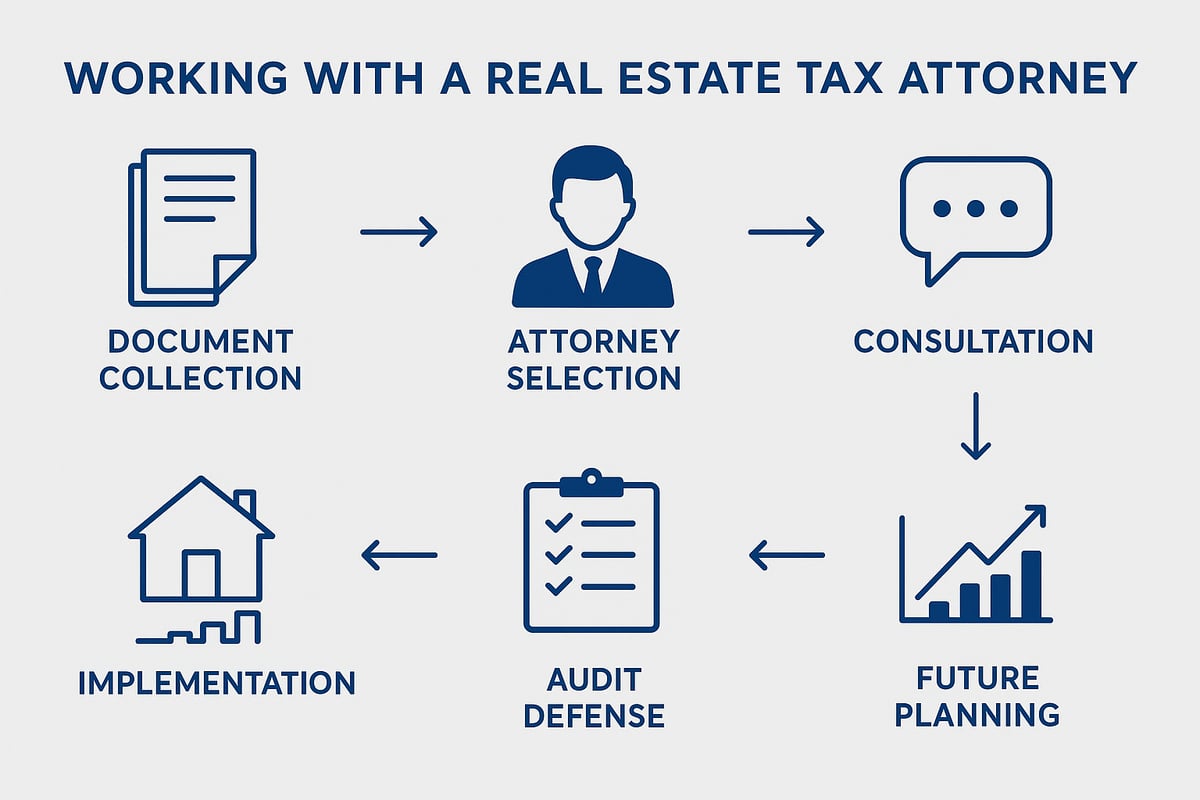
Step 1: Assess Your Real Estate Tax Situation
Begin by gathering all relevant documents for your properties. This includes deeds, prior tax returns, and transaction records. A real estate tax attorney will need these to assess your current and future tax obligations.
Make a self-assessment checklist:
- List all owned properties.
- Note any recent sales or purchases.
- Identify rental income streams.
- Review outstanding tax notices or liens.
By organizing your financial and property information, you provide your real estate tax attorney with the foundation needed for tailored advice. Early preparation ensures nothing is overlooked.
Step 2: Research and Select the Right Attorney
Finding the right real estate tax attorney is crucial. Look for professionals with tax law specialization, real estate experience, and proper state licensing.
During consultations, ask:
- What is your experience with real estate tax cases?
- How do you structure your fees?
- Can you provide references from similar clients?
Be cautious if an attorney lacks transparency or clear communication. A real estate tax attorney should demonstrate both expertise and a commitment to client service. Compare options to ensure a good fit.
Step 3: Initial Consultation and Strategy Development
Your first meeting with a real estate tax attorney sets the stage for success. Expect a thorough review of your documents and a discussion about your goals.
The attorney will:
- Identify potential tax liabilities.
- Develop strategies for minimizing taxes on sales or transfers.
- Address compliance risks under new 2026 rules.
For example, if you plan to sell a property, your real estate tax attorney might suggest a 1031 exchange or review available deductions. This stage builds a personalized roadmap for your situation.
Step 4: Implementation and Ongoing Compliance
Once a strategy is agreed upon, your real estate tax attorney will assist with structuring transactions, setting up entities, or reviewing legal documents.
Ongoing services may include:
- Annual tax reviews.
- Filing support for property sales or acquisitions.
- Entity formation for tax efficiency.
Your attorney helps ensure compliance with evolving tax laws, providing updates and reminders. Regular check-ins keep your portfolio protected and optimized for tax savings.
Step 5: Navigating Audits, Disputes, and Appeals
If the IRS or state tax authorities initiate an audit or dispute, your real estate tax attorney becomes your main line of defense. They handle communications, prepare documentation, and represent you in negotiations.
Attorneys are skilled at identifying errors or inconsistencies in tax records. For more insight on the audit process, see IRS audit guidance and tips. With their support, clients often achieve significant reductions in proposed penalties or assessments.
Step 6: Leveraging Legal Guidance for Future Planning
The relationship with your real estate tax attorney does not end after a single transaction. They provide long-term planning for portfolio growth, estate transfers, and adaptation to future tax law changes.
Annual reviews help you stay ahead of regulatory developments. By building a trusted partnership, you gain proactive advice that protects your assets and maximizes returns well beyond 2026. Ongoing legal guidance is an investment in your real estate success.
Essential Qualities to Look for in a Real Estate Tax Attorney
Selecting the right real estate tax attorney is critical for safeguarding your investments and ensuring compliance in a changing landscape. The following qualities distinguish top professionals and help you make an informed choice.
Specialized Experience and Track Record
A real estate tax attorney must have deep, focused expertise in both real estate and tax law. This specialized background ensures they can navigate complex transactions, IRS disputes, and the latest legislative changes. Look for attorneys with a proven record in audits, litigation, and negotiation with tax authorities.
- Experience with 1031 exchanges and estate planning
- Success in handling IRS or state audits
- Familiarity with recent tax law updates
For example, attorneys who identify opportunities in evolving tax credits, as described in Real Estate Industry Tax Planning Opportunities, deliver measurable results for clients. Choosing a real estate tax attorney with this background is essential for effective representation.
Communication, Transparency, and Client Service
Clear, proactive communication sets great attorneys apart. Your real estate tax attorney should explain complex tax rules in simple terms and provide regular updates. Transparency about strategies, risks, and fees is crucial for building trust.
- Provides understandable answers to your questions
- Sends timely progress reports
- Clearly outlines fee structures and expectations
Red flags include slow response times or vague billing practices. An attorney who values transparency not only guides you through complicated filings but also supports informed decision-making. Effective client service leads to smoother transactions and fewer surprises.
Fee Structures and Value for Money
Understanding how a real estate tax attorney charges for services is vital to managing your budget and expectations. Common models include hourly rates, flat fees for specific tasks, and contingency arrangements for certain cases. Always clarify how fees are structured and what is included.
- Hourly billing for ongoing counsel
- Flat rates for tax appeals or entity setup
- Contingency fees for tax recovery cases
A skilled real estate tax attorney balances cost with potential savings. Ask for estimates and compare them to the potential tax benefits or risk reduction. Transparent fee structures help you gauge the true value of legal support for your property portfolio.
Local and National Reach
The best real estate tax attorney understands local property tax laws and has the ability to represent clients across state lines. This is especially important for investors with properties in multiple jurisdictions. Attorneys with a national practice can guide you on compliance requirements in different markets.
- Knowledge of state-specific tax incentives
- Familiarity with local court systems and tax agencies
- Ability to coordinate multi-state tax planning
Accessing tax resources for property owners can also provide additional guidance when evaluating attorneys. A broad reach ensures your interests are protected wherever your investments are located.
Proactive Tax Strategies for Real Estate Success in 2026
In 2026, a proactive approach is crucial for optimizing your real estate tax outcomes. With evolving regulations and stricter enforcement, working closely with a real estate tax attorney can help you stay ahead. Let us explore actionable strategies to safeguard your investments, minimize liabilities, and ensure lasting success.
Year-Round Tax Planning and Documentation
Consistent documentation is the backbone of real estate tax success. A real estate tax attorney will advise you to maintain detailed records of income, expenses, and improvements for every property.
- Use specialized software to track receipts and categorize spending.
- Automate entries for rent payments and maintenance costs.
- Schedule regular reviews to reconcile accounts and avoid discrepancies.
Ongoing organization not only streamlines tax preparation but also reduces the risk of audit triggers. With your real estate tax attorney, you can identify gaps in your records and implement systems that offer peace of mind throughout the year.
Entity Structuring for Tax Efficiency
Choosing the right entity structure can have a substantial impact on both liability and taxes. A real estate tax attorney helps assess whether an LLC, S-corp, or trust best suits your goals.
- LLCs often provide personal liability protection and flexible tax treatment.
- S-corps may reduce self-employment tax for active investors.
- Trusts can facilitate estate planning and minimize probate costs.
Your attorney will analyze your portfolio and recommend structures that maximize benefits while ensuring compliance. By implementing the optimal entity strategy, you can shield assets and create a tax-efficient foundation for future growth.
Maximizing Deductions and Credits
Maximizing deductions and leveraging credits is vital for reducing your tax burden. A real estate tax attorney stays current on allowable write-offs and new opportunities introduced by upcoming law changes.
- Deduct mortgage interest, depreciation, repairs, and management fees.
- Explore 2026 updates to energy-efficient property credits and other incentives.
- Document all qualifying expenses to support your claims.
For insight into the evolving landscape, see the Major Tax Changes Coming in 2026, which details new deduction limits and estate tax thresholds. Your attorney ensures you capture every eligible benefit, keeping your returns both accurate and optimized.
Timing Transactions for Tax Advantage
Strategic timing can significantly affect your tax outcomes. A real estate tax attorney will guide you on when best to buy, sell, or exchange properties to leverage favorable rates.
- Holding assets for over a year may qualify you for lower long-term capital gains.
- Scheduling a 1031 exchange before deadlines can defer taxes.
- Reinvesting proceeds in a timely manner preserves your tax advantages.
By planning transactions in advance, you can align your actions with tax law shifts and maximize after-tax returns. Your attorney's foresight helps you avoid costly missteps and seize the right opportunities.
Preparing for Audits and IRS Scrutiny
The risk of IRS scrutiny has increased, making audit preparation essential. With a real estate tax attorney, you can implement safeguards that withstand examination.
- Organize supporting documentation for all deductions and income.
- Conduct mock audits to identify potential red flags.
- Respond promptly to any IRS inquiries with attorney guidance.
Proper preparation reduces audit penalties by up to 60 percent, as thorough documentation can quickly resolve disputes. An attorney's expertise is invaluable in both prevention and defense, ensuring your interests are protected.
Estate and Succession Planning for Real Estate
Integrating real estate holdings into your estate plan is critical for minimizing tax exposure and ensuring smooth generational transfers. A real estate tax attorney will develop trust structures and gifting strategies tailored to your legacy goals.
- Use revocable or irrevocable trusts to shield assets from estate taxes.
- Plan for step-up in basis to reduce heirs' capital gains.
- Coordinate with financial advisors for holistic planning.
Careful succession planning not only preserves wealth but also avoids legal complications. Your attorney's guidance ensures your properties transition according to your wishes with minimal tax impact.
Staying Informed and Adapting to Future Changes
Tax laws are ever-changing, and staying informed is non-negotiable. A real estate tax attorney provides ongoing updates and proactive advice to keep you compliant after 2026.
- Subscribe to IRS and local agency updates.
- Schedule annual reviews to assess new regulations.
- Adapt your strategies promptly as laws shift.
By building a long-term relationship with your attorney, you can confidently navigate future challenges and secure continued real estate success.
Navigating the complexities of real estate tax law in 2026 can feel overwhelming, but you do not have to face these changes alone. As we have explored, having the right legal guidance can help you avoid costly mistakes, protect your investments, and uncover valuable opportunities. Whether you are preparing for new regulations, managing transactions, or seeking proactive tax-saving strategies, expert support makes all the difference. If you are ready to gain clarity and confidence for the year ahead, let us help you take the next step. Contact us for a free consultation.



