

 0
0
 0
0
Filing your tax return marks a significant milestone each year, but the journey doesn't end the moment you hit submit or drop your envelope in the mail. Whether you e-filed or sent physical documents, understanding what happens after you've filed my tax return is crucial for avoiding penalties, maximizing refunds, and ensuring compliance with IRS requirements. Many taxpayers mistakenly believe their obligations conclude once they file, only to face unexpected notices, delayed refunds, or payment complications later. This comprehensive guide walks you through the essential steps to take after filing, common scenarios that require immediate attention, and how to navigate potential challenges with confidence.
Understanding What Happens After Filing
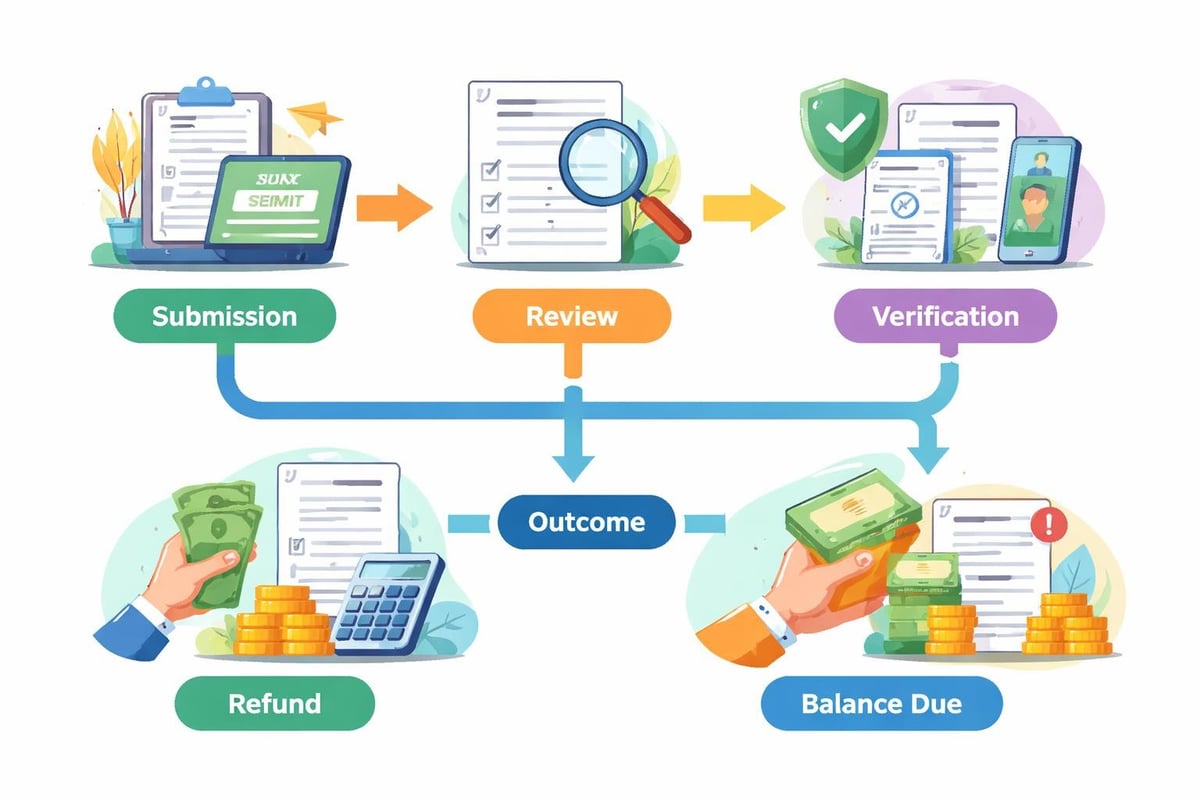
Once you've filed my tax return, the IRS begins a multi-stage processing system that typically takes 21 days for e-filed returns and up to six weeks for paper returns. During this period, the agency validates your information, cross-references data from employers and financial institutions, calculates any refund owed, and flags returns for additional review if discrepancies arise.
The IRS Processing Timeline
The IRS filing process involves several checkpoints that your return must pass through successfully. Electronic returns move faster because computers can immediately verify mathematical accuracy and routing information. Paper returns require manual data entry, which introduces additional time and potential for human error.
Most taxpayers can expect their refund within three weeks if they filed electronically and chose direct deposit. However, certain factors trigger extended review periods, including:
- Claiming Earned Income Tax Credit or Additional Child Tax Credit
- Filing amended returns or prior-year corrections
- Identity verification requirements
- Math errors or missing information
- Suspected fraud indicators
Understanding these timelines helps you set realistic expectations and recognize when delays signal potential problems requiring intervention.
Tracking Your Return Status
After you filed my tax return, monitoring its progress provides peace of mind and early warning of issues. The IRS offers multiple tools designed specifically for this purpose, each serving different needs depending on your situation.
Where's My Refund Tool
The primary resource for checking return status is the IRS "Where's My Refund?" tool, accessible online and through the IRS2Go mobile app. This system updates once daily, usually overnight, and provides three key status indicators:
- Return Received – The IRS has your return and began processing
- Refund Approved – Processing completed and refund amount confirmed
- Refund Sent – Payment transmitted via direct deposit or check
You'll need your Social Security number, filing status, and exact refund amount to access your information. The USA.gov guide on checking return receipt offers additional methods for confirming the IRS received your filing, particularly helpful if you're not expecting a refund.
When to Contact the IRS
Most refund inquiries don't require direct IRS contact if you're within normal processing windows. However, specific circumstances warrant a phone call:
- More than 21 days passed since e-filing (or six weeks for paper)
- The tool instructs you to contact them
- You received a notice requesting additional information
- Your refund amount differs from expectations
Before calling, gather your tax return copy, all W-2s and 1099s, and any IRS correspondence you've received. Wait times can exceed an hour during peak season, so prepare accordingly.
Addressing Common Post-Filing Mistakes
Even careful taxpayers occasionally discover errors after they filed my tax return. The approach you take depends on the mistake's nature and timing, with some requiring immediate action and others handled through amended returns.
Mathematical Errors and Typos
The IRS automatically corrects simple math errors without requiring amended returns. If their calculation results in a different refund or balance due, you'll receive a notice explaining the adjustment. Bank account numbers, however, require your intervention if entered incorrectly.
If you transposed digits in your routing or account number, contact the IRS immediately. Refunds sent to wrong accounts can be recalled if caught quickly, but delays occur once another taxpayer's account receives your funds.
Missing Income or Deductions
Discovering unreported income after filing creates potential audit risk and penalties. Common scenarios include:
- Forgotten 1099 forms from side income
- Investment earnings statements arriving late
- Multiple W-2s from job changes
- Cryptocurrency transactions
| Error Type | Action Required | Deadline | Potential Penalty |
|---|---|---|---|
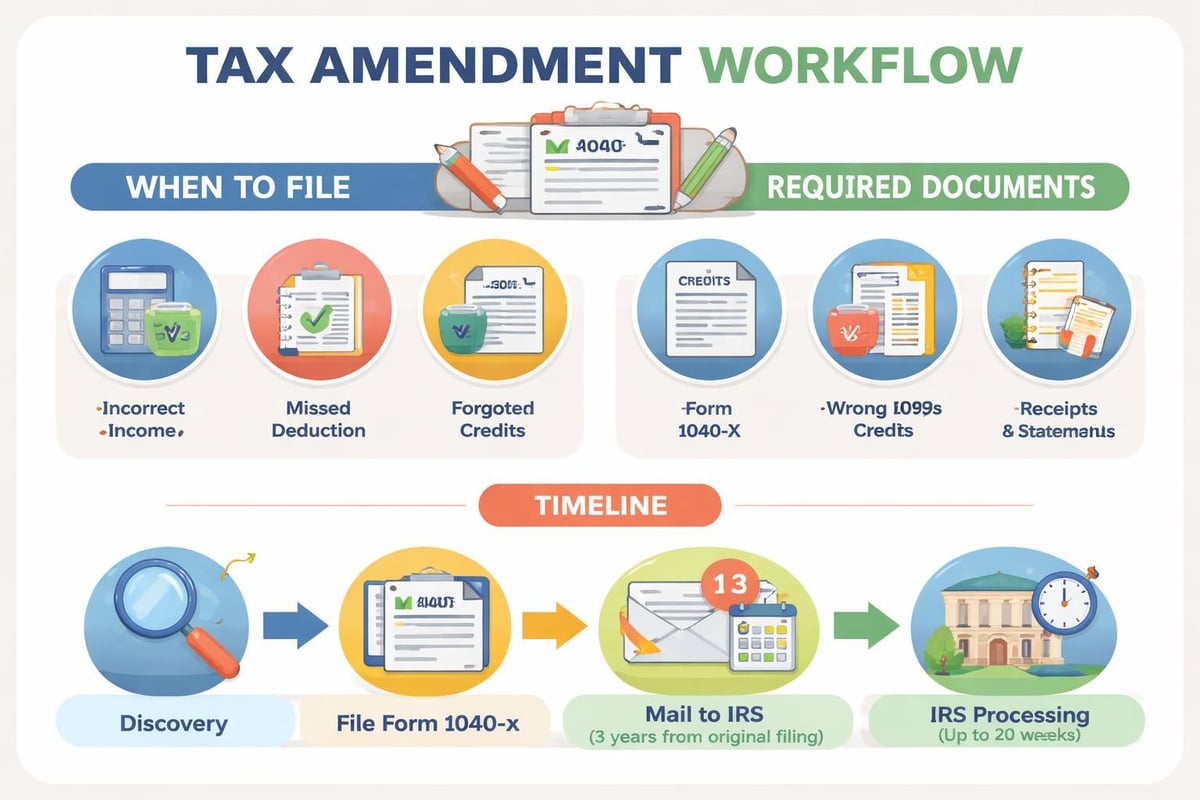
| Unreported Income | File Form 1040-X | 3 years from original due date | Accuracy-related penalty |
| Missed Deductions | File Form 1040-X (optional) | 3 years from original due date | None (you lose the benefit) |
| Wrong Filing Status | File Form 1040-X | 3 years from original due date | Varies by situation |
| Dependent Claimed Incorrectly | File Form 1040-X | 3 years from original due date | Can trigger audit |
Filing an amended return using Form 1040-X corrects these issues. Process the amendment only after the IRS completes processing your original return, typically indicated by receiving your refund or balance due notice.
Handling Tax Bills and Payment Options
Not every taxpayer receives a refund. If you owe money after you filed my tax return, understanding payment options prevents additional penalties and interest from accumulating beyond what you already face.
Immediate Payment Methods
The fastest way to satisfy tax debt is paying the full amount by the April 15 deadline. The IRS accepts:
- Direct Pay – Free electronic payment from checking or savings accounts
- Debit or Credit Card – Through approved payment processors (fees apply)
- Check or Money Order – Mailed with payment voucher
- Same-Day Wire – For urgent payments preventing levy or enforcement
Even if you can't pay the full amount, paying what you can by the deadline reduces interest charges on the remaining balance.
Payment Plans and Agreements
When full payment isn't feasible, the IRS offers several structured payment alternatives. Short-term payment plans allow up to 180 days to pay balances under $100,000. Long-term installment agreements extend payments over months or years for those who qualify.
The tax payment plan options available through professional tax resolution services often secure better terms than self-negotiated agreements. These include:
- Lower monthly payments based on financial hardship
- Temporary delay of collection activities
- Penalty abatement for reasonable cause
- Offers in Compromise reducing total debt
Setting up installment agreements prevents the IRS from initiating more aggressive collection actions like wage garnishment or bank levies, which can devastate your financial stability.
Responding to IRS Notices and Audits
Receiving IRS correspondence after you filed my tax return triggers anxiety for most taxpayers, but these notices often address routine matters requiring simple responses. Understanding common notice types and appropriate responses prevents minor issues from escalating into serious problems.
Common Notice Categories
The IRS sends millions of notices annually, with most falling into predictable categories:
CP2000 Notices indicate income discrepancies between your return and third-party reporting. Employers, banks, and brokers send copies of all 1099s and W-2s to the IRS, which matches them against filed returns. Respond within 30 days with either agreement and payment or documentation supporting your original filing.
CP14 Notices serve as initial balance due reminders. These don't signal audit or investigation, simply that the IRS records show unpaid tax. Verify the amount's accuracy and either pay or arrange a payment plan promptly.
566 and 567 Letters request additional information to process your return. Common requests include proof of dependents, income verification, or clarification of deductions. Provide requested documents within the specified timeframe to avoid processing delays or automatic adjustments.
Audit Notification and Rights
Genuine audit notices arrive exclusively via U.S. Mail, never by phone, email, or text. The IRS typically initiates audits 12-18 months after you filed my tax return, though they can examine returns up to three years old (six years for substantial underreporting).
Audit notices specify:
- Tax year(s) under examination
- Items questioned or requiring substantiation
- Response deadline and format (correspondence, office visit, or field audit)
- Your rights throughout the examination process
You have the right to professional representation during any IRS audit or examination. Tax attorneys and enrolled agents can communicate with the IRS on your behalf, often preventing costly mistakes that occur when taxpayers represent themselves. The tax resolution services provided by experienced professionals frequently result in better outcomes and reduced assessments.
Protecting Your Refund From Scams
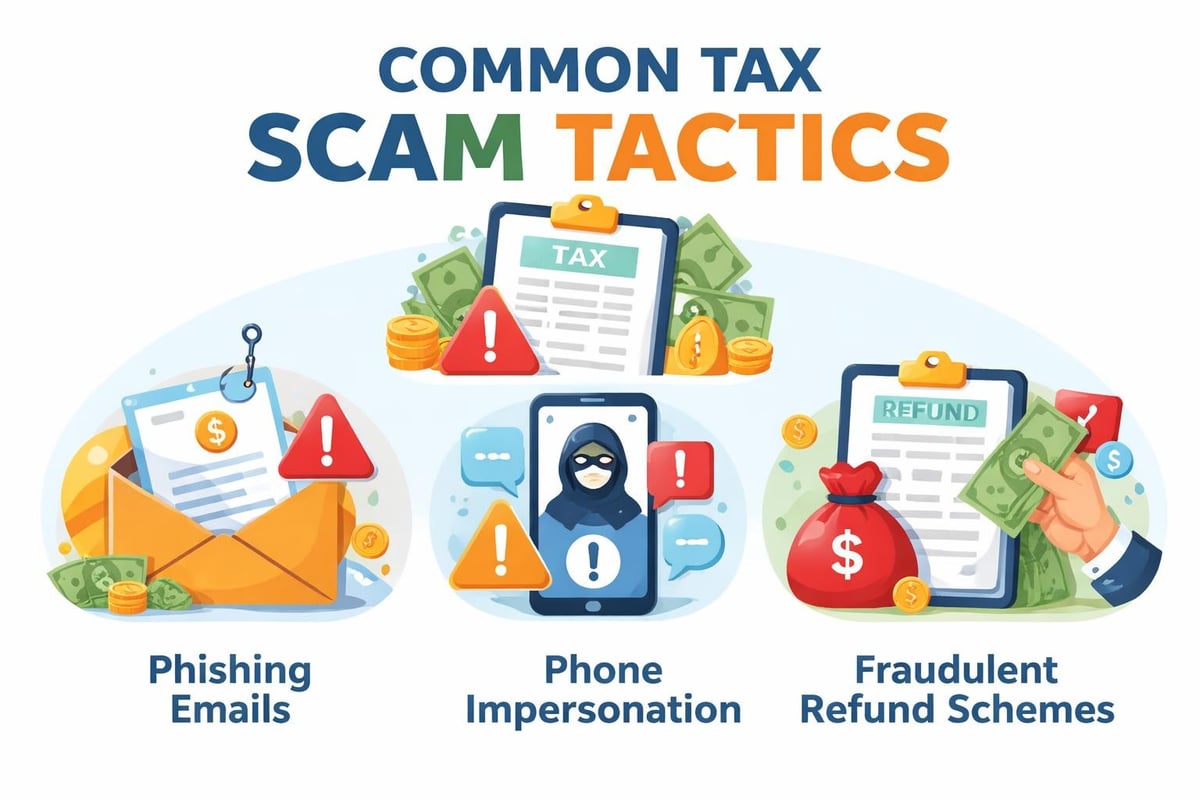
The period after you filed my tax return represents prime season for tax-related fraud and scams. Criminals exploit taxpayer anxiety and lack of knowledge about IRS procedures to steal personal information or money.
Recognizing Legitimate IRS Communication
The IRS follows strict protocols when contacting taxpayers. Legitimate communication:
- Always begins with mailed notices, never phone calls
- Never demands immediate payment via gift cards, wire transfer, or cryptocurrency
- Provides specific notice numbers and taxpayer rights information
- Allows you to verify by calling official IRS phone numbers independently
Scammers impersonate IRS agents, threaten arrest or deportation, and demand instant payment. The real IRS never threatens police involvement during initial contact or asks for payment methods that can't be traced.
Identity Theft Prevention
Tax-related identity theft occurs when criminals file fraudulent returns using stolen Social Security numbers to claim refunds. Warning signs include:
- Rejection of e-filed return because one already exists
- IRS notices about returns you didn't file
- Unexpected tax transcripts or refund deposits
If you suspect identity theft affected your filing, complete IRS Form 14039 (Identity Theft Affidavit) immediately. The IRS will flag your account, issue an Identity Protection PIN for future filings, and investigate the fraudulent return.
Planning for Next Year's Filing
Smart taxpayers use the experience of having just filed my tax return to improve their approach for the following year. Implementing organizational systems and tax strategies now prevents scrambling during next filing season.
Document Organization Systems
Create a dedicated tax file immediately and add documents throughout the year:
- Income Records – All W-2s, 1099s, K-1s, and earnings statements
- Deduction Receipts – Charitable contributions, medical expenses, business costs
- Investment Records – Purchase dates, sale proceeds, dividend statements
- Life Changes – Marriage certificates, adoption papers, education enrollment
Digital scanning of paper documents provides backup protection and easier retrieval. Many taxpayers photograph receipts immediately and store them in cloud-based folders organized by category.
Tax Withholding Adjustments
If you owed a significant balance or received a large refund, adjusting your W-4 withholding optimizes your cash flow. Owing money indicates underwithholding, while large refunds mean you provided the government an interest-free loan.
The IRS Tax Withholding Estimator helps calculate appropriate withholding based on your situation. Life changes requiring W-4 updates include:
- Marriage or divorce
- Birth or adoption of children
- Starting or losing a job
- Significant income changes
- Home purchase or sale
Free Filing Resources for Future Returns
Many taxpayers qualify for free filing assistance but pay for services unnecessarily. Understanding available programs helps you minimize costs when you file next year's return.
IRS Free File Program
The IRS Free File program partners with tax software companies to provide free preparation and filing for taxpayers earning $79,000 or less annually. Qualifying individuals access brand-name software at no cost, including state return preparation in many cases.
Those earning above the threshold can use Free File Fillable Forms, which provide electronic versions of IRS forms without interview-style guidance. This option requires more tax knowledge but remains completely free regardless of income.
Volunteer Income Tax Assistance
VITA and Tax Counseling for the Elderly programs offer free in-person tax preparation by IRS-certified volunteers. These services target:
- Taxpayers earning $64,000 or less
- Persons with disabilities
- Limited English speakers
- Seniors needing specialized assistance
Local libraries, community centers, and nonprofit organizations host VITA sites during filing season. The USA.gov tax filing guide provides location tools and qualification details for these valuable programs.
When Professional Help Becomes Necessary
While many taxpayers successfully file my tax return independently, certain situations demand professional expertise to avoid costly mistakes or legal complications.
Complex Tax Situations
Consider professional assistance when facing:
- Multiple Income Sources – Self-employment, rental properties, investments, and W-2 income create complicated filing requirements
- Business Ownership – Partnerships, S-corporations, and LLCs involve entity-level returns and personal tax implications
- International Elements – Foreign income, offshore accounts, and expatriation trigger specialized reporting requirements
- Large Transactions – Real estate sales, inheritance, divorce settlements, and debt forgiveness generate complex tax consequences
Professionals provide more than just return preparation. They offer strategic planning that minimizes lifetime tax burden rather than simply handling annual compliance.
Tax Problems and IRS Disputes
Once you filed my tax return and receive notices indicating disagreements, audits, or collection actions, professional representation becomes crucial. Tax attorneys and enrolled agents navigate IRS procedures more effectively than individuals attempting self-representation.
Specific scenarios requiring expert help include:
- Audit defense and examination representation
- Offer in Compromise negotiations
- Penalty abatement requests
- Collection appeals and hardship claims
- Tax court proceedings
| Resolution Method | DIY Success Rate | Professional Success Rate | Complexity Level |
|---|---|---|---|
| Payment Plan | High | Very High | Low |
| Penalty Abatement | Low | High | Medium |
| Offer in Compromise | Very Low | Moderate | Very High |
| Audit Defense | Low | High | High |
| Collection Appeal | Low | High | Very High |
The investment in professional services often pays for itself through reduced tax liability, avoided penalties, and prevention of enforced collection actions.
State Tax Return Considerations
Federal filing receives most attention, but state tax obligations require equal diligence after you filed my tax return. Most states require separate returns with unique deadlines, rules, and processing timelines.
State-Specific Requirements
States employ various tax systems:
- Income Tax States – Require annual returns similar to federal filings
- No Income Tax States – Alaska, Florida, Nevada, South Dakota, Tennessee, Texas, Washington, and Wyoming have no state income tax
- Hybrid Systems – New Hampshire and Tennessee tax only investment income
If you moved during the tax year, you might need to file part-year returns in multiple states. Each state calculates income differently, with some allowing full federal deductions while others impose limitations.
Coordinating Federal and State Filings
File your federal return before state returns when possible. State agencies often reference federal Adjusted Gross Income as starting points for their calculations. Changes to your federal return through amendments typically require corresponding state amendments.
State refund timing varies dramatically from federal processing. Some states issue refunds within weeks, while others take months. Track state returns separately using each state's individual refund checker tool, as the IRS system only monitors federal returns.
Successfully navigating the post-filing period protects your financial interests and ensures compliance with all tax obligations. Whether you're awaiting a refund, managing a balance due, or addressing IRS notices, taking appropriate action promptly prevents minor issues from becoming major problems. When tax challenges exceed your comfort level or expertise, CLAW Tax Group provides professional tax resolution services, including Offers in Compromise, Installment Agreements, and legal defense against audits and collection actions, helping you resolve tax debts while protecting your assets and financial future.



